Back to Basics

http://www.facebook.com/plugins/likebox.php?href=http%3A%2F%2Fwww.facebook.com%2Flearningmatters&width=292&colorscheme=light&show_faces=false&stream=false&header=true&height=62

Lately I have been lying awake at night thinking about basic skills. To be precise, I am wondering what you — or I — would do if we were in charge of getting America “back to basics” in education. Just what are ‘the basics’ anyway? Is that a place we’ve actually been and now have to return to?

For me, there are four basics in education — but more about them in a moment. Three events prompted this line of thought. The first was an encounter with a teenage girl, perhaps 16, at a skating rink. To get a locker, I had to give her $10.50 but would get some money back when I returned the key. “So how much does the locker cost me,” I asked? She said that I would get $6 back, but something about the way she said it made me ask my question again. She said she didn’t know — and she reached for a calculator. That girl is in school now, at a time when all systems are focused on math and reading, but she wasn’t able to work with a fairly simple problem that entailed some thinking, not just calculating.

Apple
While an apple for the teacher can remain an education basic, we need to focus our attention in four key areas to see results.

A week or two later I discovered that a woman I know, who is about 40, has trouble writing a coherent page of prose; she went to good schools and a top university but cannot present a logical argument on paper. She went to school in the 70’s and 80’s, the height of an earlier ‘back to basics’ phase/craze, but somehow her writing flaws went undetected or untreated.

If ‘back to basics’ didn’t work for those two (admittedly random) examples, what’s ahead for the next generation, including my 6-month-old granddaughter, who has been living with us for the past week? What are the basics for her education, and the education of your young children and grandchildren?

“Back to basics” is a silly notion without some understanding of what is basic in the life of a child and where schools fit into the picture. So here are my four: 1) reading and writing; 2) numeracy; 3) creativity; and 4) health and nutrition. Our short-sighted leaders have in the past focused on ‘The Three R’s” of reading, ‘riting and ‘rithmetic, which is euphonious but short-sighted.

Reading and writing are inseparable and are the first ‘basic.’ We read to gain information, and we write to convey it. While neither is a natural act and therefore must be learned, they belong together. I’ve seen first graders reading and writing competently and confidently in some very poor neighborhoods, so there’s no doubt that schools can handle that basic:

Numeracy (‘rithmetic) is also a basic skill, and the best teachers engage their young students in the joy of mastery of the mystery and utter rationality of numbers. They use Cuisinaire Rods and other manipulatives, they create puzzles and group challenges, and they allow students to make and learn from mistakes.

“‘Suppose we were going to repaint this classroom. What colors? How much paint? How much would it cost? How long would it take?” That’s a ‘real world’ problem that most kids would enjoy solving. Similar ideas were recently discussed on the Learning Matters podcast series.

I remember a teacher drawing two (uncut) Pizza pies on the board and asking her class whether they would rather have two pieces of Pizza or four? Everyone opted for four pieces, of course, at which point she divided one pie in half, the other into eight pieces….and waited while her 4th graders reconsidered their decision.

Achieving success in teaching these two ‘basics’ will require some changes: smaller classes in the first four or five grades, team teaching, ungraded classrooms, serious professional development, and appropriate technology. Our most qualified teachers belong in those classrooms, and they cannot have people looking over their shoulders at every turn.

The third ‘basic’ is creativity, as Sir Ken Robinson and others have reminded us:

I believe the earlier ‘back to basics’ movements failed because schools obsessed about The Three R’s to the exclusion of creativity, fun, art, music and physical education. The current focus on student achievement is making the same mistake. The problem is not the testing itself but far too much time on bubble-measured ‘education.’ Education Secretary Arne Duncan has said (including on our Twitter Town Hall) that 10 days of tests and test-prep in a school year is too much, but I will wager that almost every school district in the nation spends more time than that.

William Sanders, the pioneer in value-added testing, trumps the Secretary. “Three days max!” he told me recently, citing a study that indicated that the more time teachers reported spending on test prep, the worse their scores on value-added measurements!

We need courageous leaders at the Board and Superintendent level who will say ‘No more!’ to the excesses of bubble-testing, but I haven’t heard of anyone making a serious effort to even keep track of how much time is devoted to those exercises, let alone restricting the time.

Who benefits from the focus on test scores, since the evidence suggests it’s neither students nor teachers? Maybe we should follow the money. Testing companies like Pearson and CTB/McGraw-Hill are pushing hard to sell school districts ‘intra-course’ tests that — they assert — will help teachers modify their instruction. To Dr. Sanders, these companies are “preying upon insecure leaders” who are under pressure from NCLB to make what’s called ‘adequate yearly progress.’ This means more testing, not less, even though Dr. Sanders reports that these tests add less than 1% to overall scores.

My fourth ‘basic’ may push the inside of the envelope for some. To me, health and nutrition are basic components of a balanced education. In this case schools and teachers cannot get there on their own but must develop alliances. It’s disgraceful that the number of children living in poverty is increasing, and it’s outrageous that our political leaders at every level and in both parties are unwilling to raise taxes on the wealthy so that the safety net can be repaired.

It’s tough enough being a teacher as it is. Larger classes with increasing numbers of children who are undernourished or otherwise in poor health are not a prescription for a vibrant future, not for kids, not for teachers, not for the nation.

So that’s my view of ‘the basics’ in public education. It’s not about going back to basics, because we’ve never gone there. I think it’s time we did.

What do you believe?


Final note: I participated in a discussion at the Commonwealth Club of California in December of 2011; it was a panel discussion and lasted over an hour — but the participants and topics were great. The video is now online if you’d like to take a look:

Education Predictions for 2012

http://www.facebook.com/plugins/likebox.php?href=http%3A%2F%2Fwww.facebook.com%2Flearningmatters&width=292&colorscheme=light&show_faces=false&stream=false&header=true&height=62

What can we expect in the world of public education in 2012? (For a good review of what happened in 2011, check out this link.) I’ll start by considering three nagging questions.

1. Will this be the year that some school districts say ‘No mas!” to No Child Left Behind’s harsh rules?

2. Will we have that long-awaited national conversation about the goals of public education?

3. And will political leaders rise up against the excesses of for-profit education, so effectively documented in the New York Times (December 13, 2011), where we learned that the school superintendent of one for-profit charter chain that enrolls 94,000 students is paid $5,000,000 a year? (By contrast, Dennis Walcott, who is responsible for over one million New York City public school students, earns $213,000 a year.)

Sadly, I fear that the answer to those three questions is NO, NO and NO. Professional educators — who are generally reactors, not actors — will be busy trying to keep up with the latest new new thing (this year it’s the Common Core). I don’t expect rebellious behavior from superintendents and school boards, no matter how much they claim to be chafing under NCLB. Expect instead a further narrowing of the curriculum, more testing, larger classes, and the continued heroic behavior of most teachers under difficult circumstances.

Because this is an election year, the politics of public education are even crazier than usual, meaning that serious debate over the federal role in education won’t occur in 2012. Republicans are running against the very existence of the federal Department of Education, not debating subtleties of achievement measures. Not only is there zero chance of a national dialogue, the probability that anything useful will happen in the re-authorization of NCLB is pretty slim, unless it happens very early this year.

And because money talks in education, the for-profit crowd seems likely to continue its creeping expansion. A few more exposés like Stephanie Saul’s wonderful New York Times piece (linked above) won’t be enough to make us care about what amounts to the selling of other people’s children.

Classroom
What will happen here in 2012?

However, I can imagine four and perhaps five hopeful scenarios for 2012. In ascending order of importance (my judgement call), they are ‘Growth in Home Schooling,’ ‘Shutting Down Failing Charter Schools,’ ‘Board/Union Cooperation,’ ‘Whole School Evaluation,’ and ‘Blended Learning.’

I think it’s safe to predict more Home Schooling, fueled by a stagnant economy, policies that allow home-school students to participate in some school activities, and parental dissatisfaction with public education’s relentless focus on math and reading. Parents want more for their kids, and, if one parent can’t find a paying job outside the home, why not teach your own?

A larger number of failing charter schools will be closed in 2012. It’s happening now in California, New Orleans and Washington, DC. While the stated reason is often financial, as Andy Rotherham wryly notes, that’s how they got Al Capone. What that means: it’s easier to prove financial mismanagement than educational malpractice, but they often go hand in hand. If the non-profit public charter movement gets its act together and both raises and adheres to high standards, there’s no stopping this movement in 2012.

Board/Union Cooperation is not some dream scenario. It’s happening because the Race to the Top competition got the two sides talking, because the Gates Foundation and the U. S. Department are putting dollars behind it, and because quite a few leaders on both sides of the table are reading the tea leaves. Union leaders are well aware of the threat posed by charter schools, which do not have to unionize. Whether there’s pressure on school boards to stop their meddling is an open question, but there’s a trend toward decentralization that could grow. It’s not just Hillsborough, Florida, folks. This could be big in 2012. Maybe we will see shorter contracts that leave more decisions in the hands of the people in the school, instead of dictates from on high.

Whole School Evaluation is a sleeper for 2012 because all the public attention has been directed toward measuring the effectiveness of individual teachers (often so the ineffective ones can be removed). But quietly and behind the scenes, a few leaders have recognized that evaluating every teacher individually would entail testing every subject in every grade — and that’s both illogical and insane!

Concrete plans are being developed and implemented that use multiple measures to draw conclusions about how much or how little the entire school is progressing. And when a school rises, everyone involved — including office staff, custodians, attendance officers and the like — stand to benefit. Washington, DC, which has been in the spotlight (and sometimes the cross hairs) for its controversial “Impact” system, uses what seems like a sensible Whole School Evaluation approach. Esther Wojcicki and I wrote an op-ed, “Trust but Verify”, on this subject a few months ago, if you’d like to know more about how it could work.

But my personal pick in 2012 is Blended Learning, an idea whose time has certainly come. Sal Khan and the Khan Academy are the most visible (and most successful) manifestation, but I hear that forward-thinking educators in many districts are recognizing that, while kids are going to be in schools, there is no reason they cannot be connected with students across the district, the state, the nation and the world. What’s more, the traditional ‘stop signs’ of 8th grade, 9th grade, 10th grade and so forth are now meaningless. If a child can use technology to help her move through three years of math in one, she should be encouraged to dig deep and move at her own pace. And when a child needs a year-and-a-half to get through Algebra, that’s fine too.

There are plenty of hurdles to the widespread acceptance of Blended Learning, chief among them being habit and tradition. Teachers are going to need help with this, because they haven’t been trained or encouraged to ‘let go’ of control, and, frankly, Blended Learning can make life difficult for the adults in charge. After all, it requires close personal attention to individual kids, instead of the usual practice of grouping kids by their age. In this approach, learning is a two-way street that demands exploration and always entails failure. No doubt some are going to try to co-opt Blended Learning either to make money from it or to cut the labor force (teachers), but, all that aside, Blended Learning is my bet for education’s big winner in 2012.

So, there you have my predictions/hopes for 2012. What are yours?

What are you thankful for in education?

http://www.facebook.com/plugins/likebox.php?href=http%3A%2F%2Fwww.facebook.com%2Flearningmatters&width=292&colorscheme=light&show_faces=false&stream=false&header=true&height=62

In a recent tweet, I wondered aloud about what we should be thankful for in education (a similar discussion happened before Thanksgiving on the Learning Matters website). I got a variety of responses, including:

  • Students who are hungry to learn;
  • Parents and other family members who work in concert with teachers to support effective learning;
  • Growing collaboration between School Boards and Unions, often made possible by foundation grants;
  • Teacher collaboratives, like Barnett Berry’s Teacher Leader Network and the National Board for Professional Teaching Standards;
  • A rich and broad variety of well-written blogs that assist in solving problems;
  • Research and documentation of pedagogy and materials that have a positive impact on learning; and
  • The Internet itself, which allows teachers to connect and support each other.

That’s a nice list. However, although I am basically a ‘glass half-full’ personality, it’s hard to be cheerful given what we are doing in public education. While I was in California last week, a friend in Palo Alto told me that his daughter was one of 40 students in her high school math class, one of 38 in her history class. In Palo Alto, one of the state’s richest communities! Our 2005 documentary history of California education, “First to Worst,” is due for a sequel, “First to Burst.”

Or take the U.S. Department of Education. It seems to me that the push for higher standards, the emphasis on early education, and the support for developing common tests are all positive. But, with its other hand, the Department is supporting more cheap and dumbed-down testing when it encourages grading teachers based on bubble test scores. Now, I know someone will tell me that I am misrepresenting Arne Duncan and send me quotes from his speeches, but I think we are past listening to what’s being said, and into actually watching what’s being done.

Thankful
What should inspire this reaction in education?

I would be happier if the Department supported policies that rewarded entire schools, not individual teachers, because education is a team sport. After all, federal legislation punishes entire schools for not making ‘adequate yearly progress.’ So why not create some carrots to go along with the stick? How about ‘OYP’ for ‘Outstanding Yearly Progress?’

In California last week at a 1-day meeting about “next generation” assessments, I was struck by the richness of what’s being developed in New York, Ohio, California and elsewhere. In these approaches, project-based learning leads to complex and comprehensive assessments. The logic is clear: kids will dig deep into subjects, and the assessment that follows will respect their efforts. In this (future) world, simple bubble tests will be trumped by assessments that are also learning experiences.

Right now, however, bubble tests rule. Teachers spend as much as one-sixth of their time getting kids ready for the test, administering the test and test makeups, or going over the test. Imagine that: 30 out of 180 days on testing stuff, days that could be spent on learning and teaching. New York State just announced plans to expand testing, so that third graders will now take a 3-hour reading test, and Washington, DC, has announced its intention to give standardized exams to second graders!

We won’t get to a brighter future until we figure out ways to turn our backs on the idiocy of the current system–while keeping our focus on achievement and accountability.


A final note of thanks: Learning Matters has received a challenge grant that will give us $100,000 if we can raise $100,000. Right now we are about $40,000 shy of the goal. If you want to help, click here. Invest $20 or $100 or an amount of your choice, and I promise you will get that back tenfold in quality reporting.

Where do teachers come from?

http://www.facebook.com/plugins/likebox.php?href=http%3A%2F%2Fwww.facebook.com%2Flearningmatters&width=292&colorscheme=light&show_faces=false&stream=false&header=true&height=62

If you live in or around NYC, John will be appearing in conversation with Randi Weingarten — the topic is “Unions and the Future Of Our Schools” — on Wednesday, December 14. Click here for tickets and info.

Talk it up on Facebook!

One benefit to my being a reporter is the opportunity to spend time with people who know more than I do. I had breakfast recently with Marshall “Mike” Smith, the Undersecretary of Education in the Clinton Administration, and our conversation inspired this blog post.

The assertion that our teachers come from ‘the bottom third’ has been in the air for some time. New York Mayor Michael Bloomberg seems to believe matters are worse than that, because he recently told a press conference that most came from the bottom 20 percent of college graduates.

In a recent post, Matthew Di Carlo of the Shanker Institute provided a credible analysis of the studies that seem to be the basis for the claim. Di Carlo says that two studies by McKinsey & Company provide the underpinnings for the assertion, and I suggest you read his analysis. One of the McKinsey reports asserts that almost 50% of US teachers come from the bottom third of college graduates, as defined by SAT scores (Other studies have debunked any link between SAT scores and teaching effectiveness, but that’s another story).

The data in these two reports have taken on a life of their own. For example, The Christian Science Monitor editorialized on March 17: “For starters, the United States needs to increase its pool of quality teachers. Almost half of its K-12 teachers come from the bottom third of college classes. Classroom leaders such as Singapore, South Korea, and Finland select from the top ranks. In Finland, only 1 in 10 applicants is accepted into teacher training.”

Teacher Training
Where are our teachers coming from?

But even if most teachers come from the bottom two-thirds of college graduates, just what does that mean? Let’s do the math.

Begin with 100 eighth graders. After seven years (not five), how many will have earned high school diplomas or an equivalency degree?

Let’s be generous and say that 88 of 100 will have that credential.

Of those 88, how many will continue on with their education? Suppose 65 go on to a 4-year or a 2-year institution. After six years (not four), how many will have earned a 4-year degree and thus possibly be eligible for a teaching position?

Again, let’s be generous and say that 32 of 100 will have earned degrees.

That’s the group we draw our teachers from, and that suggests that our teachers come from the top 32% of our population, even if they are not at the top of that particular pyramid.

So our teachers come from an elite group — college graduates — to begin with. Where they rank within this elite is the issue, and it’s simply unfair to suggest that a large group of people in the top third is somehow fundamentally flawed.

Why does this matter? Precisely because one proposed ‘solution’ to our education crisis is ‘better people.’

Could teacher training be improved? Could working conditions be improved? Could starting salaries and the bizarre compensation system that back-loads rewards be improved? Yes, yes and most definitely yes.

Let’s devote our energies to real problems and their solutions, not to ad hominem attacks on an entire profession.


Quick programming note: if you’re in or around New York tomorrow evening (Dec. 14), I’ll be appearing live in conversation with Randi Weingarten of the AFT. Here are some details. I’d love to see some of you there.

And of course, if interested in the above topics of teacher quality and training, I suggest you consult the Learning Matters site here and here. We produced a piece recently presenting some numbers about the teaching profession in quiz format; you can view that below (it’s great if you’re a wonk).

My ‘brilliant’ idea

http://www.facebook.com/plugins/likebox.php?href=http%3A%2F%2Fwww.facebook.com%2Flearningmatters&width=292&colorscheme=light&show_faces=false&stream=false&header=true&height=62

If you live in or around NYC, John will be appearing in conversation with Randi Weingarten — the topic is “Unions and the Future Of Our Schools” — on Wednesday, December 14. Click here for tickets and info.

Talk it up on Facebook!

Some years ago, when I still believed that I was a pretty clever fellow, I dreamed up a campaign to persuade young people to stay in school. What inspired this brilliant idea was daily sightings of adults standing at intersections wearing signboards advertising one thing or another. This was, to my eye, the ultimate low-skill job because it required absolutely no mental effort and hardly any physical work. I hypothesized that the workers must have dropped out of school.

So I thought about taking photographs of the sign-wearers, blurring their faces, and then creating posters with a slogan something like “It’s your choice. Stay in School or …” with an arrow pointing to the poor guy wearing the sign.

Great message to youth, I figured, because no one could aspire to that work, and the threat of being able to get only that sort of job would be a powerful motivator.

Luckily, I did not do anything impulsive about my brilliant idea. Instead, when I replayed those images in my mind, it dawned on me that almost all of the sign-wearers were brown-skinned men and women. They might have been new arrivals to northern California and working at the one of the few jobs available. Or, a more frightening thought, they might have been dropouts from a California high school or middle school.

Camcorder
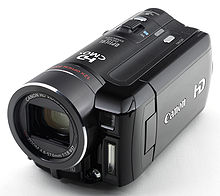
Can a simple camcorder be the beginnings of a new wave in education?

Sure enough, the Hispanic dropout rate turns out to be significantly higher than that of any other group. In 2010 the Pew Hispanic Center, a nonpartisan research organization, released the report “Hispanics, High School Dropouts and the GED.” It found that 41% of Hispanic adults age 20 and older in the United States do not have a regular high school diploma, compared with 23% of black adults and 14% of white adults.

Their reasons for dropping out were complex, as likely to involve school failure as economic imperatives, lack of family support or expectations, and language barriers (meaning teachers, administrators and support staff who did not speak or understand Spanish).

Suddenly my notion of a ‘stay in school’ campaign seemed to be a classic case of oversimplification and ‘blaming the victim.’

Forget my not-so-brilliant idea. What we need is not a(nother) simple-minded ‘Stay in School’ campaign aimed at the kids but a more sophisticated campaign, aimed at both youth and adults. Call it ‘Succeed in School.’ And it shouldn’t be all about how much more money you earn if you get a high school diploma, but instead about ways to succeed and ways to help others succeed. Small steps, or what B.J. Fogg of Stanford calls “Tiny Habits.” Or as another thoughtful leader, Louis V. Gerstner, is wont to say, “No more forecasting rain; it’s time to build arks.”

What small steps and tiny habits are the building blocks of success? I have written about this in The Influence of Teachers, and deeper thinkers like Larry Rosenstock, Don Shalvey, Amy Valens, and Renee Moore have turned words into deeds, so I won’t go into this more deeply here but will ask you for your suggestions. What works to make kids be — and feel — successful?

I have one suggestion, however: help them make videos where community members recite poetry or prose. I wrote about this here, and now I have an example to show you:

In my last post (linked above), I wrote about how projects like this work on several levels. They teach real-world skills like production and cooperation; they give kids the satisfaction of seeing a project through from start to finish and sharing their work with a larger audience; and they demonstrate to the 80% of households without school-age children that great things are happening in our schools.

Small steps, tiny habits.

“Success is a Team Sport” is my nomination for the bumper sticker.

Your thoughts?

The teacher quiz, and the ‘other one percent’

http://www.facebook.com/plugins/likebox.php?href=http%3A%2F%2Fwww.facebook.com%2Flearningmatters&width=292&colorscheme=light&show_faces=false&stream=false&header=true&height=62

If you live in or around NYC, John will be appearing in conversation with Randi Weingarten — the topic is “Unions and the Future Of Our Schools” — on Wednesday, December 14. Click here for tickets and info.

Share this with your friends on Facebook

Friends,

We posted a new video at Learning Matters this week; it’s an attempt to review what we know about the American teacher force — and done in quiz format. Watch it now, embedded here. After the video, check out my thoughts on “the other one percent;” I had similar ideas published in The New York Daily News this week. If interested in some of these themes, I encourage you to purchase a copy of my book, The Influence of Teachers. All proceeds go to Learning Matters.

Let’s watch the video to test your knowledge:

And now, thoughts on “the other one percent.”


I’d like to begin by thanking my teachers in 5th, 6th and 7th grades, Mrs. Pulaski, Mr. Burke and Miss Elmer. They taught us percentages and showed us how to ‘round down,’ which I am doing now, because the US population is 312,624,000, and we have 3,198,000 public school teachers, which computes to 1.02%.

That’s right. More than one out of every 100 Americans teaches in our public schools.

What, you thought I was talking about Wall Street fat cats, professional athletes, entertainers and other rich people? (If interested in some thoughts on the intersection of business and education, you should listen to a new podcast we posted with Doug Lynch of UPenn.) That’s a different one percent, and I guarantee there’s no overlap between the two groups. The average teacher today earns about $55,000. At least 75 CEOs earn that much in one day, every day, 365 days a year. According to the AFL-CIO’s “Executive Paywatch,” the CEO who ranked #75, David M. Cote of Honeywell, was paid $20,154,012, for a daily rate of $55,216.47.

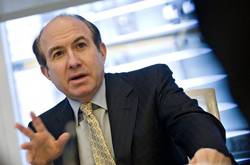
Dauman
Philippe P. Dauman is not worried about his next meal.

The CEO at the top of the heap, Philippe P. Dauman of Viacom, was paid $84,515,308. My third grade teacher, Mrs. Krepela, taught me how to compute averages, so I can tell you Mr. Dauman earns a daily average of $231,549, which is more than four times what the average teacher earns in a year.

Unlike wages for teachers, CEO salaries have been soaring in recent years. Forty years ago, the average public school teacher earned $49,000, adjusted for inflation. That’s a raise of a whopping $150 a year for forty years, or about one quarter of one percent annually.

Here’s another way that the other one percent is different: teachers spend their own money on supplies for their classrooms. That came to $1.33 billion in school year 2009-2010, or $356 per teacher, according to the National School Supply and Equipment Association.

I will wager several packs of colored pencils that Mr. Dauman, Mr. Cote and the other high earners do not drop by Staples to pick up office supplies for their secretaries.

The teaching profession is often criticized because salaries are not based on performance, meaning that the best teachers earn what their less-than-stellar colleagues take home. While that’s generally true, it’s also changing fast. Twenty-four states now base teacher evaluation in part on student performance, and Denver, Washington, DC and other localities have created ‘pay for performance’ systems that reward individuals or entire schools when students do well. Connecting teacher effectiveness with student outcomes is the wave of the future, and it’s becoming easier to remove ineffective teachers than it was just a few years ago.

That doesn’t seem to be true on Wall Street and in corporate boardrooms, where the pay of the CEO is often at odd with his company’s performance. Take Cisco and John Chambers. The website 24/7 Wall Street ranks Chambers the most overpaid CEO, based on his total compensation of $18,871,875 even though the price of Cisco common stock fell 31.4 percent.

In fairness, some teachers are actually overpaid, because they have ‘retired on the job’ and are just going through the motions until they can retire for real. Of course, there’s a big difference between being overpaid at $55,000 and being overpaid at $20,500,000, which is what Carl Crawford of the Boston Red Sox earned for hitting .255 with just 11 home runs last season. Like the CEO of Honeywell, Crawford is earning about $55,000 a day, every day, 365 days a year. He ranks only 28th on the list of athletes, according to Sports Illustrated’s “Fortunate Fifty.”

As may have occurred to you, public school teachers — the group I am calling the other one percent — are actually part of the 99 percent. However, they probably were not occupying Zuccotti Park. At least not during the day, because that’s when they are otherwise occupied — teaching our children and grandchildren.

A new idea: shared poetry

http://www.facebook.com/plugins/likebox.php?href=http%3A%2F%2Fwww.facebook.com%2Flearningmatters&width=292&colorscheme=light&show_faces=false&stream=false&header=true&height=62

If you live in or around NYC, John will be appearing in conversation with Randi Weingarten — the topic is “Unions and the Future Of Our Schools” — on Wednesday, December 14. Click here for tickets and info.

Share this with your friends on Facebook

Stop reading right now If you are a strong ‘back to basics,’ no-frills education person, because this column is about as far away as humanly possible from your notions of what should be happening in schools.

However, if you teach in high school or middle school — or if you are worried about the narrowing of the curriculum — please stay with me.

In a given month, between 30,000 and 40,000 people read this blog; I am hoping that at least a few of you are HS or MS teachers who are committed to the arts. Or perhaps non-teachers who share that enthusiasm and are in a position to help.

In a recent post about the threats to the arts in the schools, I suggested that we needed to ‘energize the 80,’ my shorthand for the need to get the 80% or so of households without school-age children involved in supporting public education.

A lot of you liked the idea, which was gratifying for a day or two — but now it’s time to do it. Or rather, for students to do it. I envision a squad of middle school or high school students, armed with a decent video camera, going door to door and persuading apartment owners and shopkeepers to look into the camera and recite poetry. A couple of lines each, to be edited together, with the speakers identified on the screen.

(For fun, we will get a couple of recognizable people — think pro sports stars, like Derek Jeter — to contribute as well)

There’s just one rule: the students must recruit adults who do not have school-age children. They are members of the 80 percent that have to be energized in support of the arts.

I ask you to imagine watching the video described below on YouTube (I’ve used characters from my Manhattan neighborhood, but you should picture folks from your world):

Mrs. Andrews in Apartment 9B:
To be, or not to be, that is the question:
Whether ’tis nobler in the mind to suffer
The slings and arrows of outrageous fortune,
Or to take arms against a sea of troubles,
And by opposing end them?

Mr. Young of Mr. Young’s Cleaners:
To die, to sleep,
No more; and by a sleep to say we end
The heart-ache, and the thousand natural shocks
That flesh is heir to …

Kimberly Wong in Apartment 17C:
… ’tis a consummation
Devoutly to be wished. To die, to sleep;
To sleep, perchance to dream …

Augie Ramos at the Deli:
… ay, there’s the rub:
For in that sleep of death what dreams may come,
When we have shuffled off this mortal coil,
Must give us pause – there’s the respect
That makes calamity of so long life.

Angela Packer at Equinox Gym:
For who would bear the whips and scorns of time,
The oppressor’s wrong, the proud man’s contumely,
The pangs of despised love, the law’s delay,
The insolence of office …

Jacob Epstein of Epstein Jewelers:
… and the spurns
That patient merit of the unworthy takes,
When he himself might his quietus make
With a bare bodkin?

Derek Jeter of the New York Yankees:
Who would fardels bear,
To grunt and sweat under a weary life,
But that the dread of something after death,
The undiscovered country from whose bourn
No traveller returns, puzzles the will,
And makes us rather bear those ills we have
Than fly to others that we know not of?

Fifth grader teacher Alice Gotteswold:
Thus conscience does make cowards of us all,
And thus the native hue of resolution
Is sicklied o’er with the pale cast of thought …

Richie O’Connor, 201 East 79th doorman:
… and enterprises of great pith and moment,
With this regard their currents turn awry,
And lose the name of action.

This could obviously be done for an assortment of literary elements.

Frost
Two roads diverged in a yellow online video, and that has made all the difference in education.

You can be certain every one of those performers will be boasting about their roles and urging others to watch. And, even more important, they will be shaking their heads in amazement at what school kids are doing these days. They will now be the schools’ advocates.

Shakespeare can be intimidating, but because everyone can relate to passion, I’d suggest the kids bring along Elizabeth Barrett Browning.

Vicki Hennigan, florist:
How do I love thee? Let me count the ways.
I love thee to the depth and breadth and height
My soul can reach, when feeling out of sight
For the ends of being and ideal grace.

Archie Samuels, counterman at Wrap ‘n Run:
I love thee to the level of every day’s
Most quiet need, by sun and candle-light.
I love thee freely, as men strive for right.

Victor Reynoso, 235 East 79th doorman:
I love thee purely, as they turn from praise.
I love thee with the passion put to use
In my old griefs, and with my childhood’s faith.

Peggy Sydak, age 83, in Apartment 21B:
I love thee with a love I seemed to lose
With my lost saints. I love thee with the breath,
Smiles, tears, of all my life; and, if God choose,
I shall but love thee better after death.

And Robert Frost is a natural. Here I would break apart the verses, divide them among performers.

Alfonso Gonfriddo, postal carrier:
Two roads diverged in a yellow wood,
And sorry I could not travel both
And be one traveler …

Amanda Morales, office manager:
… long I stood
And looked down one as far as I could
To where it bent in the undergrowth …

Joan Zrodowski, businesswoman:
… then took the other, as just as fair,
And having perhaps the better claim,
Because it was grassy and wanted wear …

Ted Bauer, web site developer:
… Though as for that the passing there
Had worn them really about the same …

Jerry Flanigan, owner of 81st Street Hardware:
… and both that morning equally lay
In leaves no step had trodden black.
Oh, I kept the first for another day!

Joe Quinlan, salesman:
Yet knowing how way leads on to way,
I doubted if I should ever come back.

The kids will quickly figure out the importance of videotaping each performer reading lines from several different poems, with multiple takes of each reading. They will figure out that doing it well will not be easy, but this is the real world, and their work product will be up there for all to see, up against lots of other student productions. A little competition is a good thing, particularly when it’s team competition.

I have stressed that these videos will build support for the arts, but it’s just as important to point out that the process will teach valuable lessons to the students. In addition to the obvious ‘soft skill’ of working on a team with a real world product, producing these videos will add to their skill set, because they are going to have to persuade the adults to relax, persuade them to ‘do it again’ quite a few times, stroke their fragile egos when they mess up (which will happen a lot), and generally persuade them to take their minds off the camera — even as they are looking into the lens.

School will be more valuable and interesting, and the enthusiasm will rub off and carry over into other aspects of their school experience. They will be become better and more discerning consumers of education precisely because they are now producers.

As they search for talent, and as they edit on their computers, I am sure that some of these young producers will start to take some chances, let their imaginations run free.

Perhaps they will have the dry cleaner saying “Out, damned spot.’

Or the local watch repair guy reciting ‘To-morrow, and to-morrow, and to-morrow, creeps in this petty pace from day to day, to the last syllable of recorded time…’

How about some pre-schoolers on the playground intoning “When shall we three meet again in thunder, lightning or in rain? When the hurlyburly’s done, when the battle’s lost and won?”

Just don’t ask the school principal to intone ‘it is a tale told by an idiot, full of sound and fury, signifying nothing.’

I understand that at least two school groups have begun working on this. That’s a start, but this is a big country with a lot of bored school kids out there, kids with drive, brains and energy.

Learning Matters will create a dedicated channel on YouTube, and we’ll try to get the big arts groups behind this.

Long ago the novelist E. M. Forster told us what matters. ‘Only connect,’ he wrote, getting it right.

What do you say?

Do we need better parents?

http://www.facebook.com/plugins/likebox.php?href=http%3A%2F%2Fwww.facebook.com%2Flearningmatters&width=292&colorscheme=light&show_faces=false&stream=false&header=true&height=62

If you live in or around NYC, John will be appearing in conversation with Randi Weingarten — the topic is “Unions and the Future Of Our Schools” — on Wednesday, December 14. Click here for tickets and info.

Share this with your friends on Facebook

If we want our children to perform better academically, we need “better parents.” That’s what Tom Friedman wrote, perhaps ironically, on November 19 in the New York Times. The column provoked hundreds of readers to comment, and those comments provide insights into just how far apart we are as a nation, at least when it comes to public education.

Friedman cites an OECD study that reveals that “Fifteen-year-old students whose parents often read books with them during their first year of primary school show markedly higher scores in PISA 2009 than students whose parents read with them infrequently or not at all.” (My use of the verb ‘reveals’ is my effort at irony, in case you are wondering.)

Friedman cites another study, “Back to School,” from the American School Board Journal, which says that, when parents are involved in children’s learning, the kids do better. “Monitoring homework; making sure children get to school; rewarding their efforts and talking up the idea of going to college. These parent actions are linked to better attendance, grades, test scores, and preparation for college,” the study reports. It adds that these things matters more than attending PTA meetings, volunteering in classrooms, or helping raise money for the school.

There is a certain “Duh” factor — yes, involved parents make a difference in their children’s education — but what struck me was the heat and intensity of the responses, some of which I am excerpting below.

A few readers responded to Mr. Friedman’s comments about ‘better parents’ by changing the subject and preaching about the need for ‘better teachers.’

Janet of Salt Lake City was an early responder who wrote, in part: We need to place the responsibility for teaching squarely where it lies — on the teachers. A great teacher can teach anything to any child. Rather than wishing to turn every parent into the perfect parent, a goal that can’t be achieved, we need to provide the training and salaries that will attract the best and the brightest of our college graduates into a career in public education.

Moreover, suggested another respondent from Salt Lake City, SThomas: It’s the fault of the schools that parents aren’t involved. He wrote, in part: Unfortunately, most of these uninvolved parents were educated in the same school systems that are now failing our children, so naturally they lack the kinds of skill sets needed to instill in their children a thirst for learning. And it’s a vicious cycle: these same parents will then go on to elect next year’s school board members who will determine next year’s under-performing curriculum when compared to the rest of the world, thus setting up their children for failure in an ever-changing world.

Many readers attacked Janet, often in a ‘what planet are you living on?’ vein.

Persam1197 of NY was pretty typical: Janet, you said: ‘The public school system of every community has the responsibility to teach every student, regardless of the quality of the home life.’ I agree wholeheartedly, and that’s why placing the burden and responsibility of squarely on teachers as you suggest is misguided. It takes a village to raise a child, and, until our communities accept responsibility for our children, expect more of the same.

Parents
Do mom and dad need to improve?

Predictably, teachers — like Malcolm in Pennsylvania — responded defensively to the being criticized. I have taught in public schools for more than 20 years, in an inner city and in a rural setting. I wouldn’t mind being held highly accountable for achievement in children I see for 150 hours a year (50 minutes a day for 180 days) if the parents who are responsible for them the other 8,610 hours out of the year were also held highly accountable. “Accountable” means more than showing up for a 10-minute parent conference once a year.

A more common response, however, was supportive of Mr. Friedman’s point, often with hand-wringing. Here’s what Judy C of Phoenix wrote:

It goes without saying that when parents are actively involved in their children’s education, the children do better. Unfortunately, for many reasons, a lot of parents are uninvolved, and the raising of the child is essentially left up to the school. Sure, there’s nothing better than a good teacher; but really, a child’s primary, and most important, educator is his or her parent. Parents need to step up.

Don Myers of Connecticut agreed: How the parent respects learning is the key to how the child perceives and respects learning. Learning is a 24/7 deal not just limited to the school and related activities. We treat the school with disdain and with no more respect than we do the baby sitter.

Dale, a former teacher in Idaho, suggested that parents actively instill anti-school attitudes in their children: Many students regard school and their teachers as adversaries.

Jim G in DC agreed: Hostility toward education does not come from the great teacher. It comes from the parent, or from the lack of a parent. We must break the cycle of poor student performance in economically disadvantaged homes, and we cannot expect the preschoolers in those homes to do the fixing. The parents must change.

Which prompted a question from Josh Hill in Connecticut:

Sure, but how do you improve the parents?

If the challenge is to improve parents, whose job would that be?

Susan of Eastern Washington noted that “Parents often do not acknowledge that they, and not any school, are ultimately responsible for their children’s educations.”

Why is this happening? Do parents not know they are responsible, are they aware but incapable, or are they willfully ignoring their responsibilities to their children in their mindless pursuit of money and status? (Those were all popular explanations, by the way.)

None of the comments I read addressed what to me is a critical issue, and that is a false distinction between ‘education’ and ‘schooling,’ a distinction that I believe has been perpetuated and reinforced by many educators. That is, too many educators act as if they are in charge, a kind of “Leave your children — and your tax dollars — at the schoolhouse door, and don’t bother us.”

(Many superintendents and principals then set up ‘parent involvement committees’ and other patronizing activities that actually reinforce the barriers between parents and schools. It’s like saying ‘yes, we will let you be involved in your children’s education, but only through channels and by serving on committees.’ No wonder so many parents are fed up with educators!)

So what’s to be done? Ken of Hobe Sound (FL) suggested that “One powerful change a parent from an at-risk family can apply to transform their child’s defeatist approach to school is to become very involved in their student’s education on a daily basis.”

Bingo! But how can that happen? Mr. Friedman quotes from his conversation with Andres Schleicher of OECD:

“Just asking your child how was their school day and showing genuine interest in the learning that they are doing can have the same impact as hours of private tutoring. It is something every parent can do, no matter what their education level or social background.”

Sure, every parent can do that if they know they’re supposed to, but I believe that schools and teachers can actually make that happen, organically and naturally, with a carefully designed curriculum in the early grades that continues up through secondary school.

I have written about this elsewhere but here’s a short summary: beginning in kindergarten, teachers should create ‘homework’ that involves the parents or guardians of their students. It can be as simple as asking Mom or Dad about their favorite movie for the first-grader’s ‘show and tell’ the next day. Early writing assignments can be on family-connected topics: What was Mom’s favorite food growing up, and why? What was the first trip Dad or Grandma took? Why is XX your favorite (athlete, actress, political leader)? And so on. And this is not a one-off but a routine, at least once every week.

This works for math as well, with shopping and cooking and anything else that involves numbers.

When ‘homework’ is organic, the families cannot help but ‘fulfil their responsibilities, but not in an ‘eat your peas’ way. Parents will want to see what their children write, and what the teacher writes on the paper. More connections emerge.

I am thankful that we live in a country where we can speak freely, but in public education the ‘them versus us’ approach isn’t working. We all can and must get better, but finger pointing won’t get us there.

Questioning the conventional wisdom

http://www.facebook.com/plugins/likebox.php?href=http%3A%2F%2Fwww.facebook.com%2Flearningmatters&width=292&colorscheme=light&show_faces=false&stream=false&header=true&height=62

Share this with your friends on Facebook

The phrase “conventional wisdom” is often an oxymoron, at least in education. At a bare minimum, conventional wisdom ought to be questioned. Which is what I propose to do here about ‘Time on Task’ and the new Common Core standards.

‘Time On Task’ is a concept educators love to talk about. It often goes this way: someone asks about extending the school day and/or the school year, prompting this response: “Good idea, because more time on task produces academic gains.”

Odds are good that what comes next is an emphatic statement about the importance of quality time on task — which strikes me as akin to supporting motherhood and apple pie.

Everyone nods approvingly at this conventional wisdom.

But they have it backwards. It’s not ‘quality time’ that matters so much. It’s ‘quality tasks.’ Anyone who’s spent much time in high school lately knows that much of what goes on there is mind-numbing. It’s the tasks, not the time, that ought to take precedence.

You may have read my earlier comments about creating knowledge, so I won’t rehash them here, except to say that teachers have remarkable opportunities to work with young people on tasks that build their skills and knowledge, tasks that challenge their creativity, and tasks that help them sort through the flood of information that surrounds them 24/7 and turn it into knowledge.

So it’s not ‘quality time on task’ that we should be talking about. Instead, it’s ‘Time on Quality Tasks.’ See that the tasks are meaningful, and we won’t have to worry about time — most students will want to complete quality tasks.

The second example of conventional wisdom that ought to be scrutinized involves the Common Core (national) standards for math and English, which have now been endorsed/adopted by 45 states. Bandwagons in general scare me, and the Common Core bandwagon is moving at high speed, endorsed not just by most states but also by teacher unions and many other education associations. Education Secretary Arne Duncan and I talked about it at our Twitter Town Hall this past Monday, and he was lavish in his praise, while taking extreme care to point out that the federal government had not written these standards.

(However, his Department of Education has thrown a lot of money at this and also made acceptance of ‘higher standards’ one of the four requirements for qualifying for its “Race to the Top” competition. Not that there’s anything wrong with that…)

STOP Sign
Is this a sign that our children should be seeing year-to-year?

The Common Core will be a game-changer, the Secretary asserted. Perhaps they will be, but I have to wonder how many people have actually read them? (The PDFs, available for download at the site linked in the first paragraph above, are quite lengthy.)

One thing is clear: What we have now in public education is unacceptable. It’s a hodgepodge of standards, many quite low because of the ‘dumbing down’ effects of No Child Left Behind. As Robert Rothman makes clear in his valuable new book, Something in Common, America has been wrestling with this issue for years. So I am not arguing for the status quo. However, I am afraid that we are missing an opportunity to re-examine our 19th Century approach to school organization. Let me explain.

Because I taught English in high school and college at the beginning of my career, I have been poking around in the ELA standards (English Language Arts). They are very detailed, by year, and ‘strand’ and category. So be prepared to crack the code, ‘Rl.5.4,’ ‘Rl.9.10.10,’ and so on.

On the subject of ‘Range of reading and level of text complexity,’ by the end of the year, fifth graders are expected to “read and comprehend informational texts, including history/social studies, science, and technical texts, at the high end of the grades 4–5 text complexity band independently and proficiently.”

Before you say ‘huh’, read on.

In that same category, this is what’s expected of 9th graders: “By the end of grade 9, read and comprehend literature, including stories, dramas, and poems, in the grades 9–10 text complexity band proficiently, with scaffolding as needed at the high end of the range.”

“Scaffolding” is educational jargon. Think building blocks. First you learn to add and subtract, then you build on that scaffold and learn to multiply and divide, that sort of thing. An awful lot of learning does NOT occur that way, but that’s probably beside the point here.

Leaving aside the mind-numbing jargon that makes my eyes glaze over, I have a serious issue with the Common Core and the conventional wisdom that these detailed national standards are just what we need. They are pouring concrete around our antiquated, age-segregated approach to learning. Just when modern technologies allow students to move at individual and different speeds, the Common Core standards seem to set in concrete the notions of 5th grade, 6th grade, 7th grade, and so on.

I worry that these markers will become stop signs, just as the grade demarcations now operate. Not long ago I heard a school principal complain that he had to tell his 9th graders to ‘motor down’ to get ready for the 9th grade test — because they were doing 11th grade math. All they will get credit for, naturally, is the 9th grade. Isn’t “Slow Down!” a horrible lesson about the irrationality of the world for those young people to absorb?

Schools work around age segregation by creating programs for ‘the gifted,’ which allow precocious 9-year-olds to do work that’s usually for older kids. Sometimes kids skip a grade, but no one seems to question age- and grade-segregation.

I want to be clear here. I am not arguing for ‘fewer standards,’ something the writers seemed to have anticipated, because they write, “It is important to recognize that ‘fewer standards’ are no substitute for focused standards. Achieving “fewer standards” would be easy to do by resorting to broad, general statements. Instead, these Standards aim for clarity and specificity.”

‘Specificity’ they’ve achieved, but ‘clarity?’ Re-read the excerpts quoted above.

I have a suggestion. Rather than perpetuate grade-based learning, could we set standards for age groups? Standards for children ages 6-10 that say, ‘This is what every 10-year-old is expected to be able to do.’ Standards for kids ages 11-14 that say ‘This is what every 14-year-old is expected to be able to do.’ And graduation standards for those ages 15-18: ‘This is what every HS senior is expected to be able to do before getting a diploma.’ Then our system could actually be learner-centered.

Is that a pipe dream? What do you think?

Moving the chair, at Penn State and in education

http://www.facebook.com/plugins/likebox.php?href=http%3A%2F%2Fwww.facebook.com%2Flearningmatters&width=292&colorscheme=light&show_faces=false&stream=false&header=true&height=62

John’s book, The Influence of Teachers, is currently available on Amazon.

The latest example of failed leadership — what I call ‘moving the chair,’ an analogy I’ll explain in one second — comes from Pennsylvania State University. This is a tragic story of sex abuse that apparently went unchecked for years, despite the fact that a fair number of university leaders — including President Graham Spanier and legendary football coach Joe Paterno — knew of the situation.

“Moving the chair” is my analogy for what lousy, ineffective leaders do when faced with a tough decision. Envision a man sitting in his living room watching football on a large flat-screen TV when, suddenly and unexpectedly, water begins dropping on his head. He has a problem: he’s getting wet. He ‘solves’ the problem by moving the chair, and maybe also getting a pot from the kitchen to catch the water drops.

Obviously, the football fan has failed to define the problem, perhaps willfully — because it was a good game, or because he’s lazy, or because it’s a rented house, or whatever. He’s willing to limit the immediate damage, a short-term ‘solution’ that lets him watch the game.

It seems pretty clear that Penn State leaders didn’t want to disrupt their games either, because football is a huge business in Happy Valley, where Coach Paterno is revered and the economic benefits run into the hundreds of millions of dollars.

For too long we have simply ‘moved the chair’ in public education, often congratulating ourselves for having solved the problem. Here’s what I mean:

Our so-called cures for whatever is wrong in education don’t work because we haven’t diagnosed the problem correctly. Too many influential people think the problem is abysmal test scores, and those folks then design ‘cures’ with the purpose of raising the scores.

(Unfortunately, it is possible to raise test scores with malleable third and fourth graders, and so the ‘cure’ seems to be working. It’s a mirage, as the inevitable drop in scores in 8th grade and beyond demonstrates. Older kids are not so easy to manipulate. What that means is that the ‘learning’ shown in 4th grade was not genuine, more akin to sleight-of-hand than the deep learning that we should want for our children.)

Spanier and Paterno
Graham Spanier and Joe Paterno, the president and head football coach at Penn State, seem to have simply moved the chair.

Diagnosing the problem requires strong leadership, courage, and an informed electorate.

I believe that our fixation on tests and test scores is responsible for our having lost sight of the aims of education. What is the purpose of school? How about this?

“Schools and teachers are helping to raise adults.” Their job is not, contrary to conventional view to ‘teach children,’ because that’s too narrow an aim.

But if I am right and the job is growing adults, then we need to think about what sort of adults we want children — our own and others’ — to become.

Our founding fathers possessed great wisdom, and many today are fond of quoting Jefferson. However, I call your attention to James Madison, who wrote:

“… A popular Government, without popular information, or the means of acquiring it, is but a Prologue to a Farce or a Tragedy; or perhaps both. Knowledge will forever govern ignorance; and a people who mean to be their own governors must arm themselves with the power which knowledge gives.”

To me, as a journalist, that means putting the best possible information in front of the public, trusting it to act wisely and in its own interests. But the public also relies on leaders (like Madison and Jefferson) to do the right thing, to identify problems and possible solutions, and to have the courage to face unpleasant choices instead of running from them.

How often in education do leaders ‘move the chair’ instead of doing the right thing? For that matter, how often do politicians and policy makers go to the heart of the problem, instead of settling for the quick and superficial analysis? It’s a lot easier to focus on quick fixes that are not disruptive of ‘the way we have always done it.’

I’m not sure that courage is rewarded — and challenging the status quo, even when it represents mediocrity, is often a sure fire way to short circuit one’s career.

This is, however, not an academic discussion, because policies based on flawed logic do substantial harm to children and youth, to teachers and administrators, and to the nation’s faith in public education.

What will it take to transform schools so that their essential question, asked about each student, becomes “How are you intelligent?” instead of the ubiquitous “How intelligent are you?”

And what can you do to make it happen?