What do we do with the cheaters?

http://www.facebook.com/plugins/likebox.php?href=http%3A%2F%2Fwww.facebook.com%2Flearningmatters&width=292&colorscheme=light&show_faces=false&stream=false&header=true&height=62

As always, remember that John’s book The Influence of Teachers is for sale at Amazon.

Right now I feel the need to vent, even though my rant might not move the ball forward. Next week I will pose the important question “Where do we go from here?” regarding the widespread cheating in Atlanta and apparently in a lot of other places as well, but that can wait.

I recall hearing former Secretary of State Madeleine Albright telling an audience of young girls that a special place in Hell was set aside for successful women who refused to help other women succeed.

An even hotter spot should be reserved for those adults who knowingly cheat children out of a decent education and lie to them about their achievements.

The cheaters in Atlanta, D.C., Philadelphia, Houston, Baltimore and elsewhere took advantage of the neediest and most vulnerable children and changed their scores so it would appear they had mastered material, when they in fact had not. They weren’t thinking about the kids, of course, but only about themselves and the appearance of success.

Kids were numbers, nothing more, nothing less.

The scale of unethical behavior in Atlanta is staggering: According to the report from the Georgia Bureau of Investigation, of the 56 schools investigated, 44 cheated; so did 38 principals and 178 teachers (about 80 of whom have already confessed). But the lack of integrity did not start at the school level, and it appears to the investigators that the rot went all the way to the top, to Superintendent Beverly Hall. The report says that she either knew or should have known, but the culture of the system she created put public praise of her leadership above integrity and ethics. In her regime, the report says, a culture of fear, intimidation and retaliation ruled, and any teacher who tried to blow the whistle was punished.
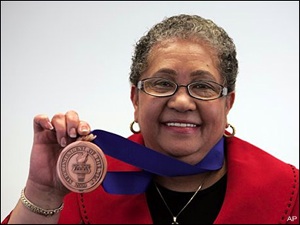
Beverly Hall
Beverly Hall displays her 2009 Superintendent of the Year medal.

Dr. Hall, who was the National Superintendent of the Year in 2009 — the highest honor given by the American Association of School Administrators — has resigned. She has apologized without admitting any wrongdoing.

Maybe she should do a Reggie Bush and give back that award, just as the former USC running back returned the Heisman Trophy — a few steps ahead of NCAA investigators.

The investigation focused on one school year, 2008-09, but the cheating must have started years earlier. It simply could not have grown so massive in just one year or two.

The report says that ‘thousands’ of children were affected but gets no more specific than that. Suppose that only 10% of students were affected; that’s about 5,000 kids. But the cheating went on for a few years, perhaps since 2001 or 2002, meaning that the cheaters stole a lot of years of opportunity from a lot of children.

And they are not just cheaters. They are also thieves.

Why did it continue undetected for so long? Probably because everyone wanted to believe in the remarkable success of low-income minority children. Closing the achievement gap has been education’s holy grail for many years, and now it’s happening right here in Atlanta. Who would want to pour cold water on that?

Any skepticism would likely have been met by skillful playing of the race card: “What, you don’t believe that poor African-American children can learn? Would you question the results if the children were white and middle class?” Michelle Rhee used that approach when people questioned the remarkable progress in Washington, D.C. and it worked there.

I told you what I think should happen to the guilty parties, and Georgia law actually provides for penalties of up to 10 years imprisonment for some offenses. But what will happen? The last cheating incident in Atlanta, about 10 years ago, produced two convictions but gentle slaps on the wrist: 40 hours of ‘community service’ in a soup kitchen, two years of probation and a fine of $1000 — the total punishment for the two offenders! That was quite a deterrent, wasn’t it?

(Ironic, isn’t it, that some of these adult thieves were responsible for making sure that students did not cheat.)

Officials from Education Secretary Arne Duncan on down are talking about ‘technical fixes’ and ‘better referees’ and closer monitoring to prevent this from happening again, but the horse is out of the barn here. And as long as test scores rule, cheating and other attempts to beat the system will continue.

And cheaters will find a way. Count on it, even if Atlanta’s cheaters go to jail, because, if the system is going to punish or even fire teachers and principals and administrators for students’ poor test scores, some are going to be tempted to get those scores up, by hook or by crook.

One does not have to be a skeptic or cynic to expect more cheating stories to emerge.

But what about the kids, the real victims? There’s no mulligan in life, and those 4th graders who didn’t master math or language arts are now 5th graders.

What should be done for them? How do we pay back the debt we owe them? I encourage you to comment here.
David Brooks, Diane Ravitch, and the education wars

http://www.facebook.com/plugins/likebox.php?href=http%3A%2F%2Fwww.facebook.com%2Flearningmatters&width=292&colorscheme=light&show_faces=false&stream=false&header=true&height=62

As always, remember that John’s book The Influence of Teachers is for sale at Amazon.

Last week in this space, I speculated about the most influential educator in America. Although I put forth more than a half dozen names, most respondents ‘voted’ for Diane Ravitch, the historian/policymaker/apostate whose book, The Death and Life of the Great American Public School, is a best seller.

Her landslide victory is not particularly surprising, because she is a Five Star General in the ongoing education wars; her badly outgunned army includes the two teachers unions, Linda Darling-Hammond and a lot of teachers.

The opposing side includes Brian Williams and NBC’s Education Nation, Oprah Winfrey, Teach for America, Joel Klein, Michelle Rhee, charter school supporters, Waiting for Superman and a lot of powerful business and financial leaders.

Add to that list David Brooks, the influential columnist for the New York Times. That’s particularly disappointing, because the normally perceptive Brooks seems to have swallowed a questionable argument hook, line and sinker.

At stake in this struggle is nothing less than the direction of public education. (I write about this war extensively in The Influence of Teachers and won’t rehash the arguments here.)

Just a few days after Ravitch clinched the election on this blog, Brooks took her to task in harsh terms on the op-ed pages of the Times.

Here’s a sample:

She picks and chooses what studies to cite, even beyond the normal standards of people who are trying to make a point. She has come to adopt the party-line view of the most change-averse elements of the teachers’ unions: There is no education crisis. Poverty is the real issue, not bad schools. We don’t need fundamental reform; we mainly need to give teachers more money and job security.

Brooks acknowledges that Ravitch highlights a fundamental tension in education — teaching is humane, while testing is mechanistic — but then accuses her of simply wanting to eliminate testing and accountability.

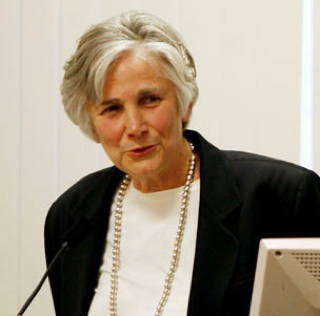
Diane Ravitch
Is Diane Ravitch vs. David Brooks truly good for the future of public education?

Having accused Ravitch of intellectual dishonesty, Brooks seems to walk down that same path, with the help of a foil, Whitney Tilson, whom he identifies for his readers as ‘the education blogger.’ That’s the same Whitney Tilson who was a founding member of Teach for America and who now serves on the Board of KIPP New York, the same Whitney Tilson who supports Democrats for Education Reform and who was a major player in the campaign of rumor and innuendo to discredit Linda Darling-Hammond when she was being considered for Secretary of Education. That Whitney Tilson! Even he must have been surprised to be labeled merely as ‘the education blogger.’

Brooks approvingly passes along Tilson’s observations about test-obsessed schools like KIPP (!) and the Harlem Success Schools, places where students are far more likely to participate in chess, dance and drama than do their counterparts in regular public schools.

Brooks’ money line follows:

The places where the corrosive testing incentives have had their worst effect are not in the schools associated with the reformers. They are in the schools the reformers haven’t touched. These are the mediocre schools without strong leaders and without vibrant missions.

In Brooks’ view, Ravitch is simply wrong. “Ravitch thinks the solution is to get rid of the tests,” he writes. “But that way just leads to lethargy and perpetual mediocrity. The real answer is to keep the tests and the accountability but make sure every school has a clear sense of mission, an outstanding principal and an invigorating moral culture that hits you when you walk in the door.”

Brooks’ conclusion — if a school teaches to the test, it’s the fault of the leaders, not of the test — may follow logically from his premises, but it’s a house of cards, and not just because Ravitch is being painted unfairly. The flaw lies in Brooks (or Tilson’s) failure to examine the dominant default model of public education today, which is precisely Ravitch’s point: test scores rule. Yes, inspired leaders can trump that thinking, and kids lucky enough to attend one of those schools may well emerge as more than a score.

It’s true, as Wendy Kopp of Teach for America asserts, that more winning schools are opening every year, and a body of evidence proves that strong leaders, talented teachers, a powerful sense of mission and coherent curricula like Core Knowledge make a difference. However, the evidence suggests that their success also requires superhuman effort that produces a high burnout rate among teachers and school leaders.

Is this a model for genuine and widespread reform? Let’s look at the numbers. We have about 100,000 public schools. Perhaps 5,000 or maybe even 10,000 are defying the odds. At that rate, how long will it take? Where will the thousands and thousands of inspired leaders and teachers come from?

Why do Brooks and others defend a system in which success seems to require superhuman effort? To be blunt, our ‘answer factory’ approach to education is outmoded and counter-productive in a world that technology has transformed, and continues to transform at an unimaginable rate. What is needed is a major rethinking of the structure of school — a recasting of the basic operating model.

Pitting Ravitch against Tilson makes for a readable column in the hands of a gifted writer like David Brooks. While I regret his unfair treatment of Ravitch, she has proven time and time again that she can take care of herself. What bothers me more is that Brooks and most observers are missing the larger point.

Which is this: Our public schools are the equivalent of yesterday’s pony express. Just as a faster pony express would not be sufficient to deliver the mail today, the “faster horses” that reforms like KIPP, Teach for America and charter schools represent are not in themselves adequate for our 50 million school-age children, nor will they ever be.

I have some thoughts about what truly transformed schools would look like, and I imagine you do as well. Some of these schools already exist, others perhaps only in your imagination. Please share your thoughts on what to do next, not just on how to end this counterproductive ‘education war’ but also on how to proceed positively.

I look forward to your responses.

Who’s the most influential educator in America?

http://www.facebook.com/plugins/likebox.php?href=http%3A%2F%2Fwww.facebook.com%2Flearningmatters&width=292&colorscheme=light&show_faces=false&stream=false&header=true&height=62

As always, remember that John’s book The Influence of Teachers is for sale at Amazon.

A month or so ago, I speculated about the most influential person in American education — then two weeks ago I expanded upon those musings in a feature for the New York Daily News. In both columns I put forth four nominees — Wendy Kopp, Big Bird, Arne Duncan and Joel Klein — and chose Joel for his remarkable network of eleven protégés now influencing what happens in schools and classrooms around the nation.

I was attacked for my choice by people who feel that his influence has been negative, or even destructive. Few seemed to notice that I neither praised nor condemned the former Chancellor’s policies. No one challenged that he changed New York City schools in dramatic ways — nor could they. Remember that before mayoral control, New York City had 32 separate districts, quite a few of them known as jobs programs for cronies with little regard for student outcomes. There was little sense of urgency about actually educating large numbers of children, and the central office at 110 Livingston Street was a nightmare. Joel changed all that.

But there were other reactions, including a few “How could you leave off….?” letters.

So, without asking Joel, I am reopening the discussion and adding several nominees. The new names are:

  • Diane Ravitch, the former Bush education official who has become NCLB’s fiercest critic
  • Howard Gardner of Multiple Intelligences fame, whose writings have influenced thousands of teachers
  • E. D. Hirsch, Jr., the inspiration behind Core Knowledge, whose elementary school curriculum is — for me anyway — a bright shining light.

From the original list, ‘Big Bird’ is, of course, a stand-in for Sesame Street , Joan Ganz Cooney, the Muppets and The Electric Company. Add two men we have lost — Fred Rogers and Jim Henson — as you consider your vote. Just think how many American children have been positively influenced by this team!

Would you vote for Arne Duncan as Most Influential Educator in America?

Arne Duncan might deserve more votes if he continues to press Congress on NCLB, which he now threatens to do by granting waivers.

When you consider Wendy Kopp, realize she’s a serious contender — and not just for the 9,000 Teach for America corps members who will be teaching in some of our toughest schools this fall. I invite you to review some of the names of people who have come through TFA in its 20 years on the scene and remain influential:

That list doesn’t mention a large handful of Teachers of the Year, and about 15% of the principals in Oakland. What’s more, she and TFA are a case study at the Harvard Business School, an honor that has so far escaped Joel, Arne and Big Bird.

Before you cast your vote, let me add a wild card, which I am calling the “Roberto/Robert team. ” They are two mostly invisible hands within the Obama Administration — hands that may not wash each other. Roberto J. Rodríguez serves in the White House Domestic Policy Council as Special Assistant to President Obama for Education. Previously, he was Chief Education Counsel to United States Senator Edward M. Kennedy (D-MA). In this capacity, he managed the Committee’s Democratic education strategy for legislation addressing early childhood education, elementary and secondary education, higher education, and adult education. As for Robert Gordon at OMB, the Washington Post described him thusly: “Gordon will tackle the task of finding wasted cash in the financials of the nation. Education and labor are his specialties; he has written extensively on the impact of the “No Child Left Behind” (NCLB) bill, and has worked in the New York City Department of Education … Gordon has been an advocate for changing teacher-tenure rules in public schools, modifying NCLB and increasing efforts to fight crime.”

This raises the possibility that Roberto proposes from the White House and Robert vetoes from his desk at OMB, saying, ‘We can’t afford that.” Does that make them a force for stasis, for gridlock? Does that disqualify them? Your call.

So there are the new nominees for “Most Influential Educator in America.”

Vote here, vote early and vote often.

Test question — can you spell ‘blackmail?’

http://www.facebook.com/plugins/likebox.php?href=http%3A%2F%2Fwww.facebook.com%2Flearningmatters&width=292&colorscheme=light&show_faces=false&stream=false&header=true&height=62

As always, remember that John’s book The Influence of Teachers is for sale at Amazon.

If memory serves, years ago a group of students at a California high school deliberately filled in incorrect answers on a test the state used to evaluate its schools, thereby guaranteeing that the school would sink in the rankings. They were upset because the principal failed to bow to their demand for a smoking area or some similar privilege.

Whether the principal was right or wrong is immaterial. What matters is that the state had put him in that position by creating a test whose results meant nothing to those being tested — but could lead to cash bonuses for schools doing well.

Students at other high schools apparently went to their principals and offered to do really well in return for privileges. Not sure how that turned out.

In 2006, according to California reporter John Fensterwald, students at a charter school in San Jose protested the dismissal of a couple of popular teachers by sabotaging a state test. The school’s score on the all-important Academic Progress Index dropped 203 points, from 731 to 528.

What brings that to mind is the news that New York City is going to spend at least $25 million to create tests whose scores will, they hope, allow them to judge teachers (not students).

As Chief Academic Officer Shael Polakow-Suransky said to the New York Times, “How do you create an additional assessment that is actually going to strengthen instructional practice, rather than divert time away from instruction?”

That, he added, “is what we set out to solve.”

From my vantage point, there is so much wrong with this thinking as to be laughable — although maybe Dr. Polakow-Suransky (by all accounts a brilliant man) is being logical given that the legislature passed a law last year that requires districts to find ways to rate teachers on a scale from ‘highly effective’ to ‘ineffective.’ The legislature was doing Washington’s bidding, to help the state win the Race to the Top competition, so perhaps the madness starts in the Congress and the White House.

But madness it is, because New York City will be piling more tests on top of those already being administered. The Times reports that, if the plan is carried out, high school students could end up taking as many as eight additional tests a year, because, after all, not everyone teaches math or language arts. As spokeswoman Natalie Ravitz said in an email, “Some of the things that need to be determined are how are we going to ‘test’ students in art classes…students in Physical education… students in Spanish.”

There will be more tests for elementary and middle school students as well.

Now about the blackmail: When New York City rolls out the test exams next year in 100 or so schools, how long before some savvy students let teachers know that they know what’s going on — and are willing to try their best if the teacher will agree to (fill in your own answer here).

Reporters have to be salivating at the prospect of some really juicy stories emerging from this idiotic policy. If it weren’t so stupid, I would be really pumped too.

According to the Times article, sample tests were given in 11 schools this spring, but no one told the students what the deal was. Good luck with keeping that a secret as the tests spread to other schools.

And in fact, Dr. Polakow-Suransky urged full disclosure. “I don’t think it should be a secret that part of how teachers are evaluated is how kids’ learning goes on in their class,” he said.

Bubble Test

(Perhaps I should say ‘if the tests spread,’ because spokeswoman Ravitz says they have only put out the RFP but “haven’t made decisions.”)

Doesn’t anybody have the courage to challenge this slavish devotion to standardized testing (mostly bubble tests, by the way)? Students in New York City finished taking their ‘end of the year’ state test in mid-May, but school itself doesn’t get out until the end of June. For kids (and for the policy types in their comfortable offices), the tests are everything. Teachers, of course, have to hold their students’ interest for another six weeks or so.

Dr. Polakow-Suransky said the challenge was to create an additional assessment that will ‘strengthen instruction.’

I say he ought to examine the premise of the law and challenge it, because the goal ought to be to strengthen teaching and learning. This entire exercise strikes me as a ‘gotcha game’ whose outcome will undermine the teaching profession, increase disrespect among students for schooling, and take time away from teaching and learning. It will, however, allow students to strengthen their bargaining and blackmailing skills.

Assessments can strengthen instruction, of course. Frequent school-based tests in math, for example, can pinpoint which teachers are having difficulty getting certain concepts across; they can then learn different approaches from their more successful peers. That’s not ‘gotcha’ testing but sensible assessment with an immediate feedback loop.

I write about many of these issues in my book, The Influence of Teachers. A lot of our problems in public education stem from a dearth of respect. We don’t respect students’ intelligence; hence we focus on the lowest common denominator in skills. We don’t respect teachers, which is why we turn to standardized testing as the be-all and end-all of evaluation. I’m not sure we even respect learning itself.

Nor do we expect very much from our kids, frankly. Imagine setting the bar for reading at third grade, when most first graders are fully capable of learning to read and learning to enjoy reading?

But enough of this rant. The questions are:

How do we raise expectations?

How do we get beyond the insult of ‘the basics’?

How do we wean ourselves away from our addiction to more and more standardized testing?

The floor is open for suggestions (I’ve done the ranting).

Appreciate a Teacher

http://www.facebook.com/plugins/likebox.php?href=http%3A%2F%2Fwww.facebook.com%2Flearningmatters&width=292&colorscheme=light&show_faces=false&stream=false&header=true&height=62

As always, remember that John’s book The Influence of Teachers is for sale at Amazon.

On Saturday I had the honor of being the commencement speaker at the University of Michigan’s School of Education. With an audience of 394 men and women who had earned their degrees and their families and friends, I focused on the opportunities — not the challenges — facing them. Here’s an excerpt.

Continue reading

The joys of jargon

http://www.facebook.com/plugins/likebox.php?href=http%3A%2F%2Fwww.facebook.com%2Flearningmatters&width=292&colorscheme=light&show_faces=false&stream=false&header=true&height=62

As always, remember that John’s book The Influence of Teachers is for sale at Amazon.

At Harvard recently a young graduate student asked me a tough question:

Mr. Merrow, you have been interviewing educators for 35 years. How do you know when an educator is sincere and can be trusted?

It’s a great question, but before I tell you how I answered her, let me admit that, once I got back to New York, I queried other education reporters on the subject. Is there language — jargon — that makes you suspicious of educators, I asked?

The flood of responses surprised me. It seems that a lot of reporters have had it up to here with educational jargon. Their (non) favorites include phrases like: ‘at risk,’ ‘scaffolding,’ ‘value-added,’ ‘best practices,’ ‘state of the art,’ ‘laser-like focus,’ and ‘raising the bar.’

For about half a dozen reporters the absolute nails-on-the-blackboard term is ‘stakeholders.’

I can’t resist stringing together expressions, like so:

“Aligned instruction with buy-in by highly qualified teachers for authentic inquiry-based learning and student engagement in professional learning communities will produce 21st Century skills in our youngsters.” (And I’ll bet some educator somewhere has actually said that!)

(But not in my new book, The Influence of Teachers.  I did my best to make it a jargon-free zone and will refund your purchase price if you can find examples of my — non-ironic — use of ‘educationese.’)

Educators apparently adore alliteration: ‘Scaffolding for success,’ ‘ramp up for rigor and readiness,’ ‘data-driven,’ ‘drilling down,’ ‘authentic assessment,’ ‘teaching to the test,’ and ‘rigorous research.’

Reporter Jackie Borchardt of the Casper Star-Tribune made a school board bingo card last year that included ‘literacy,’ ‘goal team,’ ‘rigor,’ ‘pathways,’ ‘research-based,’ ‘engaged,’ ‘high-access,’ ‘what’s best for kids,’ ‘cohort,’ ‘strategic plan,’ ‘and ‘21st century education. She didn’t say whether she called out “Bingo” during a School Board meeting!

JargonDoes jargon disguise vacuity? Anne Lewis, a veteran reporter, offered this analysis: “I have come to the conclusion that it exists because of a professional lack of esteem. Other professions requiring college degrees have a specific language — medicine, the sciences, engineering, law. But educators only have plain English, so they change it into a ‘professional’ language that sounds fancy and inaccessible when it ought to be the most accessible profession of all.”

Do some educators obfuscate because they think it makes them sound more professional? Are some educators so deep in the weeds of their profession that they have forgotten how to communicate with ordinary folks?

And are some being duplicitous, saying, ‘We know what works’ when in fact they do not?

I suspect it’s “Yes” to all of the above.

So how did I answer that young woman?

I told her that two terms make me hyper-vigilant: rigorous and ready to learn. ‘Ready to Learn’ tells me one of two things: either the educator hasn’t thought about the difference between being ‘ready to learn’ and being “ready for school” OR she actually believes they mean the same thing. If the latter, that’s remarkable arrogance. If the former, let’s hope the leader can be taught the difference.

I hate it when educators talk about the need for a ‘rigorous curriculum’ because that tells me they haven’t thought much about the meaning of the adjective (harsh and unyielding). Perhaps they think it makes them sound tough, as if that were a good thing, but I associate rigor with death (‘rigor mortis’). Who needs that in our classrooms? Why not say ‘challenging’ instead?

But what I listen for are clues about beliefs. When an educator looks at a child, I want to know if he wonders, “How intelligent is this kid?” — or is he thinking “How is this child intelligent?”

If the former, then the educator is operating from a medical model, with himself as the doctor and provider of cures. I don’t like that philosophy. If the latter, he is working from a health model and is ready to build on the child’s strengths.

I advised the young woman that one cannot simply ask educators which way they look at the world, because they will spit back the politically correct response. Instead, I said, watch and listen carefully. Cut through — or even ignore — the jargon, which at the end of the day is a nuisance and a distraction. It’s the core beliefs that matter.

ADD trash to the curriculum?

http://www.facebook.com/plugins/likebox.php?href=http%3A%2F%2Fwww.facebook.com%2Flearningmatters&width=292&colorscheme=light&show_faces=false&stream=false&header=true&height=62

As always, remember that John’s book The Influence of Teachers is for sale at Amazon.

Looking out my living room window, I see five large trash receptacles on the four corners of the intersection of 3rd Avenue and 79th Street that our east side Manhattan apartment overlooks. And, probably as a consequence, there’s very little garbage on the street and sidewalk.

In fact, most intersections in my neighborhood seem to have a trashcan on each corner, something I have been aware of — and grateful for — when I walk our yellow Lab in the morning and at night.

But when I was visiting a school in the South Bronx last week, I couldn’t help but notice that sidewalks and streets were littered and there weren’t very many public trash receptacles. Just one per intersection, not the four (or five) in my neighborhood.

Now, a couple of casual sightings and an anecdote do not constitute data, but this is a great opportunity for social studies teachers to use technology to enliven their classes, energize their students, and perhaps provide real life lessons in how cities distribute resources.

Continue reading

In education, a lack of response to basic demand

I started writing this blog entry on a flight to California from New York; I’m headed there for another book party and a meeting of the Learning Matters board.

For the last 30 minutes or so, I have been listening to a father talk about his two young children, ages 7 and 10.  He’s an older Dad with at least one adult child, and he radiates child-like enthusiasm about what amounts to a second go-round of childrearing. He’s been telling me about their endless curiosity; they always are asking “why?” and “how does this work?” and so on.

As I listened, a dark cloud flickered across my eyes and I wondered: what would their schools do to their spark?

Nurture it, tolerate it, or extinguish it?

Continue reading

MOVIE REVIEW: Race to Nowhere

By now it seems we have all reviewed Waiting for Superman, but what’s surprising is that WFS is just one of four or five movies about education now out. A few weeks ago I reviewed WFS, and now I’ve decided to review the rest of them, beginning with Race to Nowhere, the 2009 film made by first-time director (and angry parent) Vicki Abeles.

Race to Nowhere is a film about how schools and parental pressure are affecting students’ mental and emotional wellbeing. WFS portrays our schools as undemanding; Race to Nowhere says the opposite—that we are killing our kids, figuratively and sometimes literally.

Continue reading

Measuring soft skills

(This post was co-authored with Arnold Packer.)

Reliability and Validity are the Alpha and Omega of testing. A test that is reliable can be counted on each time it’s given, while a valid test measures what it is supposed to. Tests that meet these two criteria are the gold standard of assessment..

Soft SkillsFor example, making someone swim 100 yards to test whether or not he can swim would be a valid and reliable test. If you sink, you flunk, and that’s true each time the test is given and is independent of who is doing the testing.

However, when teachers are trying to assess ‘soft’ skills, the waters get murky. How can we measure the ability to work with others, process information from disparate sources, communicate persuasively, or work reliably?

Continue reading