As the bus approached my stop this morning, I could see through the windows that lots of seats were empty. Great, I thought, I can read the paper on my way to work. But as I boarded the bus, I realized I was mistaken. Those apparently empty seats had tiny occupants, close to 40 little kids. Their joyous cacophony filled the bus with high-pitched musical chatter. From my vantage point–standing–I could see most of them. A few were reading, most were talking, and not one of them was manipulating an electronic device. One of the adults who was accompanying them told me they were on their way to MOMA, the Museum of Modern Art, which is in midtown Manhattan. They were second graders, and their excitement was palpable and contagious.
Whatever morning fatigue I felt vanished as I took in the scene and tried to imagine them at MOMA. What would they think of Monet’s water lilies and Picasso’s strange and wonderful art? How would they react when they came face to face with “The Scream,” Edvard Munch’s famous painting?
Thinking about “The Scream” transported me back to last week, when my wife (a school principal) invited me to her second grade class. Those kids had visited MOMA, seen Munch’s painting, and then made their own versions, all of which were hung in the school’s entry hall. One morning two weeks ago in an uncanny (and carefully planned) echo of history, four of the children’s paintings disappeared, apparently stolen, just like Munch’s painting. The kids were upset, and so their (imaginative) art teacher brought in the school’s security chief, a retired cop, to investigate. Enthralled, the kids helped him search for clues. The case was solved on schedule, the morning I visited. The detective brought in the culprit, the school mascot, who was carrying the paintings and a big “I’m Sorry” sign. Everyone cheered and celebrated with cookies and milk.
Unfortunately, there was a downside to both of these wonderful times, an aftershock. It was the realization that these lovely children were one year older than the 20 kids murdered in Sandy Hook. They were enjoying life in ways that Sandy Hook’s children will not. As I walked back from school a week ago, and as I left the bus this morning to walk the remaining blocks to my office, tears welled up. Why is life so unfair?
But I think I know part of the answer: we stand on the sidelines and allow it to be unfair. We allow a small minority of (pick your noun–mine is unprintable) to control national policy and prevent sensible gun regulation. The Bushmaster automatic weapon that the young man used to murder those children and six adults is a killing machine, no more and no less. Magazines that hold 100 or more rounds are for mass killing, not for hunting or for sport. Neither has any place in a civilized society.
I wonder if Representatives John Boehner, Eric Cantor, Tim Murphy and Ben Quayle, Senators Harry Reid and Joe Mancini and the other politicians who take money from the National Rifle Association and then cast votes that please them have ever spent a morning in a first grade class, or ridden the bus with second graders? Perhaps that would affect their perspective.
But a better wake-up call would be the refusal of voters to put them, and others of that ilk, back in positions of power.
“I couldn’t sleep,” Larry Schall said. He and his wife had watched the memorial service from Newtown the Sunday after the massacre and had heard President Obama talking about the young children who had been murdered.
He lay awake for hours, he told me. “At about 2 in the morning I gave up on sleep and went downstairs and wrote a letter,” he said. The next day he shared it with a good friend, and later in the day their edited version became an open letter to other college and university presidents.
Larry is Lawrence Schall, the president of Oglethorpe University in Georgia, and his co-author is Elizabeth Kiss, the president of Agnes Scott College, also in Georgia, two leaders and two institutions that you may not have heard of before Newtown.
The letter specifies the following measures:
• Ensuring the safety of our communities by opposing legislation allowing guns on our campuses and in our classrooms
• Ending the gun show loophole, which allows for the purchase of guns from unlicensed sellers without a criminal background check
• Reinstating the ban on military-style semi-automatic assault weapons along with high-capacity ammunition magazines
• Requiring consumer safety standards for all guns, such as safety locks, access prevention laws, and regulations to identify, prevent and correct manufacturing defects
“I thought if we got 50 presidents to sign it would be a homerun,” President Schall said, but their powerful message resonated, and within a few days more than 200 presidents had signed it. The group acquired a name, “College Presidents for Gun Safety.”
Today over 330 presidents have signed, almost all of them the leaders of private institutions (perhaps because they don’t have to answer to governors and legislatures).
Is that a homerun? Depends on how you count, it seems to me. America has about 4,150 colleges and universities, which means that just under 8 percent have signed the letter. However, given that it’s tough for the presidents of public institutions to step out on this limb, we ought to consider the universe of private institutions, some 2450 in all. That brings the number to just over 13%.
I urge you to read the names of the 330 or so institutions and see which institutions are NOT there. You will find Cornell College (IA) but not Cornell University; Teachers College, Columbia University but not Columbia University itself; and three Notre Dames (Notre Dame College (OH), Notre Dame de Namur University (CA) and Notre Dame of Maryland University (MD) but not THE Notre Dame, the one in Indiana with the Golden Dome.
You will find Macalester, Colby, Mount Holyoke, Spelman, Middlebury, Colorado College, Davidson, Hamilton, Amherst, Bates, Bowdoin and Centre College and a number of other outstanding institutions, but where is Duke? Why no MIT? You will look in vain for members of the Ivy League, UC Berkeley, Stanford, and other household names.
Perhaps the most glaring omission is Virginia Tech, the scene of the worst gun massacre in our history. I asked Virginia Tech about that, but so far no one has responded.
The Association of American Universities, representing 60 of the top institutions, issued its own statement (pdf) on January 2. While that letter lacks the power of the Schall/Kiss letter, it does call for Congressional action.
On Monday, February 4, College Presidents for Gun Safety will join with Mayors Against Illegal Guns (representing 800+ mayors) for an event on Capitol Hill, an effort to put pressure on Congress to pass meaningful gun laws.
Getting just 8% of higher education to sign on may not seem like a homerun, but–compared to the rest of public education–Presidents Schall and Kiss have hit a grand slam, maybe even an 8-run homer.
Here’s why I say that. Not long after Newtown, I got in touch with most of the leading K-12 groups. I believe that their generally ineffectual response to the mass slaughter of those 6- and 7-year olds allowed the National Rifle Association to frame the debate. And so, instead of debating whether we should ban the sale and possession of weapons of mass murder from our society, until just recently we have been arguing whether arming school principals and teachers makes sense.
Here are a few concrete examples:
The National Association of Elementary School Principals, which lost a member when Sandy Hook principal’s, Dawn Hochsprung, was gunned down, issued a statement expressing condolences that said nothing about restricting access to assault weapons. Instead, NAESP pledged to “do everything we can to strengthen laws and policies aimed at keeping our children safe and secure in our nation’s schools and communities.”
The 578-word statement on the website of the National Association of Secondary School Principals was devoted largely to opposing the NRA’s call for arming of educators. Only after 540 words did NASSP allude to the murder weapons, and then somewhat obliquely–and in just seven words: “And yes, it’s a matter of gun access.”
The National School Boards Association “does not take positions on social issues” like the availability of assault weapons, according to its General Counsel. “After Columbine, we turned our attention to identifying troubled students,” Francisco M. Negron said, “But now we will have to look at safety more broadly because schools are just another multiplex.”
Two young leaders seemed determined to offend no one with their public statements. Jonah Edelman and his organization, Stand for Children, declared after Newtown that “Real actions must be taken” but failed to say what those actions might be. His high-sounding statement (with an accompanying “Open Letter to the President”) demanded to know, “Has the moment arrived, at last, when decent people across our great nation have finally decided we’ve had enough? Will those of us who’ve consented to so much loss with our silence finally speak up and demand our leaders pass laws that decrease the prevalence of mass shootings?”
When I was in high school, stuff like that won the “Talks most, says least” category.
Michelle Rhee of Students First (the former Chancellor of the Washington public schools) appeared to be walking a tightrope. Fresh from helping Michigan Republicans pass anti-union legislation, she declined to take a position on another law passed by the the GOP-controlled legislature that would have allowed guns in schools. Her silence was seen as tacit support for the measure. Rhee couched her neutrality thusly: “As an education reform organization, we try hard to remain singularly focused on those issues that directly affect student achievement.”
After Newtown, however, Rhee apparently felt compelled to enter the debate–although not the one about assault weapons in society. Instead she weighed in on the NRA’s question: “Schools must be safe havens for teaching and learning — that is a basic obligation to children that comes before anything else,” she said. And so Students First is now against guns in schools but has no position on assault weapons in the larger society.
In sharp contrast to both Michelle Rhee and Jonah Edelman, Randi Weingarten of the American Federation of Teachers did not mince words. “The AFT supports common sense gun control legislation, including banning assault weapons and large ammunition magazines, requiring thorough background checks and making sure that gun owners keep their weapons secure.”
The Council of the Great City Schools, which represents more than 60 urban districts, also took a firm stand, albeit quietly: “The nation’s Great City Schools join with their mayors in urging tighter restrictions on the sale, possession, and use of assault weapons and other weapons designed to harm people.”
The National Education Association reacted to the NRA position: “Greater access to mental health services, bullying prevention, and meaningful action on gun control—this is where we need to focus our efforts, not on staggeringly misguided ideas about filling our schools with firearms. Lawmakers at every level of government should dismiss this dangerous idea and instead focus on measures that will create the safe and supportive learning environments our children deserve.”
The leaders of private schools took a strong stand. Calling themselves “Heads of School Against Gun Violence,” about 70 school leaders in New York City took out a full-page ad in the New York Times, formed a national organization, and began agitating for Congressional action. (Full disclosure: my wife, Joan Lonergan, is an active participant in the group.) As of this morning, 197 school heads have signed the the petition, and an additional 3063 teachers and other school personnel have signed an accompanying letter of support.
I applaud Marian Wright Edelman of the Children’s Defense Fund, who spoke first. On the day of the mass murder, the veteran civil rights leader issued a powerful statement, excerpted below:
“… How young do the victims have to be and how many children need to die before we stop the proliferation of guns in our nation and the killing of innocents? …
“This slaughter of innocents happens because we protect guns, before children and other human beings. …
“Each and all of us must do more to stop this intolerable and wanton epidemic of gun violence and demand that our political leaders do more. We can’t just talk about it after every mass shooting and then do nothing until the next mass shooting when we profess shock and talk about it again. …
“We have so much work to do to build safe communities for our children and need leaders at all levels of government who will stand up against the NRA and for every child’s right to live and learn free of gun violence. … Our laws and not the NRA must control who can obtain firearms. …
“Why in the world do we regulate teddy bears and toy guns and not real guns that have snuffed out tens of thousands of child lives?”
Many years ago Dr. Martin Luther King, Jr., noted, “The arc of the moral universe is long, but it bends toward justice.” Some 40 years later Illinois senator Barack Obama assumed that history does bend towards justice but said, “It bends because each of us in our own ways put our hand on that arc and we bend it in the direction of justice…”
Unfortunately, most K-12 educators have not put their hands on that arc. By failing to seize the opportunity to lead on what is arguably the critical issue of our time–the health and safety of our children–too many public educators are providing a disappointing role model for the children in their charge.
As Oglethorpe University President Schall told me, “Every graduation we tell our graduates to go boldly into the world and stand up for what they believe, but we weren’t doing it ourselves. It’s time we did.” Kudos to him, to Elizabeth Kiss of Agnes Scott College and to all the educators who are demanding action.
Because you are reading this now, I am assuming that you have a strong interest in education and may even be a wonk like me. It’s great that you care, but, unfortunately, we are in the minority. Perhaps you can help us figure out how to reach and engage the “inadvertent audience,” the people who tune in for coverage of politics or the economy, stumble across an education story, and get hooked. These “inadvertent viewers” might be part of the 80% of American households without school-age children; perhaps they are people who don’t spend much time thinking about schools and their role in our democracy.
Whoever they may be, they are critical, for reasons I will go into below.
Those folks don’t get a regular dose of education coverage, because there’s really no such thing. That we know from a December 2009 report from the Brookings Institution, which pointed out that a mere 1.4% of the national “news hole” for television, radio, newspapers and the web was devoted to education.
Of that meager amount, about 30% focused on higher education, the rest on elementary, secondary and pre-school, but that number is inflated because, the report notes, much of that ‘education’ coverage was devoted to the hot ‘education’ issue of the day and its impact on schools. (In 2009, the hot issue was the H1N1 flu).
The number is further inflated because some outlets apparently count a story about gang violence, for example, as an education story because some of the gang members were in high school or because some acts of violence occur just off school grounds.
The leading outlets, like the Associated Press, the New York Times, the Wall Street Journal, Time and so forth, do not devote much space or manpower to national education issues. None of the four major television networks has a full time education correspondent. (The Brookings Report does not point out that the PBS NewsHour has two, John Tulenko and yours truly, plus national correspondents like Tom Bearden who also contribute occasional reports about education.)
If we want things to change, we need to reach the “inadvertent audience” – but not just because it’s larger. That group is important because the education community is small, insular, fragmented and fundamentally reactive, not proactive. Let me address those in order.
Small: See above reference to number of households with school-age children.
Insular and fragmented:In 2009 there were about 5,000 education blogs, and it wouldn’t surprise me to learn that there are 10,000 or more today. Most reach a small audience and are probably preaching to the converted. That seems to be what’s happening on Twitter, as Mike Petrilli of the Fordham Foundation demonstrated recently. Using Michelle Rhee to represent the right and Diane Ravitch to stand for the left, he calculated that only about 10% follow both, inferring that people gravitate to where they are most comfortable. They talk to each other and yell about everyone else. That’s not a recipe for moving the ball forward.
Reactive, not proactive: Educators rarely act; instead they react. Imagine for a moment that the Newtown killer had burst into a rabbinical school or a convent and slaughtered two dozen rabbinical students, nuns or priests. Had he done that, the entire religious community–Christians, Jews, Muslims, Hindus, et cetera–would have come together before the next sunset. That coalition would have issued a strong statement condemning weapons of mass murder and demanding that the President and the Congress ban their sale and possession.
Now think about the reaction of ‘the education community.’ No coalition formed. Marian Wright Edelman of the Children’s Defense Fund published a powerful clarion call for action within hours, and Randi Weingarten of the American Federation of Teachers followed not long afterwards. Otherwise, mostly silence or bland words. That ineffectual response allowed the National Rifle Association to frame the debate on its terms. Instead of debating the wisdom/folly of allowing weapons designed for mass killing to be legal, we find ourselves arguing whether principals should carry loaded weapons or not.
As I say, educators as a group are a timid lot, accustomed to reacting, not leading.
The “inadvertent audience” matters because many of those men and women know where the levers of power are, and how to operate them. We need to figure out how to reach and touch them, because they need to understand that providing decent educational opportunities for all children is essential for the health of our economy and our way of life–even though the kids we are talking about are not their own children or grandchildren.
We cannot have a national conversation about the goals of education, about our dreams for our children and about our hopes for America, without them.
To be clear, I am not trolling for story ideas for the NewsHour but for something bigger, something I can’t quite get a handle on myself.
What follows is the story of a missing memo, numerous attempts to unearth it using the Freedom of Information Act, confidential sources, apparently lost email, and new questions about Michelle Rhee’s decision not to investigate widespread erasures on an important standardized test during her first year in Washington, DC.
Readers of this blog know that our Frontline film, “The Education of Michelle Rhee,” has stirred up the conversation about Chancellor Rhee’s tenure in Washington, DC. Debate continues about the ‘wrong to right’ erasures on the DC-CAS, and about the quality and depth of the investigation of those erasures. (Read more about these reactions, including my response, here.)
Erasures matter. The DC-CAS is a diagnostic tool whose wrong answers reveal where students are weak (say, multiplying fractions), so that teachers can provide the necessary catch-up instruction. If adults change answers, then the weaknesses are not discovered or remediated. If you believe, as I do, that education is a civil right, then those cheaters are denying children a basic civil right.
As the film documented, the new Chancellor extracted written guarantees of gains from her principals and offered cash bonuses to principals, assistant principals and teachers if their students’ scores jumped. The implicit message was that principals might lose their jobs if scores did not go up.
Scores jumped, sometimes as much as 42%.
In response to those dramatic increases, she awarded more than $1.5 million in bonuses to principals, assistant principals and teachers. As she said at the celebration–without a trace of irony–when awarding the bonuses, “These are unbelievable for a one-year time period.”
Shortly thereafter, Rhee was informed by Deborah Gist, the Superintendent of Education, that the test maker had discovered large numbers of erasures, most of the answers changed from ‘wrong to right.’ In an “action required” memo dated November 21, 2008, Gist asked Rhee to investigate. (Gist, now Rhode Island’s State Superintendent, declined to discuss this on the record.)
As our film documented, the normally decisive Chancellor responded to Gist’s memo by asking first for more time and then for more information. In the end, she did not investigate the possibility that adults had cheated in order to raise the scores.
What almost no one outside of Rhee’s inner circle knew–perhaps until now–is that the usually decisive Rhee did not stray from her normal pattern of behavior. She acted decisively, but she did this privately.
She turned to a trusted advisor, Dr. Fay G. ‘Sandy’ Sanford. Dr. Sanford began consulting for DCPS early in Rhee’s tenure. He had been approached by Erin McGoldrick, Rhee’s Chief of Data and Accountability, even before she began working for DCPS. “She didn’t have any background in data-driven instruction,” Sanford told me in mid-November of last year, “and so she asked me for help.”
Sanford’s undated agreement says he will be paid $85 per hour for work performed at his offices in California (his company is called Eduneering) and $1500 per day for work performed at DCPS, plus reimbursement for travel, food and lodging.
The document makes clear that he would be under the direct supervision of McGoldrick. His duties are broadly defined in five areas: professional development; data analysis and data modeling; critical review of plans, programs or any other related topics, program design and implementation; and–the open-ended job–”any other services not specified above but related to the data and accountability welfare of the district as directed by the Chief of Data and Accountability (McGoldrick).”
McGoldrick and DCPS relied on Dr. Sanford to the tune of at least $218,935.45 in roughly three years. Sanford’s purchase orders and invoices, which we obtained through the Freedom of Information Act (FOIA) were invariably sent to the attention of Erin McGoldrick (with her email address) and paid by DCPS.
A confidential source told Producer Mike Joseloff that, around the time of Gist’s memo, DCPS asked Dr. Sanford to examine the same data that set off alarm bells in Deborah Gist’s office. It stands to reason that McGoldrick, Sanford’s direct supervisor, would have made the request on the Chancellor’s behalf.
Dr. Sanford confirmed that he had written a memo about the erasure data at the request of DCPS. He said that to Joseloff in late spring of 2012 and again to me in our phone conversation on November 20, 2012, a conversation that lasted for 44 minutes and 30 seconds (according to billing records).
I asked him for a copy of the 2008 memo. He said he would release it if DCPS agreed, but, because it was a ‘work for hire,’ he couldn’t simply send me a copy. He told me that he had already given copies to the Inspectors General of both DCPS and the US Department of Education, under subpoena.
Here beginneth our tale of FOIA frustration. Starting in early May of 2012, we submitted FOIAs to DCPS, the DC Inspector General, the Mayor and the US Department of Education. DCPS told us the document did not exist. The DC Inspector General told us he had it but wouldn’t release it, a decision echoed by the US Department of Education’s IG. The Mayor supported DCPS. I have copies of 46 communications on my desk as I write this, but there may have been more.
Careful readers will recall that Sanford reported to McGoldrick and that he regularly invoiced her for payments. We inferred from this that they probably communicated by email, given that Sanford was in California and McGoldrick in DC. Therefore, on July 3, 2012, we filed a FOIA with DCPS for email communications between the two. We sent ‘reminder’ requests on August 14 and October 1. On October 5 the DCPS FOIA officer, Donna Whitman Russell, wrote to say “We should receive the emails within the next 15 days. We’ll have to review them. And hope to have response in approximately 20 days.” Our November 5, 2012 FedEx letter to her was returned, unopened, with the notation, “moved.” However, Ms. Russell was still on the job as of January 15, 2013.
It’s been over six months, and we have still not received the McGoldrick-Sanford emails. How hard can it be to find email? Or could there be something in the McGoldrick-Sanford communications that DCPS does not want the public to read?
But we know the Sanford memo is out there. What does it say? Three secondary sources have told us that Sanford was troubled by the widespread erasures. An anonymous letter was mailed to me on June 20, 2012, stating in part, “The memo indicated there was cause for concern with a significant number of school test results….(Sanford) did not draw conclusions, but we all know he suspected cheating was widespread.”
A second secondary source told of being in a meeting where McGoldrick spoke of Sanford’s memo and conveyed his concern. A third secondary source said much the same thing.
Primary sources are the gold standard, of course, and in this case there is only one: the memo itself.
In my conversation with Dr. Sanford (November 20, 2012), he said to me, “You know, the memo doesn’t say what you think it says.”
And what is that, I asked him?
“You think it says I found cheating.”
No, I responded. I think it says that there was cause for concern.
He was silent.
Am I right, I asked? Is that what you reported, that there was reasonable cause to investigate?
He was silent.
I asked him to confirm or deny.
He was silent for a long time, and then he changed the subject.
I inferred from that exchange that he did not want to lie to me but that he also felt bound by the rules of his contractual relationship and could not answer. By this point in our conversation I come to feel that Dr. Sanford was a straightforward and honorable man.
I say that because I spent the first 30 minutes of the phone call learning his life story. He grew up in Tennessee and said he didn’t learn to read until he was in 6th grade. He hated school so much, he said, that he “had to be scraped from the car in the mornings.” He wouldn’t have made it through high school if it had not been for four very special teachers and music. He played the string bass and said he was an All-State musician who played rock, jazz and classical music.
After graduating from high school in 1965, Sanford joined the Marines and expected to be sent to Vietnam. Instead, this almost-dropout was assigned to teach math and physics to new recruits. Why me, he asked? “The tests show you can do this,” he said they responded.
So he went to junior college and earned enough credits to qualify to become a commissioned officer in the Marines. He eventually earned his Bachelor’s degree from the University of California and Master’s and Doctor’s degrees from USC.
After 24 years in the Marine Corps, he retired in 1989 and began teaching 4th grade. He rose through those ranks to become a principal.
When criterion-reference testing came to California, his skills were in demand, and he was promoted to the central office. He jumped from that in 2000 to form his own company. “Big mistake,” he said. “I made a grand total of $250 my first year.” But it grew and grew, finally becoming too big for his sensibilities, and so he sold it and started his current small consulting company, Eduventures.
Oh, he also took up motor car racing two years ago, at age 64. Said he’s good enough to win his age class, even won a big award that entitled him to go to Lotus Academy in England. ‘Math has served me well,’ he said, explaining that motor car racing is a matter of mathematics.
And so, when Dr. Sanford remained silent for a long time before changing the subject, I drew the inference that our secondary sources were probably right, and that this seemingly honorable man had seen enough in that raw data to believe an investigation was warranted.
If you have read this far, you must be wondering why we didn’t simply ask McGoldrick or Rhee for the document. I called McGoldrick at her home in California at least a dozen times. I never got anything but her answering machine (including once again this morning). I left messages with a call back number. She hasn’t called.
As for Michelle Rhee, we did ask, but even that story is a bit complicated. It begins with phone calls this past summer from a prominent Washington criminal attorney, Reid Weingarten. Mr. Weingarten indicated that, if we would submit our questions in writing, she would reply in writing.
I responded to Mr. Weingarten’s offer in good faith. In my email dated August 22, 2012, I asked the former Chancellor to release Sanford’s memo. She did not reply.
In that same letter, I asked for a formal sit-down interview for our Frontline film to give her ‘the last word.’ She did not reply.
So what does Dr. Sanford’s 4-page memo say? We haven’t seen it and have only circumstantial evidence that suggests its contents.
But if Sanford concluded that the Chancellor had no cause for concern and no reason to investigate, wouldn’t it be in her best interests to release it? Why not provide Frontline with a copy and dispel suspicion?
If, on the other hand, Sanford suggested there was reason to investigate, then that means that two experts, Gist and Sanford, thought something might be amiss. And one of those experts was her own trusted data person.
What we know for certain is that Michelle Rhee did not investigate the DC-CAS erasures on the 2007-2008 test. She did not hire experts to perform erasure analysis or use other forensic tools to determine whether adults cheated. There’s no record of anyone in power even trying to find out if anyone might have witnessed cheating. It’s as if no one wanted to know.
Michelle Rhee is, of course, the central character in our Frontline film, “The Education of Michelle Rhee,” but I want to tell you more about Adell Cothorne, the former DC principal who appears at the end of our film. She was one of a small handful of DC educators willing to speak on the record about the widespread erasures that occurred during Michelle Rhee’s tenure in Washington–and I think what she has to say is important.
It’s not an exaggeration to say that producer Mike Joseloff, researcher Catherine Rentz and I made hundreds of phone calls to teachers and principals at schools with high erasures rates (with answers almost always changed from ‘wrong’ to ‘right’) on the District’s standardized test, the DC-CAS, and to those in Michelle Rhee’s central office. Many of those we called either hung up the phone, said ‘no comment,’ or ask to go ‘off-the-record.’ I think some changed their phone numbers, and a few managed to disappear from sight.
Why the code of silence? One person explained that she wouldn’t be able to find work in education if she spoke out—and then hung up. Others told much the same story.
So let me tell you more about Adell Cothorne, in her own words.
“I grew up in poverty. I’m a minority, of course, (laughs). (And the daughter of a) teenage mother. So I absolutely understand the value of a strong public school education. It will take you places you’ve never been before.”
Education enabled Adell Cothorne to rise from those unpromising circumstances, and she ended up as an Assistant Principal in Montgomery County, Maryland. For those unfamiliar with the Washington, DC, area, Montgomery County is a wealthy suburb of the Capital with excellent ‘Blue Ribbon’ public schools. It’s one of the top-ranked school districts in the nation.
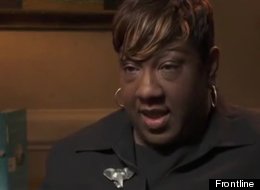
Adell Cothorne, former principal of Noyes Education Campus
Her idealism burned brightly, and so she applied for a job in Washington, largely, she told Frontline, because of her admiration for Michelle Rhee.
“I still have the Time Magazine with Michelle Rhee on the cover,” Cothorne told Frontline. “I had been following her for a while, and I admired what I saw on the media and the news. And so to have the opportunity to dialogue and sit across from her and then have her say to me, you know, ‘It’s not a matter of when you’re coming to D.C., but where I’m going to put you,’ that was absolute confirmation for me. And I was over the top.”
Rhee installed Cothorne as principal of Noyes Education Campus, a ‘Blue Ribbon’ school that had achieved remarkable gains on the DC-CAS in previous years. In October Cothorne met again with the Chancellor, one-on-one, to discuss her plans for the year. (Rhee’s practice was to meet with every principal to get their written guarantees.)
She told Frontline that meeting, which took place early in school year 2010-2011. “You are to ‘goal set.’ You are to tell her, you know, ‘I will raise math scores by 5%. I will raise reading scores by 6%.’ And so, yes, she and I had that conversation. And I said to her in early October, ‘I’m very comfortable with a 6% gain in math and a 7% gain in reading.’”
JOHN MERROW: But … if you make the commitment for 6%, 7%, is it understood that if you don’t make it you are not going to be around?
ADELL COTHORNE: Yes.
JOHN MERROW: Produce or else?
ADELL COTHORNE: She– yes, she said that to me. Yes.
JOHN MERROW: She said–
ADELL COTHORNE: In a joking fashion, absolutely joking fashion, but she did say, ‘You know, Cothorne, if you don’t make this, don’t be upset if you get a pink slip.’ Those were her words to me. In a joking manner.
JOHN MERROW: Did you take it as a joke?
ADELL COTHORNE: No. (LAUGH) That’s my livelihood. No I did not.
Even as she was making that commitment, Cothorne knew she had a problem. What she had already seen in her new school did not jibe with the test scores that had been recorded. Here’s what she told Frontline:
“As any good administrator should, I visited classrooms and just made my presence known, (and) noticed a disconnect for myself and what was going on in the classroom. The level of instruction, because I’ve worked at Blue Ribbon Schools before, so the level of instruction that I know is needed for a Blue Ribbon School, I was not seeing on a daily ongoing basis. … There’s these huge disconnects. They’re struggling academically. Yet the data that I have been given is showing great gains. But what I see with my own eyes on a daily basis is not a true picture of great gains.”
I asked her to tell me more.
ADELL COTHORNE: Well, for instruction, I saw students who were struggling to read, which is absolutely what does not happen in a Blue Ribbon School. And did not coincide or line up with the data that I had been given as the new principal. I just really saw a lack of instruction across the board. There were only very few instances where I could go into a classroom and feel comfortable that instruction was going on and kids were learning. Wholesale, that was not happening at my school.
JOHN MERROW: It must’ve been upsetting.
ADELL COTHORNE: It was upsetting and it was a little nerve-wracking because I knew (LAUGH) it was my responsibility to raise the achievement of that school.
Her predecessor, Wayne Ryan had led Noyes with great success. In fact, Rhee had promoted him to her central office largely because of his school’s success on the DC-CAS. In 2007, for example, only 44.14% of Noyes’ students had scored at a proficient level in reading, but under Ryan’s leadership that number nearly doubled, to 84.21%, in just two years. Math scores had also nearly doubled, from 34.24% to 62.79.
What Cothorne did not know was that an awful lot of answers had been changed from ‘wrong’ to right,’ on DC-CAS answer sheets from Noyes–and in nearly half of Rhee’s other schools. At Noyes 75% of the classrooms were flagged for high erasure rates. (This problem began in Rhee’s first year, and she learned of it early in her second year. She had been urged to investigate the 2007-2008 erasures but did not, as the film details.)
Cothorne told Frontline that she inadvertently discovered a possible explanation for the discrepancy between the high test scores and the students’ daily performance: Adults were changing answers on the tests. She had stayed late one night and heard noises coming from one classroom.
“So I walked into the room and I saw three staff members. There were test books everywhere, over 200 test books spread out on desks, spread out on tables. One staff member was sitting at a desk and had an eraser. And then there were two other staff members at a round table and they had test books out in front of them.
And one staff member said to me, in a light-hearted sort of way, ‘Oh, Principal, I can’t believe this kid drew a spider on the test and I have to erase it.’ … That was a little strange to me. I mean, the whole situation of all of these test books, over 200 test books being spread out in this room after school hours with three staff members. It’s not the way a testing situation is supposed to happen.”
This was not an isolated incident, Cothorne told Frontline.
JOHN MERROW: Were there any other indications?
ADELL COTHORNE: Yes.
JOHN MERROW: Of– that– teachers or staff members were behaving inappropriately on testing situations?
ADELL COTHORNE: Oh, in testing situations. Yes. … I personally walked into two different classrooms and saw two separate teachers giving instruction, trying to frontload students with information while test books are open and out. So I saw that with my own eyes.
That created a crisis for Cothorne. She felt compelled to report the incident, but her immediate supervisor was Wayne Ryan, her predecessor at Noyes. How could she call him up and accuse his former colleagues of erasing answers, without implying that he may have been part of the scheme? In the end, she told Frontline, she called someone else, who, she says, told her ‘not to worry’ but that was the last she heard from him.
She also told Frontline that one administrator summoned her to his office. She would not reveal his identity but told Frontlne about the conversation.
ADELL COTHORNE: When I was meeting with this higher up– the statement was made to me, ‘You don’t respect the legacy that has been built at Noyes.’ Once again, I processed, and looked at the person and said, ‘Could you repeat that?’ The person again moved closer and said, ‘You don’t respect the legacy that has been built at Noyes.’ And I answered with, ‘You know, I thought I was doing a very good job of looking at instruction and giving support.’ And the person just kind of smirked and set back.
JOHN MERROW: And how did you interpret that?
ADELL COTHORNE: “Be quiet.” That was my interpretation.
(Cothorne would not tell Frontline the name of that administrator, but in court documents that were unsealed the day before our broadcast she names Wayne Ryan as the individual. He was, of course, her predecessor at Noyes and the person she reported to directly at DCPS. Back in May 2011, Cothorne filed a ‘whistleblower’ action with the US Department of Education alleging widespread cheating and, therefore, fraudulent awards of federal funding. However, on the afternoon before our broadcast the Department of Education’s Inspector General reported that she had not found cheating by adults and therefore the Department of Justice would not pursue Cothorne’s case. Her full complaint can be found here (.pdf). In it she names the DCPS officials she says she spoke to. We have not be able to contact those men, and DCPS claims it has no records of phone calls from Cothorne. Cothorne’s attorney says that one call was made on Cothorne’s cell phone and that she has supporting documentation.)
At Noyes, however, she was in charge of the building itself. I asked her to talk about the coming DC-CAS. Here’s our conversation:
JOHN MERROW: You, as principal of the school, had something to say about the DC-CAS and security. And did you do anything to make sure that DC-CAS would be a secure test?
ADELL COTHORNE: Yes. So I did speak with downtown, and– on a regular basis, after I witnessed what I saw earlier in the year, I had ongoing conversations with downtown. “Don’t forget, when DC-CAS comes around, I need extra, you know, monitors. I need some other people besides my staff in the building to ensure that everything is okay.”
And at that point, downtown was more willing to help because the USA Today article had come out, and so Noyes had gotten lots of publicity about an erasure scandal. So when CAS came around in 2011, I did have two extra people from downtown to help monitor to– the test, and then I had another two extra people who helped with, you know, having the test checked in to make sure all the tests came in. We had locks changed on doors so that myself and my assistant principal were the only two people that had the key to the room to get in to testing. No one– the test coordinator did not have it. No one else had the keys.
JOHN MERROW: So are you convinced that that DC-CAS in the spring of your year there, that that was a secure test?
ADELL COTHORNE: I would honestly say that was a secure test.
JOHN MERROW: So you– you’re certain there were no erasures on that test?
ADELL COTHORNE: Now, I cannot be certain because I did not stay at the school 24 hours (LAUGH) a day. But while I was there, and what I saw, I do think it was a secure test.
With heightened security, Noyes’ DC-CAS scores dropped 52 points in reading (from 84.21% in 2009 to 32.40%) and 34 points in math (from 62.79% to 28.17%). In fact, in 2010-2011 Noyes performed below its 2007, pre-Rhee, level.
JOHN MERROW: How do you explain the drop?
ADELL COTHORNE: Those were the true test scores.
JOHN MERROW: I’m sorry?
ADELL COTHORNE: Those were the true test scores, in my opinion. Those were what the students in that school actually were able to produce.
Take note, readers. The decline at Noyes was not an exception among ‘high erasure’ schools. At the 14 schools with erasure rates of 50% or higher, scores declined at 12, often precipitously, after security was tightened. For example, reading scores at Aiton fell from 58.43% in 2007-2008 to 20.80%; in math from 57.87% to 16%. Reading scores at Raymond went from 70% to 42.44%, while its math score dropped from 68% to 45.71%.
By the time the 2010-2011 DC-CAS was administered, everyone knew of the widespread erasures, thanks to USA Today’s brilliant and thorough investigation. Rhee was gone by then, but, under public pressure, Rhee’s successor asked DC’s Inspector General to investigate. He began at Noyes, where he had little success. Cothorne told Frontline, “At first, they tried to interview staff members after school, but then staff members would find a reason not to be interviewed.”
JOHN MERROW: Why would teachers play cat and mouse?
ADELL COTHORNE: That would be speculation, but I guess they had something that they didn’t want to be forthcoming.
Of course, Cothorne expected to be questioned. After all, she had filed a complaint, and Noyes was the epicenter of the story.
JOHN MERROW: Were you interviewed?
ADELL COTHORNE: No, I was not.
JOHN MERROW: Why weren’t you interviewed?
ADELL COTHORNE: Again, my speculation, they didn’t want to hear what I had to say.
The Inspector General spent 17 months but investigated only one school, Noyes. Oddly, he did not examine data from 2007-2008, the year with the largest number of erasures but looked only at Rhee’s second and third years. At Noyes, the IG finally managed to interview 32 school personnel–but not Cothorne–and 23 parents. He reported finding a number of problems with test security but on the issue of Noyes personnel erasing answer sheets, “investigators found no evidence to corroborate these allegations.”
The Inspector General would not agree to an interview with Frontline.
Linda Mathews, the lawyer/journalist who supervised the USA Today investigation, told Frontline that , if one of her reporters had submitted a report like the one compiled by DC’s Inspector General, “I’d fire him on the spot.”
I asked Cothorne if she understood why an administrator or teacher might be tempted to cheat?
ADELL COTHORNE: Absolutely.
JOHN MERROW: Explain.
ADELL COTHORNE: Pressure. There’s pressure from central office to raise test scores. And that pressure is given to principals. And it is very clearly explained to you, not only in D.C., but many other school systems, your job is tied to test scores. Increase test scores. Period.
JOHN MERROW: Did you think there were people who, you know, outside of school, above the school, who knew something was wrong and maybe didn’t want to know?
ADELL COTHORNE: Not that they didn’t want to know, they wanted to keep their jobs. So I think that they knew, and, you know, because of the economic times that we’re in, decided to go along.
JOHN MERROW: Do you think that was widespread?
ADELL COTHORNE: In my opinion, yes.
I ask you to pay special attention to the next section of this piece.
Playing Devil’s Advocate, I suggested that changing a few answers was a victimless crime. She nearly jumped from her chair.
ADELL COTHORNE: No, it’s not a victimless crime. There are many victims. There are thousands of victims. It’s the students that are the victims.
JOHN MERROW: How?
ADELL COTHORNE: Someone is putting forth a picture that you are able to do something that you have no capability of doing. And so you keep moving to these different levels and the next person’s saying, “Oh, Janie can read on a fifth grade level and she can do fifth grade math.”
And Janie gets into your sixth grade middle school class, Janie can’t read, ‘See the dog run down the street.’ Janie can’t do the math. And so Janie becomes frustrated, because you are putting these sixth grade expectations on her and she has first grade ability. So then what happens to Janie? She waits her time, and when she’s 16 she’s out.
Although Cothorne became disillusioned with Michelle Rhee, she suggested that the problem went beyond the Chancellor. To Cothorne, Rhee was swept up in the national obsession with test scores everywhere, created by the 2001 federal No Child Left Behind law.
She described it in these words: “(I)nstruction shuts down in February because you have to do test prep from February until the test. So instruction in many districts was already shaky in the beginning, and now you’re basically shutting down all instruction in February to do all of this test prep. Because for many administrators and many school districts, it’s as important to make sure that kid knows how to take the test than it is, ‘Did they truly learn the content?’ “
Because Cothorne is also the mother of a young child, she also sees education from a parent’s perspective. She talked about that in our interview.
ADELL COTHORNE: My frustration as a parent is that education as a whole has lost the ability of students to be natural learners. No Child Left Behind has put in the caveat that every kid must get it by Tuesday at 2:00, and if you have an IEP, we’ll give you until 2:15. But at 2:15 we’re moving on.
And you’ve got to get it. So children who need a little more processing time, children who may be able to give you the idea, but they have to write a song about it, or they have to create a picture about, (but) … when the rubber meets the road, it’s not about differentiation at the end of the day. That teacher is judged on, ‘What scores did those children get on that test?’
And that test doesn’t look at, ‘Could you sing the information?’ or ‘Could you create a poem?’ It looks at, ‘Could you write a short essay and could you bubble in the right answer?’ So that has been the focus. How do they pass that test? Not ‘Did they learn anything?’ but ‘Are they able to pass numerous tests?’ Because we test all year long.
Adell Cothorne, a dedicated educator who was completing work on her doctorate, resigned her principalship and gave up a reported annual salary of roughly $130,000. She has opened up a bakery, “Cooks ‘n Cakes,” in Ellicott City, Maryland, surely a gamble in these difficult economic times.
I hope it’s a rousing success. When you stop by (to buy), please congratulate her on her courage.
 The Merrow Report