“Make America HATE Again”

The best lack all conviction, while the worst   

Are full of passionate intensity

W. B. Yeats, “The Second Coming”

Are ‘the best’ and ‘the worst’ of Yeats’s poem groups of people, or is he referring to the human condition, the internal struggle that each of us wages daily between our better angels and our lesser impulses and temptations, between good and evil? The latter reading fits the current presidential race: Democrat Kamala Harris’s platform stresses joy and positivity, while Republican Donald J. Trump has been stirring up negative passions among his supporters. And while those red hats do not say “Make America Hate Again,” they might as well, because the former president and his enablers have made it perfectly acceptable to wallow in bigotry, hatred, threats of violence, and–far too often–violence.

Don’t dismiss Trump as a clown, riffing and rambling and ranting in his interminably long rallies.  His off-the-cuff references to sharks, windmills, and Arnold Palmer’s genitalia may amuse his passionate followers, but this ‘bread and circuses’ approach should not be allowed to obscure what’s really going on, “laughing into fascism.”

November 5th–the most significant election of our lifetimes and perhaps in our nation’s history–is around the corner, and one candidate represents a clear and present danger to America and the world.

Early in October the New York Times printed a special section, “30 Days Until the Election,” to contrast and compare the views of Harris and Trump on major issues.  “Here’s what you need to know,” the Times’s subhead declared. Because I spent 41 years reporting on public education, I was disappointed to find not one word about education or schools. 

In fact, the two platforms’ positions on education could not be more different.  Project 2025, the real GOP platform, calls for the virtual abolition of public education.  Schooling becomes a private family matter, flipping centuries of tradition out the window.  More precisely, that would mean vouchers and what are known as ‘Education Savings Accounts.’  An ESA means that parents can direct their share of education funding to a private school or whatever entity the family is using to educate their children–including themselves.  Homeschooling your children?  Keep the money and spend it as you see fit to ‘educate’ your children, including trips to Disneyland and athletic equipment!  

The Democratic party still believes in what the former Republican party once believed in: Free public education with a common purpose:  to give all children the opportunity to acquire the knowledge, skills,  and tools they need to thrive as individuals and as citizens of our democracy. In short, Democrats believe in the importance of community.   Project 2025 would abolish the U.S. Department of Education completely, while the Democrats would emphasize the federal responsibility for ensuring that all children–particularly those from low income families, those with handicapping conditions, the homeless, and those whose first language is not English–are treated equitably.  Basically, Democrats believe that all kids should have access to the resources they need, regardless of which state they live in and their family, racial, or religious status.   Project 2025 would end any federal oversight and protection.  

I don’t mean to whitewash the record here, because Democrats in Washington have done as much damage to public schools as Republicans in recent years.  Barack Obama’s “Race to the Top” was just as destructive as George W. Bush’s “No Child Left Behind.”  But it seems likely that having a former high school teacher as Vice President will bring some common sense to Washington and end the federal overreach that characterized those two Administrations.

W. B. Yeats’s magnificent poem, “The Second Coming,” is painfully relevant today, because our center has not been holding, and that rough beast slouching toward Bethlehem is an unqualified, self-absorbed would-be dictator and convicted felon with clearly diminished capabilities.

Turning and turning in the widening gyre
The falcon cannot hear the falconer;
Things fall apart; the centre cannot hold;
Mere anarchy is loosed upon the world,

The blood-dimmed tide is loosed, and everywhere
The ceremony of innocence is drowned;
The best lack all conviction, while the worst
Are full of passionate intensity.

Surely some revelation is at hand;
Surely the Second Coming is at hand.
The Second Coming! Hardly are those words out
When a vast image out of Spiritus Mundi
Troubles my sight: somewhere in sands of the desert
A shape with lion body and the head of a man,
A gaze blank and pitiless as the sun,
Is moving its slow thighs, while all about it
Reel shadows of the indignant desert birds.
The darkness drops again; but now I know
That twenty centuries of stony sleep
Were vexed to nightmare by a rocking cradle,
And what rough beast, its hour come round at last,
Slouches towards Bethlehem to be born?

When Yeats composed ‘The Second Coming,’ the world was in turmoil, ravaged by World War I and a flu pandemic that killed 18,000,000 people. Does that sound eerily familiar?  When we cast our ballots, will our ‘better angels’ win out over our selfish and negative impulses? Do the best of us lack all conviction, while the worst of us are full of passionate intensity?  

We will find out on November 5th.

BEWARE ‘THE SCIENCE OF READING’

“The Science of Reading” is a real thing, so real that it’s required by law in schools in 40 states and the District of Columbia.  They have been ordered by politicians to adopt what is known as the “Science of Reading,” which mandates ‘evidence-based’ reading instruction, often in the hopes that test scores will improve. (The three states I have lived in in recent years–Massachusetts, New York, and California–have resisted the pressure to jump on this bandwagon, I’m happy to say.)

While this bandwagon has been picking up steam, something unfortunate has been happening: Our kids are reading for pleasure less and less.  For example, only 17 percent of 13-year-olds say they read almost daily for fun, compared to 27 percent in 2012 and 35 percent in 1984. That’s a huge dropoff. 

While we know that correlation is not necessarily causation, could those two developments be connected?  

Let’s start with ‘The Science of Reading.”  Here’s how the newspaper Education Week explains it (with my emphasis added to some words I want you to pay special attention to):  “In a science of reading framework, teachers start by teaching beginning readers the foundations of language in a structured progression—like how individual letters represent sounds, and how those sounds combine to make words. 

That’s Phonics, sounding out words.  In other words, schools and teachers are required by law to teach kids that letters make sounds and, by implication, that they can trust those sounds….

Makes sense, if reading is in fact a science…..

Hold on for a minute, please!  Very often we cannot trust the sounds,  because our language, English, is about as unreliable and unpredictable as possible.  It breaks its own rules willy-nilly.  

My personal favorite example is these three words, which I ask you to say out loud:  Anger, Danger, Hanger.  By the rules of Phonics and the ‘science of reading,’ those three words should rhyme……

Here’s another demonstration of our English language’s weirdness and irregularity, based on a comic routine I found on YouTube a few days ago.

Say this word aloud: EAR

By the rules of Phonics, this word, BEAR, should rhyme with EAR….but it doesn’t

Now that you have learned to pronounce BEAR, it stands to reason that adding a D, making BEARD, will produce a word that is pronounced BARED.  But it’s not; it’s pronounced BEERD.

Back to the rules: EAR and HEAR rhyme, as they should, but HEARD isn’t pronounced HERE-D; instead, it’s pronounced HERD.

And if we add a T to HEAR to make HEART, we don’t get HERE-T.  No, it’s HART.

Back to hard core phonics:  By its rules,  DEAR, FEAR, HEAR, GEAR, and PEAR should rhyme….and they do, with one important exception. Let’s talk about the exception.  What if we add an L to PEAR, to make PEARL.  It should be pronounced PAIR-L, but of course it’s not.  It’s PURR-L.

I wrote about two competing approaches to teaching reading, Phonics and Whole Language (which includes teaching students to recognize some words, not just sound them out), back in January.  You can find that piece here, but below you will find my description of  how one first grade teacher gets her students interested in reading:  

That First Grade teacher often takes pages out of the Whole Language playbook to talk about words that don’t follow the rules of Phonics.  

One day she writes these sentences on the blackboard: COME HERE!  WHERE ARE THE MACHINES?

“OK, kids. On your toes now, because only one of these words follows the rules.”

She asks them to pronounce each word according to the rules they have learned. They do, pronouncing COME with a long O, WHERE with a long E, ARE with a long A, and MACHINES with a long I.  Then she pronounces them correctly, cracking up the children.

“I told you English was tricky and sneaky, but we won’t let it beat us!”

To finish the lesson, she writes HERE on the blackboard and asks the children to sound it out, which they do with ease.  Then she puts a W in front of HERE and challenges them to sound it out.  They rhyme it with HERE.  She replaces the W with T, making THERE, and again asks her students to sound it out.  WHERE and THERE, she explains, break the rules. They will have to learn to recognize them. 

My point then–and now–is that ‘The Science of Reading’ is wildly over-hyped and arguably even dangerous when reading is reduced to drilling in Phonics.  

Never forget these two truths: 1) Every child wants to be able to read because reading gives them both pleasure and power over their environment, and 2) The teaching of reading is both an ART and a SCIENCE.  That is, Phonics is necessary but not sufficient!

I worry that the fervent acolytes for “The Science of Reading” may be taking the joy out of reading, and I know that hucksters are asking school boards to buy their expensive ‘evidence-based’ blah blah blah reading programs. I fear that the focus on “The Science of Reading” may, inadvertently, be producing children who can read but do not and will not, because what they endured to achieve the status of “reader” (by passing state tests) was painful.

“Necessary But Not Sufficient”

Many schools, both public and private, are banning cellphones. Is this a good idea? Let me present three connected points and a (seemingly) logical conclusion:

  1. Nearly all teenagers–95%–are on social media like TikTok, WhatsApp and their counterparts.  One-third of teens admit to using social media “almost constantly.” 
  1. Social media is damaging our kids, according to the U.S. Surgeon General: “The types of use and content children and adolescents are exposed to pose mental health concerns. Children and adolescents who spend more than 3 hours a day on social media face double the risk of mental health problems including experiencing symptoms of depression and anxiety. This is concerning as a recent survey showed that teenagers spend an average of 3.5 hours a day on social media. And when asked about the impact of social media on their body image, 46% of adolescents aged 13-17 said social media makes them feel worse.”  A ‘national mental health emergency’ for children and adolescents was declared by the American Academy of Pediatrics back in 2021. The Kaiser Family Foundation reports that “In 2021 and 2022, 21% of adolescents reported experiencing symptoms of anxiety in the past two weeks and 17% reported experiencing symptoms of depression.”  Undoubtedly, matters have only gotten worse, as teens’ use of social media has increased.

How does it hurt our kids? Let me count the ways:

  • Social media exposes young people to “extreme, inappropriate content.” 
  • Social media makes them–especially adolescent girls–feel bad about their bodies.  
  • Social media is a haven for predators. Nearly 6 in 10 girls say they’ve been contacted by strangers online “in ways that make them feel uncomfortable.”
  • Social media can overstimulate the brains in ways similar to addiction, leading to problems sleeping and difficulty paying attention.
  • Time on social media is time that is NOT spent with peers, developing relationships, learning about life’s give-and-take, what Erik Erikson calls ‘identity formation.’
  1. Teenagers access social media on their cellphones, and 95% of teenagers have their own cellphone.  These ubiquitous devices are their portal, their entry point, their lifeline to social media.  Without cellphones, teenagers have extremely limited access to social media.   Cellphones, which are ubiquitous, are the lifeline and portal to social media.

(It’s not just teens, of course.  According to the National Institutes of Health, “Mobile phone adoption in the United States is starting in late childhood and early adolescence; currently, 53% of children have a smartphone by age 11.”)

Ergo: Without cellphones, teenagers won’t be on social media, so cellphones should be banned. Without cellphones, teenagers won’t be taking 100 or more selfies to get the ‘perfect’ photo to post. They won’t be making 10-second videos for TikTok or spending hours watching cats being cute.  If they aren’t on social media, the thinking goes, they will be more social. If they aren’t communicating with a machine, they will engage in genuine personal communication.  

In fact, a growing number of public school districts and private schools have come to that conclusion. They have banned cellphones or developed policies designed to severely limit their use. 

The Washington Post reported in depth on this issue in late August, just as schools were opening.  According to the Post, at least seven of the nation’s 20 largest school districts have banned or severely restricted cell phone use. It’s not just large districts, of course.  The school district on Martha’s Vineyard, Massachusetts, where I live, requires students to put their phones into pouches when they enter the school building, and they can retrieve them at day’s end.  

Banning phones may be necessary (I think it is), but it is not sufficient, not even close.  What are adults offering in exchange? What’s the rest of this bargain?  Without some other steps, some quid pro quo, this will be perceived by most teens as heavy-handed and punitive, something being done to them against their will, something that makes school even less appealing.

Of course many kids see the ban as punitive, and why wouldn’t they?  When adults try to reassure them by saying, “Trust us. This is for your own good,” that only confirms their suspicions.  This is being done to them–and so they are going to devote a lot of energy to beating the ban.

Unfortunately, schools and the adults who run them are too often reactive, when thoughtful proactive behavior is called for. Instead of simply banning phones, the adults ought to be trying to get young people to want to come to school regularly, not simply ‘to attend school.’  To do that, schools (with or without cellphones) need to be interesting, challenging, and safe

Let me suggest four specific steps that should, I believe, accompany the cellphone ban:  

1) Restore the full range of extra-curricular opportunities–because most kids come to school so they can do interesting stuff with their friends!  

2) Homeroom should become an extended period, not just a quick five minutes when attendance is taken. Make daily homeroom a pressure-free time when students–without phones to distract them–can catch up with friends, forge new relationships, finish homework, or even take naps.  “Home” is the operative word here.  For most high school and middle school students, “Homeroom” is the equivalent of the starting blocks in a track meet. They touch base, listen to (or maybe ignore) morning announcements, and, when the bell sounds, dash off to class. In truth, “Homeroom” matters to school administrators only because it gives them a head count, but it’s a meaningless perfunctory exercise for kids.  For them, “Homeroom” is just a room, about as far from actually being a home as one can imagine.

That could change. America’s teenagers desperately need more “Home” in their lives, more opportunities to connect with others, more moments that tell them they matter. The rigidity of today’s high-pressure school schedules makes matters worse, not better. 

The simple—not easy, but simple–fix is to make “Homeroom” more of a HOME, not just another room.  Some teachers will have to be convinced that this new time period is an opportunity for them to expand their own professional repertoire of skills to include their students’ social and emotional growth. The challenge may be to train teachers to listen and not react, in order to allow young people to identify and share their feelings. NewsWeek magazine reports that Tacoma, Washington, schools are doing this, training not only teachers but also parents and school bus drivers.

In each of these new extended Homerooms,  teachers and their students will have to work together to figure out how they want to use this time. Some students may want to finish homework, or sleep, but the teacher could steer the conversation in the direction of “team building.”  

Perhaps one day a week could be set aside for discussion of some interesting questions (“If you could meet one figure from history, who would it be, and why?”), even trivial ones (“What questions would you like to ask Taylor Swift?”). 

Ideally “Homeroom” will turn into a safe space where students can learn to share and will agree that what’s shared there stays there. No bullying allowed.  

3) Expand course offerings to include some college classes and vocational training opportunities. Meet kids where they are, not where you think they should be.  

4) Work harder to make schools safe in three vital ways: physically, emotionally, and intellectuallyEmotional safety means that bullying and cyber-bullying are not tolerated.  Intellectually safe schools celebrate curiosity.  In these schools, adults encourage students to admit when they do not understand or are confused, often by modeling that behavior. Intellectually safe schools don’t treat kids as numbers but as growing and changing individuals.  (And young people who are treated with respect are unlikely to bring their dad’s AK-47 to school.)

Without cellphones as a crutch and given a more stimulating environment, most young people will be inclined to engage with each other. With adult guidance, they can explore new ideas, share curiosities, make plans, and so forth.  They can learn that there is life without cellphones.  

Removing cellphones creates new opportunities and challenges, but that won’t happen if adults simply enforce the ban. That is, banning cellphone in school is NECESSARY but not SUFFICIENT.

It’s time for the grownups to grow up and step up!

Appreciating Teachers

As another ‘Teacher Appreciation Week’ comes to a close, let’s ask whether classroom teaching is truly a profession. Perhaps it’s a calling. Or maybe it’s just a job…and not a very good one at that.

Whatever the case, these are tough times for teachers and teaching. Here’s why:

Not enough of us want to become teachers: Between 2008 and 2019, the number of students completing traditional teacher education programs in the U.S. dropped by more than a third, according to a 2022 report by the American Association of Colleges for Teacher Education. The report found that the steepest declines were in degree programs in areas with the greatest need for instructors, such as bilingual education, science, math and special education.

Too many teachers leave the classroom every year: With 3.6 million teachers in employment, roughly 288,000 leave each year. If the US had a similar attrition rate to Finland, only 108,000 teachers would leave each year. That would mean an additional 180,000 teachers for schools to choose from, according to this report.

Here’s why many of them are leaving:  According to Dr. Richard Ingersoll of the University of Pennsylvania, teacher turnover is mostly driven by dissatisfaction. Ingersoll says this dissatisfaction is a result of a lack of freedom. Teachers are micromanaged. While they are being told to differentiate and tailor to each specific child, they must also stick to a scripted curriculum. At the same time, they have no say in school-wide decisions.

And so our schools have real teacher shortages: Based on data from the states with published information, 47 states plus the District of Columbia had an estimated 286,290 teachers who were not fully certified for their teaching assignments, according to the Learning Policy Institute.

States having the most trouble filling vacancies: Illinois, Kansas, Michigan, Montana, Nevada, New Mexico, North Dakota, Oklahoma, and Rhode Island.  Not far behind are Alaska, Arizona, Colorado, Florida, Indiana, Maryland, Massachusetts, Nebraska, North Carolina, West Virginia, and Wyoming, according to data compiled by the Learning Policy Institute.

“So, are they quitting because they’re fed up with their heavy-handed union bosses?” The hostility of the question took me by surprise. I was explaining to my dinner companion, a veteran lawyer, that 40% of new teachers leave the field within five years, and right away he jumped to his anti-union conclusion disguised as a question.

No, I explained. Unions don’t seem to have anything to do with it; it’s most often related to working conditions: class size, discipline policies, and how much control and influence they have over their daily activities.

“It’s not money?” he asked, aggressively suspicious. Not according to surveys, I explained.

I described what I’d seen of a teacher’s daily work life. He interrupted, “How can it be a profession if you can’t take a leak when you need to?

While that’s not a criterion that social scientists use to define a profession, my cut-to-the-chase acquaintance might be onto something.

Can teaching be a true profession if you can’t take a bathroom break when nature calls?

When I wrote about this a while back, many teachers were upset by that comment, including Susan Graham, who wrote, “It seems to me that taking a bathroom break whenever the individual feels the urge has little to do with professionalism and a lot to do with time, context and management of workflow.  Do lawyers take a “potty break” whenever they want? I can’t remember a single episode of Law and Order where a recess was called for Jack McCoy to ‘take a leak’ or for Claire Kincaid to ‘go to the ladies room.’ Of course that’s just TV. A lawyer would tell you that they spend most of their time meeting with clients, collecting information, reviewing case history, meeting, analyzing potential outcomes, negotiating with other lawyers, and preparing presentations. The courtroom is just the tip of the iceberg. 

The problem is that there doesn’t seem to be an awareness that the time in front of the classroom is the tip of the iceberg of teaching. No, teachers don’t get to “go” whenever they need to. For one thing, teachers are expected to practice in isolation, something neither “professionals” or “knowledge workers” rarely do. Not having “enough time to pee” isn’t as much of a complaint as not having enough time to plan, to assess student work, to collaborate with colleagues, to do or read research, to make meaningful contact with parents. Teachers don’t expect to stroll out of the classroom for a potty break any more than lawyers expect to “take a leak” during the middle of cross examining a witness. What they seek is acknowledgement that teaching is highly complex work.
Whether you call us “professionals” or “knowledge workers”, what we want is enough time to do our job well; the discretion to apply the knowledge and skills we have worked to acquire; sufficient collaboration to continue to inform and improve our practice; and respect for our intention to act in the best interest of our students.”

Certainly, teachers and their supporters want teaching to be seen as a profession. They’ve won the linguistic battle. Googling ‘the teaching profession’ produced nearly 3 billion references, while ‘teaching as an occupation’ and ‘the teaching occupation’ produced only 69 million.

Social scientists have no doubt about the status of teaching.  According to Richard Ingersoll of the University of Pennsylvania, “We do not refer to teaching as a profession. It doesn’t have the characteristics of those traditional professions like medicine, academia, dentistry, law, architecture, engineering, et cetera. It doesn’t have the pay, the status, the respect, or the length of training, so from a scientific viewpoint teaching is not a profession.”  He carefully refers to teaching as an occupation, noting that it’s the largest occupation of all in the USA. And growing at a faster rate than the student population.

Jennifer Robinson, a teacher educator at Montclair State University in New Jersey, believes our familiarity with teachers and schools breeds disrespect for teaching. “We don’t treat teaching as a profession because we’ve all gone to school and think we’re experts. Most people think, ‘Oh, I could do that,’ which we would never do with doctors.”

Robinson suggests that a significant part of our population–including lots of politicians–does not trust teachers. She cites the drumbeat of criticism in the media, blaming teachers for low test scores.

A common criticism is that teachers come from the lowest rungs of our academic ladder, a charge that Ingersoll says is simply not true. “About 10% of teachers come from institutions like McAlester, Yale and Penn,” he says. “Perhaps 25% come from the lowest quartile of colleges,” meaning that close to two-thirds of teachers attend the middle ranks of our colleges and universities.

According to Ingersoll, one hallmark of a profession is longevity, sticking with the work. In that respect, teaching doesn’t make the grade. As noted above, his research indicates that at least 40% of new teachers leave the field within five years, a rate of attrition that is comparable to police work. “Teaching has far higher turnover than those traditional professions, lawyers, professors, engineers, architects, doctors and accountants,” Ingersoll reports. Nurses tend to stick around longer than teachers. Who has higher quit rates, I asked him. “Prison guards, child care workers and secretaries.”

The always thoughtful Curtis Johnson weighs in: “There are now some 75 schools where teachers are in charge, have authority over everything that counts for student and school success. At EE we called them ‘teacher-powered’ schools. In these schools, the teachers are in fact professionals, and turnover is very low.” For readers who find this interesting, check it out here.

James Noonan has a contrary view: “Harvard’s Howard Gardner may be best known for his theory of multiple intelligences, but he has spent a far larger proportion of his esteemed career studying the role of the professions in creating a more just and ethical world (see http://www.thegoodproject.org). The framework that he and his colleagues developed would suggest that teaching (in the U.S.) is not a profession, but that’s not to say that its status is inevitable or immutable. Many countries and systems of education (like Finland, as you suggest, and Ontario and Singapore and a host of others) have placed teachers on par with other professionals and they have found great success.
        … Teaching is not a profession currently, but the first step in changing that is envisioning something different and creating spaces (like the “teacher-powered” schools mentioned above) where teachers can experience what true professionalism feels like.”

Perhaps teaching is a calling? Those who teach score high on measures of empathy and concern for others and social progress, Ingersoll and others have noted. As a reporter and a parent, I have met thousands of teachers whose concern for their students was visible and admirable.

Trying to elevate the profession’s status (or arguing about it) is a waste of energy, according to Robert Runté, an associate professor of education at the University of Lethbridge in Alberta, Canada. More than 20 years ago, he wrote,

“Since one needs schools before one can have school teachers, teachers are stuck with their status as salaried employees working within large organizations. Teachers have always been and will always be subject to direction from their school board and the provincial bureaucracy. They are, to that degree at least, already proletarianized.  Consequently, the whole question of whether teaching is a profession, or can become one, is a red herring. The real issue is the degree to which teachers can resist deskilling and maintain some measure of autonomy within the school bureaucracy.”

To some, he may be going off the deep end when he asserts that the construct of ‘profession’ is a trumped-up label created to flatter workers and distinguish themselves from others.

The essay continues: “The only feature that ever really distinguished the professions from other occupations was the “professional” label itself. What we are is knowledge workers, and as such we have a responsibility to both ourselves and to the public to become reflective practitioners. As reflective practitioners we can reassert, first our ability, and then our right, to assume responsibility for the educational enterprise. We must stop worrying about unimportant issues of status and focus instead on the real and present danger of deskilling.”

When I first wrote about this, reader Susan Johnson responded: A student of history knows that professions evolve over time. There was a time when a barber could do “surgery” and a lawyer could practice after being apprenticed to another lawyer. My own grandmother ran into trouble for delivering babies without the benefit of specialized training and credentials because that practice was fairly common in her place and time.
        When teachers first formed an association, they wanted the authority to make decisions about curriculum, instruction and personnel, but were only granted the ability to bargain for salaries, benefits, and working conditions. And so, this association became a union, which will only exist as long as teachers are not the decision-makers. So it is likely true that union bosses do not want to see professional independence for teachers. However, these unions have the potential to evolve into powerful professional organizations similar to the American Medical Association.
        But change is on the horizon: teachers are starting to take control of the schools in which they teach. When schools are run by teachers who make almost all decisions regarding curriculum, instruction, selection and retention of personnel, then they will be full professionals. When the next teacher shortage hits, and the “captive women” are no longer available to teach our children, I believe districts will start to offer professional autonomy to people willing to staff the nation’s classrooms.”

“Deskilling,” a concerted effort to reduce teaching to mindless factory work, is the enemy of professionalism.  Remember that awful graphic in the film “Waiting for ‘Superman’” where the heads of students are opened up and ‘knowledge’ is poured in by teachers?  That’s how some politicians and education ‘reformers’ understand the role of schools and teachers. And how much skill does it take to pour a pitcher? Not much, and so why should we pay teachers more, or even give them job protection? Just measure how well they pour (using test scores of course), compare them to other teachers (value-added), and then get rid of the poor pourers. Bingo, education is reformed!

Teaching has taken some big hits in recent years, driven in great part by the education reform movement that argues, disingenuously, that “great teachers make all the difference.” This position allows them to ignore the very clear effects of poverty, poor nutrition, poor health and substandard housing on a child’s achievement.

Most parents are not fooled by this. Their respect for their children’s teachers and schools remains high.

So what’s to be done?  I believe that schools ought to be viewed as ‘knowledge factories’ in which the students are the workers. In this model, teachers are managers, foremen, and supervisors, and knowledge is the work product of their factory. In that model, students must be doing real work, an issue I have written about.

Here’s an excerpt from “Teaching Ain’t Brain Surgery–It’s Tougher,”  a provocative essay by Richard Hersh, a distinguished former college president and a friend:

(In the) face of an acknowledged short and long-term teacher shortage, the imperative for excellent teachers and teaching conditions is profoundly undermined by a patronizing “teaching ain’t brain surgery” mentality–the belief that anyone with an undergraduate degree can teach. Teachers in a very real sense operate on the brain too but teaching ain’t brain surgery–it’s tougher!

How are brain surgeons educated? Four years of undergraduate work, at least four arduous years of medical school, and several additional years of internships and residencies are required to master the knowledge and skills to operate on the finite topography of the brain. With such training, these superbly prepared surgeons are expected by society to operate on one anesthetized patient at a time supported by a team of doctors and nurses in the best equipped operating rooms money can buy. For this we gladly pay them handsomely.
How are teachers educated? They receive a spotty four-year undergraduate education with little clinical training. At best, an additional year for a Master’s degree is also required for professional certification. Teachers are expected by society to then enter their “operating rooms” containing 22-32 quite conscious “patients”, individually and collectively active. Often the room is poorly equipped, and rarely is help available as teachers also attempt to work wonders with the brain/mind, the psychological and emotional attributes of which are arguably as complex to master as anything a brain surgeon must learn. For this we gladly pay teachers little.

Conditions for professional service matter. Contemplate the results if our highly educated and trained brain surgeons were expected to work in the M.A.S.H. tent conditions equivalent to so many classrooms. In such an environment we would predictably see a much higher rate of failure.                                                                         

Or, consider if the roles were reversed-that brain surgeons were educated and rewarded as if teachers. It is virtually impossible to contemplate because it is hard to conceive of any of us willing to be operated on by someone with so little education or clinical training in a profession held in so much public disdain.                       

We take for granted that the current professional education, training, rewards, and working conditions for brain surgeons are necessary and appropriate for the complexity and value of the work performed. Not so obvious is that teaching well in one elementary classroom or five or six secondary school classes each day is as difficult, complex, and as important a task as brain surgery. But to do it well, to be truly a profession, teachers require exponentially more education, training, better working conditions and rewards than are currently provided. Unless and until we acknowledge this reality we will not solve the teacher shortage crisis, and school reform will inexorably fail.                                                     

To show respect for teaching and teachers, I suggest we leave the ‘profession/occupation’ argument to academics. Instead, let’s consider taking these  steps:

1) Support leaders whose big question is “How is this child intelligent?” instead of “How intelligent is this child?”

2) Elect school board members who believe in inquiry-based learning, problem solving, effective uses of technology, and deeper learning.

3) Insist on changes in the structure of schools so that teachers have time to watch each other teach and to reflect on their work. These are standard operating procedures in Finland and other countries with effective educational systems.

4) Ban cell phones so kids can focus on the present and their immediate surroundings.

5) Expand and improve extracurricular activities, because they are often the most important part of school for many students

Oh, and bathroom breaks for teachers when necessary….

So, as another Teacher Appreciation Week ends, consider the costs of continuing to under-appreciate teachers and public schools generally. We are truly eating our seed corn when we devalue public education. 

Pay attention to politics, to local, state, and national candidates. Listen to students, particularly to those who are staying away from schools.

Public schools don’t need to be more ‘rigorous,’ and anyone who says that ought to be drummed out of the public sphere. Our schools need to be more welcoming, more interesting, and more challenging, for students and for teachers.  

Guess Who’s NOT Coming to School!

American students are skipping school in record numbers, a crisis that is so acute that it became the lead story in The New York Times recently, as well as the subject of the Times’s podcast series, The Daily.   The lead story is long on anecdotes, graphs, and other data. It’s also chock full of quotes from experts, but no students are heard from. No teachers either.

Another serious problem with the reporting, in my view, is the lack of context. The reporters place the blame for the epidemic of chronic absenteeism on COVID, making no mention of three other deep-rooted causes, 1) the right wing’s long campaign against ‘government schools,’ which has helped create widespread distrust of many other public institutions; 2) a decades-long obsession with standardized testing that has made many kids feel like numbers, objects to be manipulated; and 3) a mental health crisis among adolescents, caused in part by their heightened anxiety about school shootings, that makes many kids genuinely afraid to go to school. 

Let’s start at the top. Ronald Reagan routinely referred disparagingly to public schools as ‘government schools,’ meaning, of course, that they could not be trusted.  The MAGA movement has amplified that cry, politicizing education, taking over school board meetings (and actual school boards as well), driving away qualified veteran educators, and causing would-be teachers to decide to find other lines of work.  Schools that ban books and restrict discussions are not exactly welcoming environments for young people.  

Although the trend to see students in terms of their test scores probably dates back to the 1988 publication of “A Nation at Risk,” George W. Bush and Barack Obama ramped it up, big time. In other words, Democrats and Republicans are equally responsible for the second major cause of absenteeism.  Bush’s “No Child Left Behind” and Obama’s “Race to the Top” prioritized student test scores in math and English–at the expense of almost everything else.  Most public schools either reduced or eliminated extra-curricular activities like drama, journalism, and music.  Recess and free play also went by the wayside, as did ‘non-essential’ courses like foreign languages and social studies. The message to students was clear: the school cares only about my test score, not me….so why bother?

Cause #3: Yes, COVID shut down many public schools, depriving young people of the opportunities to socialize, to get accustomed to being with others and dealing with whatever issues arose, but the rash of widely-publicized school shootings–and government’s failure to address the crisis–have created another legitimate reason for students to opt out of school.  I met recently with a high school history teacher, a 17-year veteran, who told me his students regularly practice how to respond to ‘an incursion.’ Mental health challenges are genuine, widespread, and perfectly understandable, he told me.   

The next day I met with another teacher, a young woman who is just finishing her 5th year teaching 4th grade in a charter school in Brooklyn. Students at her school have learned what to do if trouble arises. She also said absenteeism is an issue, and she’s certain that it will spike dramatically in a week or two–once the state tests are over.  Both teachers are concerned about the quality of incoming teachers–the pool of talent is smaller and less impressive.  I infer from their comments that this development is a consequence of the attacks on teaching and teachers–“Who in their right mind would want to teach today?” is the question that hung in the air.

If I were reporting this story, I would do what we did in 2012, talk to young people. This school district on the Mexican border had an abysmal dropout rate, so its new superintendent went out and found kids who had dropped out and asked what it would take to get them to come back.  More challenges, he learned, and so he created opportunities for kids to earn college credits while going to high school.  A few years later, a bunch of high school seniors received both their HS diplomas and their 2-year community college degrees.  Remarkable story, and a win-win-win for everyone. Please click on the link to see what I mean.

Adults concerned about chronic absenteeism ought to be trying to get young people to want to come to school regularly, not simply ‘to attend school.’  To do that, we need to make schools interesting, challenging, and safe.  Stop treating kids as numbers (their standardized test scores).  Stop asking “How smart are you?” and ask a different question about each child: ‘How are you smart?”  

Here are four specific steps that will bring kids back:  1) Restore the full range of extra-curricular opportunities–because most kids come to school so they can do interesting stuff with their friends!  2) Homeroom in middle and high school should become an extended period, not just a quick five minutes when attendance is taken. Make daily homeroom a pressure-free time when students can catch up with friends, forge new relationships, finish homework, or even take naps.  “Home” is the operative word here.  3) Expand course offerings to include some college classes and vocational training opportunities. 

Step number 4 deserves its own paragraph!  To end chronic absenteeism, make schools safe. The first step toward safety is to acknowledge that school safety is a 3-part concept. Students deserve schools that are physically, emotionally, and intellectually safe.  Emotional safety means that bullying and cyber-bullying are not tolerated.  Intellectually safe schools celebrate curiosity.  In these schools, adults encourage students to admit when they do not understand or are confused, often by modeling that behavior. Intellectually safe schools don’t treat kids as numbers but as growing and changing individuals.  (And young people who are treated with respect are unlikely to bring their dad’s AK-47 to school.)

More can be done to bring young people back to school, but concerned local educators can take those four steps to begin the process. 

How to Teach Children to Read

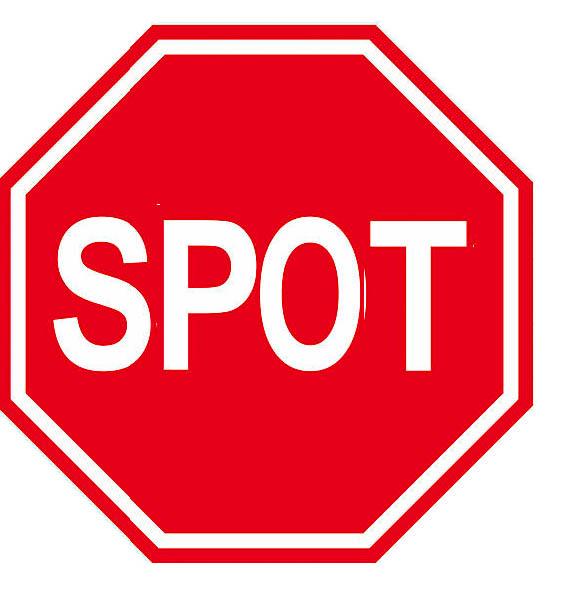
A teacher is standing in front of her class of First Graders, most of them 6-year-olds, a few age five.  She holds up a sign:   

Who can read this?”

Almost every hand goes up, and a few children call out the answer.

“That’s very good. I thought that you would know that word. Maybe you recognize the sign because you see it on lots of street corners.  It says ‘Stop,’ but now let’s take it apart, letter by letter.  The first letter, S, makes a sound.  What sound does an S make?”  

She then goes through the sounds the other three letters make, the children make the sounds, and they put the word together.  

Then she holds up a slightly different sign, one that reads STOPE. She tells them how it is pronounced and explains that, when the letter E follows a vowel, that vowel ‘says its own name.’  She tells them how to pronounce it, and then she writes several words on the blackboard: NICE, HOSE, and CASE.  The children sound them out.

That teacher is using a method known as Phonics, more formally called Phonics and Phonemic Awareness as the basis for her instruction.  Basically, it recognizes that letters have sounds associated with them, and that those sounds often change when letters are rearranged.  She’s teaching her students to decode or decipher words.

Phonics is one of two competing approaches to teaching reading.  The other method, Whole Language, stresses recognition of words rather than sounding them out, and using their context, including pictures, to decipher or guess at meaning.  The battle over how to teach reading has been going on forever.  Should children learn to take words apart, letter by letter, or should they be taught to recognize words–the ‘look-say’ approach?  

Back to that classroom:  “OK, now let’s see what happens if we move the letters around.”

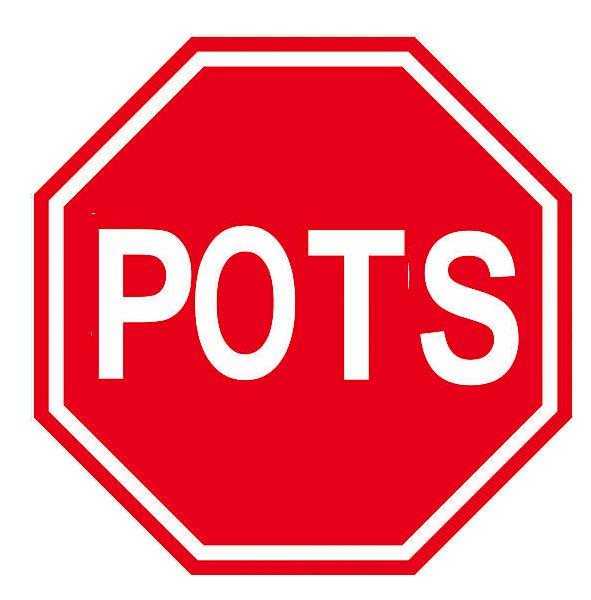
She holds up this sign:   

“Same four letters.  Let’s try to read it by sounding out each letter. Start with the first one, where I put the S at the end.  What sound does T make?”

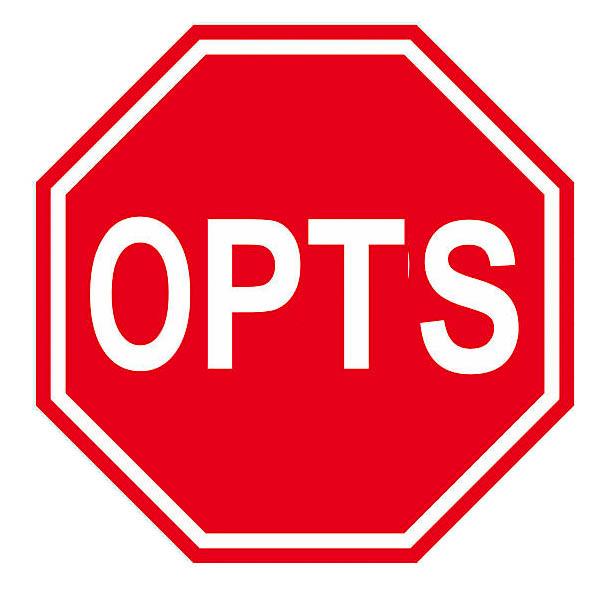
The children are delighted when she brings out four more versions of the familiar sign:   

For the next ten or fifteen minutes, the children take those words apart, then put the sounds together, eventually reading all the words.  OPTS is the most challenging because the children don’t know the word, leading to a discussion about OPTIONS, a noun, and OPT, a verb.  The teacher doesn’t move on until she’s sure everyone understands. Perhaps she challenges her students to use those words in conversation during the day, or at  home that night.

The supporters of Whole Language caricature Phonics, the method this teacher is using, as an endless series of “cat-hat-rat-sat-bat” drills, a cold and boring approach that drives children away from literature, while extolling Whole Language and its clone, Balanced Literacy, as warm, humanistic, and child-friendly.  

As its most prominent gurus, Kenneth Goodman and Yetta Goodman, argued in 1991, “Whole Language classrooms liberate pupils to try new things, to invent spellings, to experiment with new genres, to guess at meanings in their readings, to read and write imperfectly.”  

True believers in the Phonics camp point to ‘invented spellings’ and guessing at meanings as proof that Whole Language is a romantic fantasy that fails to give children the skills they will need as adults–while at the same time lying to them by telling them that they can read.  

Whole Language advocates are quick to emphasize the limitations of Phonics. English, they point out, is more idiosyncratic than most languages.  And they are correct: Just say these three words aloud: anger, ranger, and hanger. According to the rules of Phonics, they should rhyme, but they don’t. Likewise, good and mood should rhyme, but do not. Even Horace Mann, the founder of American public education, was anti-Phonics because of English’s irregularities. 

Irregularities aside, however, reading does not ‘come naturally,’ as many Whole Language devotees assume. It must be taught. For this, the research is clear:  Phonics and Phonemic Awareness are the bedrock of learning to read.  That is, they are the engine, and Whole Language is the chassis. In sum, both approaches are necessary, but the engine–Phonics–is first among equals.  And good teachers know this…

Back in the classroom, the teacher holds up another image

“Who knows what this sign says?  Can anyone use it in a sentence? (Many hands go up.)  That’s good.”

After sounding out the two letters and putting the word together, the teacher asks the children, “What happens to GO if we replace the G with S or N?”

She writes SO and NO on the blackboard, next to GO, which the children figure out almost immediately.  

“But letters can be tricky things, children. What sound does ‘O’ make in STOP? Keep that in mind.” 

She replaces the G with the letter T.  Some students automatically rhyme it with GO and SO, pronouncing it ‘TOE.’  Now she explains that in this new word, TO, the letter O has a different sound.  

“So we see that the letter O can make different sounds. English is tricky, but we will learn all the tricks.  Read this sentence: ‘SO I said NO, you must GO TO the STORE.’”

“Which letter isn’t following the rules?”

They all seem to understand that TO is the exception. She explains that they will have to learn to recognize words like TO if they want to be good readers.

“I warned you that letters were tricky!  But there are ways to figure out most letters, rules that work most of the time.  But not all the time, because English breaks a lot of its own rules.  I promise you we will have fun figuring all this out…”

The current Reading Wars escalated in 1955 when Rudolf Flesch published “Why Johnny Can’t Read,” an all-out attack on ‘Whole Language.’  The world of education ignored him. In 1969 Harvard professor Jeanne Chall’s “Learning to Read: The Great Debate” presented compelling data demonstrating the importance of Phonics, but once again the system shrugged.  

Inevitably, the crusade to dominate reading instruction became politicized.  Those who supported Phonics were most likely Republicans, conservatives, and perhaps evangelical Christians as well. Television pastor Pat Robertson made teaching Phonics central to his platform when he ran for the Republican presidential nomination in 1988, and political activist Phyllis Schlafly pushed as hard for Phonics-based instruction as she did against the Equal Rights Amendment.  “Through the late 1980s and into the 1990s, religious right organizations such as Schlafly’s Eagle Forum and Robertson’s Christian Coalition pushed legislators in Tennessee and elsewhere to enact Phonics instruction in public schools. By the early 1990s, Sing, Spell, Read and Write — the Phonics-based reading program, published by Pearson and promoted by Pat Robertson — was approved for use in a dozen states, including Tennessee, Arkansas and Mississippi,” David Waters notes in an analysis for The Institute for Public Service in Memphis. 

If, on the other hand, you believed in Whole Language, you were certainly a liberal, probably a Democrat, and perhaps even an atheist or an agnostic. 

Calling these two camps religious cults is not a stretch, because both approaches inspire devotion bordering on fanaticism….and have complete disdain for the other.  

That First Grade teacher often takes pages out of the Whole Language playbook to talk about words that don’t follow the rules of Phonics.  

One day she writes these sentences on the blackboard: COME HERE!  WHERE ARE THE MACHINES?

“OK, kids. On your toes now, because only one of these words follows the rules.”

She asks them to pronounce each word according to the rules they have learned. They do, pronouncing COME with a long O, WHERE with a long E, ARE with a long A, and MACHINES with a long I.  Then she pronounces them correctly, cracking up the children.

“I told you English was tricky and sneaky, but we won’t let it beat us!”

To finish the lesson, she writes HERE on the blackboard and asks the children to sound it out, which they do with ease.  Then she puts a W in front of HERE and challenges them to sound it out.  They rhyme it with HERE.  She replaces the W with T, making THERE, and again asks her students to sound it out.  WHERE and THERE, she explains, break the rules. They will have to learn to recognize them. 

Reading politics reached the Oval Office when George W. Bush became President. In 1999 Congress had appointed a National Reading Panel to study the issue, but the Bush Administration controlled the publication of the results. The panel of scholars issued a 449-page report promoting a balanced reading program that included but should not be dominated by  systematic instruction in Phonics. “Phonics should not become the dominant component in a reading program, neither in the amount of time devoted to it nor in the significance attached,” the report concluded.  

However, Bush’s political operatives took charge of the Report’s summary–arguably the only section anyone reads.  Their summary sent a very different message: Phonics rules!  As Waters noted, “the report’s 32-page summary, widely reported by the media and mailed to every school district in the country, focused on Phonics. It used the word ‘Phonics’ 89 times, and the word ‘balanced’ only once.”

The politicization of reading continued in President Bush’s signature legislation, the “No Child Left Behind Act of 2000.” It called for an emphasis on Phonics and ‘scientifically based reading research’ (a term found in the law and accompanying regulations more than 110 times). NCLB spawned “Reading First,” a pro-Phonics federal program that collapsed amidst financial scandals, although, predictably, the Phonics Republicans and the Whole Language Democrats differed as to who was at fault.

At some point our teacher creates a list of other rule-breaking words to learn.These so-called ‘sight words’ include who, to, are, been, because, machine, and police.  The list will grow throughout the year.

Then she opens another door. She invites the children to tell the class some words that they want to be able to read, perhaps words they have heard at home or on the street.  Words they are curious  about.  By meeting them where they are and encouraging their curiosity, she’s empowering them.  That’s a powerful motivation for young children, a strong sense of mastery.

(That teacher isn’t one person but a mashup of dozens of marvelous teachers I encountered as a reporter, all but one of them women. The man was Johnny Brinson, a First Grade teacher in Washington, DC. Among the women was my own First Grade teacher, Mrs. Peterson, whom I spent a day with when I was in my late 30’s and working for NPR.)

By all rights, teaching all First Graders to read with understanding ought to be a national priority.  Set the bar there and then devote whatever resources are necessary to help children get where they want to be.  

Sadly, we have not done that. Instead, even though 5-, 6-, and 7-year-old children are ready to learn and eager to be challenged, we have lowered the bar.  For the past 20 years or so, our stated national goal has been to have children reading at “Grade Level” when they finish Third Grade. That’s a 2-year lowering of expectations. 

So, instead of harnessing the incredible curiosity and energy of our 6-year-olds, we said to them and their teachers, “No rush. Take your time.”   That goal was set during the Administration of George W. Bush, and—surprise!!–lowering expectations has not worked.  Reading scores on the National Assessment of Educational Progress (NAEP) have flatlined: Fourth Graders in 1992 scored 217 on NAEP’s 0-500 scale, and in 2020, the Fourth Graders’ score was 215.  But rather than questioning the wisdom of the ‘low expectations’ policy, many politicians and policymakers have chosen to blame the victims–by requiring them to repeat Third Grade. Currently, 18 states and the District of Columbia require retention for students reading below proficiency by the time they complete 3rd grade. Another 10 states, including Texas, New Jersey and Maryland, allow retention but do not require it. 

The deep thinkers who decided to delay things also came up with a slogan: “In the first three grades, children learn to read; from then on, they read to learn.”  Treating reading as an end, instead of a means to an end, is dangerous nonsense!  Children learn to read so they can learn more about the world around them. Both at the same time!  Imagine if those same deep thinkers were put in charge of teaching children to walk.  They’d have kids walking in place for a year or two (learning to walk), after which they could walk around (walking to get somewhere). 

Today’s politicians and policymakers are wildly enthusiastic about what is being called ‘the Science of Reading,’ and there’s a real danger that the pendulum is swinging back to Phonics. As I read the situation, some people see the Science of Reading as a way to make money selling schools stuff that’s ‘guaranteed’ to teach children to read. This is dangerous nonsense. Reading is as much art as science, and phonics is necessary but not sufficient. Rather than spending money on packaged curriculua, states and school districts ought to devote resources to retraining elementary teachers in how to teach reading, because most teacher training institutions ignored phonics, favoring instead a word recognition approach known as Whole Language.

When the year is nearly over,  the First Grade teacher asks her children a question: ‘Who are the three or four fastest runners in the class?’   The children call out five or six different names.  ‘OK, now who are the three or four best singers in the class?’ Again names are called out.  ‘And one more question. Who are the three or four tallest kids in our class?’  More names.

‘I want to tell you why I asked those questions.’  The children look at her expectantly.  ‘Some of  you are taller than others, some of you can run faster, and some of you can sing better, but that’s just how things are turning out. It’s not because you are better. You’re just different.  The same thing is true with reading. All of you are readers, good readers, but some of you can read better than others….because you got lucky at birth, not because you are a better person.”  

(She is correct.  About 40% of children are ‘born readers,’ able to absorb the basics of Phonics and able to decode and comprehend with ease.  Everyone has to learn to read because reading is not a natural act, but some learn faster and more easily than others.)

“All of you are readers now,  all of you. And nobody can take that away from you….ever.  So please keep on reading, and writing, and thinking, and asking questions.” 


Give children a couple of years with teachers like her, and they will be ready for almost anything, because she understands that, to become effective readers, her students need to understand that letters have sounds associated with them, and that most, but clearly not all, words follow certain rules. For her, and for good teachers of reading everywhere, decoding and higher test scores are not the goal; the goals are comprehension, confidence, and enjoyment

18 Ways to Improve Public Schools

A few days ago in this space I listed the 14 ways to improve public schools that I’ve been blogging about for the past six months or so. However, reactions from thoughtful readers convinced me that I had stopped making suggestions too soon, so here’s a better list, EIGHTEEN simple steps to make our public schools more interesting, more challenging, and–yes–more productive.

1) Looping, which I expanded upon a short time later in Looping (revisited).  Looping means a teacher moving up with her or his students.  It’s quite common in other countries because it’s been shown to improve both student learning and behavior, for openers.  

2)Play. Simply put, kids need to be kids.  And for those who are concerned about learning, stop worrying because free play contributes to improved learning.

3) Practice Democracy. If we want children to function well in a democratic society as adults, they need practice.  Right now, schools are essentially undemocratic–by design. That’s the worst possible preparation for adulthood.  And giving young people more ‘agency’ over their own learning actually works!  

4) Business Cards for Teachers.  If you are a professional, you carry business cards, which you give out to people you want to stay in contact with. Teachers are professionals!  Treat them as such.  

5) Involve Outsiders. The vast majority of households do not have children in public schools,  and schools need public support.  The best advertisement for public education is the kids.  Let them strut their stuff!  

6) Multiple ‘Talent Nights.’  This is an easy way to make parents feel at home in school.  Education is a team sport, and educators need to welcome parents, not treat them as extraneous (or worse).

7) Extended Homeroom. Right now most homeroom periods are short, really just a way for administrators to take attendance.   After Covid, kids need more down time.  Extending homeroom into a full period provides that.

8) Ask the Right Question.  I’ve been pushing this for a long time, but it’s worth repeating: The most important question to ask about all children is ‘How Are They Smart?’ and not ‘How Smart Are They?’ because every child has skills, abilities, and interests that can be tapped into and developed.  

9) “Education Grand Rounds.”  Teachers need opportunities to watch each other at work so they can improve their own practice.

10) “Making Stuff”.  There’s nothing more satisfying than creating something useful.  Bring back wood shop!   

11) Make the School Safe. Schools need to be physically, emotionally, and intellectually safe.  Stop focusing only on physical safety. In intellectually safe schools, it’s cool to be curious, and it’s OK to admit ‘I don’t understand.’  In emotionally safe schools, bullying is not tolerated…and adults and student leaders step up to prevent it. 

12) Serve Your Community  This is NOT the same as ‘Community Service.’ The distinction makes all the difference.

13) Ban Cell Phones. Completely!  That’s right, ban them completely! This is a giant step toward making schools emotionally safe.

14) Acknowledge the “Opportunity Gap”.  Most school districts and policy makers focus their attention on ‘The Achievement Gap,’ but, if we close the “Opportunity Gap” (and its companion, the “Expectations Gap”), outcomes will improve across the board.  One way to do this is to adopt a proven curriculum like Core KnowledgeEL Education, or the Comer School Development Program. Another option to explore: become a Community School.

15) Change the school day’s opening time for adolescents, who need more sleep and aren’t getting it.  This important piece by Dr. Mary Carskadon and Lynne Lamberg (a reader of this blog) is both comprehensive and persuasive.  And here’s more on the issue.

16) Improve school food because better nutrition is a cost-effective way of improving students’ life chances, and because, sadly, for many kids their school meals are the only healthy ones they get. Changing the cafeteria is a good opportunity to Practice Democracy (suggestion #3).

17) Teach reading effectively by avoiding the extremes. Don’t let the ‘Reading Science’ craze push schools into going mad for phonics. Phonics is necessary but not sufficient, because our English language is complex and contradictory. (eg, why don’t ‘anger,’ ‘danger,’ and ‘hanger’ rhyme?) Here’s how to teach reading.

18) Involve classroom teachers in curriculum choices and curriculum design. But ‘involve’ does not mean that individual teachers should unilaterally decide what to teach, just that they shouldn’t be treated as cogs in a machine, told by their districts what to teach, and when to teach it.  David Steiner of the Johns Hopkins Institute for Education Policy, told Education Week that “Designing curriculum and teaching curriculum are both very, very demanding skill sets.” He went on: “When Meryl Streep decides whether she’s going to act in a movie, she doesn’t say, ‘No way, I didn’t write the script. She says, ‘Give me the best possible script so that my acting abilities can really shine.’” 

What happens next to these 18 proposals? I hope some of you will work with your local school boards to implement these changes. When candidates for school board start ranting about “DEI” or “Critical Race Theory,” I hope you will confront them, because those aren’t real issues; what matters are specific changes that can make schools more interesting, challenging, and effective.  Perhaps some of you might even run for your local school board!  

With that in mind, I have one final suggestion: Consider adopting as your guiding principle the wisdom of Aristotle: “We are what we repeatedly do. Excellence, then, is not an act but a habit.”  Applying that to schools and education suggests to me that:

   *Because we want children to be able to write well, they need to write often in their classes.  

  *Because we want them to be comfortable speaking in public, they need to practice that in school. 

  *Because we want them to work well with others as adults, they ought to be working together on projects, teams, plays, bands, et cetera, in school. 

  *Because we want them to be successful as adults in a rapidly changing world, they ought to learn at least two languages in school. 

*And so forth….

Other changes, especially reducing class size and repairing or replacing dangerously dilapidated facilities, are also called for, but these will cost real money and will require sustained political effort. None of the 18 changes I am suggesting will cost school districts big bucks, but some do involve changes in habits and schedules, which often makes adults uncomfortable.  That is, these changes are simple, but that does not mean they will be easy. I believe, however, that they are the path forward, toward schools that are effective and challenging places that children will want to be.

Improving Public Schools: A Final Thought

Back in August I began using this space to suggest simple changes that would, I believe, improve public schools significantly.  Five months and fourteen suggestions later, it’s now time to wrap this up, not because I’ve run out of ideas but because I’m hoping some readers will take this list of ideas and run with it. Perhaps some of you will work with your local school boards to implement these changes. I hope that, if candidates for school board start ranting about “DEI” or “Critical Race Theory,” you will confront them, because those aren’t real issues; what matters are specific changes that can make schools more interesting, challenging, and effective.  Perhaps some of you might even run for your local school board!  

With that in mind, I have one final suggestion: Consider adopting as your guiding principle the wisdom of Aristotle: “We are what we repeatedly do. Excellence, then, is not an act but a habit.”  Applying that to schools and education suggests to me that:

   *Because we want children to be able to write well, they need to write often in their classes.  

  *Because we want them to be comfortable speaking in public, they need to practice that in school. 

  *Because we want them to work well with others as adults, they ought to be working together on projects, teams, plays, bands, et cetera, in school. 

  *Because we want them to be successful as adults in a rapidly changing world, they ought to learn at least two languages in school. 

*And so forth….

Here, briefly, are the other suggestions: 1) Looping, which I expanded upon a short time later in Looping (revisited).  Looping means a teacher moving up with her or his students.  It’s quite common in other countries because it’s been shown to improve both student learning and behavior, for openers.  

2)Play. Simply put, kids need to be kids.  And for those who are concerned about learning, stop worrying because free play contributes to improved learning.

3) Practice Democracy. Apply Aristotle here: If we want children to function well in a democratic society, they need practice.  Right now, schools are essentially undemocratic–by design. That’s the worst possible preparation for adulthood.  And giving young people more ‘agency’ over their own learning actually works!  

4) Business Cards for Teachers.  If you are a professional, you carry business cards, which you give out to people you want to stay in contact with. Teachers are professionals!  Treat them as such.  

5) Involve Outsiders. The vast majority of households do not have children in public schools,  and schools need public support.  The best advertisement for public education is the kids.  Let them strut their stuff!  

6) Multiple ‘Talent Nights.’  This is an easy way to make parents feel at home in school.  Education is a team sport, and educators need to welcome parents, not treat them as extraneous (or worse).

7) Extended Homeroom. Right now most homeroom periods are short, really just a way for administrators to take attendance.   After Covid, kids need more down time.  Extending homeroom into a full period provides that.

8) Ask the Right Question.  I’ve been pushing this for a long time, but it’s worth repeating: The most important question to ask about all children is ‘How Are They Smart?’ and not ‘How Smart Are They?’ because every child has skills, abilities, and interests that can be tapped into and developed.  

9) “Education Grand Rounds.”  Teachers need opportunities to watch each other at work so they can improve their own practice.

10) “Making Stuff”.  There’s nothing more satisfying than creating something useful.  Bring back wood shop!   

11) Make the School Safe. Schools need to be physically, emotionally, and intellectually safe.  Stop focusing only on physical safety. In intellectually safe schools, it’s cool to be curious, and it’s OK to admit ‘I don’t understand.’  In emotionally safe schools, bullying is not tolerated…and adults and student leaders step up to prevent it. 

12) Serve Your Community  This is NOT the same as ‘Community Service.’ The distinction makes all the difference.

13) Ban Cell Phones. Completely!  That’s right, ban them completely!

14) Acknowledge the “Opportunity Gap”.  Most school districts and policy makers focus their attention on ‘The Achievement Gap,’ but, if we close the “Opportunity Gap” (and its companion, the “Expectations Gap”), outcomes will improve across the board.  One way to do this is to adopt a proven curriculum like Core Knowledge, EL Education, or the Comer School Development Program. Another option to explore: become a Community School.

Reactions from readers convinced me that I stopped making recommendations too soon, so here are three more

15) Change the opening time for adolescents, who need more sleep and aren’t getting it.  This important piece by Dr. Mary Carskadon and Lynne Lamberg (a reader of this blog) is both comprehensive and persuasive.  Here’s more on the issue.

16) Improve school food because better nutrition is a cost-effective way of improving students’ life chances, and because, sadly, for many kids their school meals are the only healthy ones they get. Changing the cafeteria is a good opportunity to Practice Democracy (suggestion #3).

17) Teach reading effectively by avoiding the extremes. Don’t let the ‘Reading Science’ craze push schools into going mad for phonics. Phonics is necessary but not sufficient, because our English language is complex and contradictory. (eg, why don’t ‘anger,’ ‘danger,’ and ‘hanger’ rhyme?)

Other changes, especially reducing class size and repairing or replacing dangerously dilapidated facilities, are also called for, but these will cost real money. None of the 17 changes I am suggesting will cost school districts big bucks, but some do involve changes in habits and schedules, which often makes adults uncomfortable.  That is, these changes are simple, but that does not mean they will be easy. I believe, however, that they are the path forward, toward schools that are effective and challenging, places that children will want to be.

Improving Public Schools (#15): Acknowledge the Opportunity Gap

Do I mean “Acknowledge the Achievement Gap,” you may be wondering?  No, that’s not a misprint.  The Opportunity Gap in public education is real, and growing. Making a commitment to closing that gap would, in time, close the Achievement Gap that so many policymakers obsess over.

The Achievement Gap is real, but it is primarily the result of gaps in both Opportunity and Expectations.  Start with Opportunities: The playing field in American public education isn’t even close to being level. Black students are twice as likely to go to high-poverty schools as their white peers, and these schools are likely to be in poor physical condition-–think peeling paint, poor ventilation, water fountains that don’t work, etc etc.  High poverty schools are harder to staff, meaning high turnover and lots of rookie teachers.  Non-white school districts get a lot less money than majority-white districts, generally more than $1500 below the national average, which translates into fewer dollars for school repairs, instructional materials, and staff salaries. Compounding this, students in high-poverty schools are more likely to have behavioral issues and educational needs that are expensive to address.  

Unsurprisingly, many in those under-resourced and decrepit schools–faculty, staff, and students– have low expectations…often a self-fulfilling prophecy.

Give students less, and then expect very little of them: that’s the reality for millions of American public school students. No wonder we have an Achievement Gap!

Educators shouldn’t be trying to close the Achievement Gap by coaching, tutoring, and testing. Those so-called ‘strategies’ are counter-productive, because they drive failing students away.  We cannot drill our way out of this situation.  

American public schools cannot provide adequate housing and health care for their students. Nor can they improve the educational background and income of their students’ parents. But public schools can–and must—attempt to close the gaps in Opportunities and Expectations. 

I believe an essential step is adopting a challenging and interesting curriculum, a program that kids will look forward to and that parents will approve of.   Three personal favorites are Core Knowledge, an extensive curriculum created by the brilliant E.D. Hirsch Jr; EL Education (formerly known as Expeditionary Learning); and the Comer School Development Program,started by another hero in the world of education and child development , Dr. James Comer of Yale.   I urge you to click those hot links to learn more.

(Over the years, a few programs prospered for a while and then faded, such as the Accelerated Schools program pioneered by the great Henry Levin of Teachers College, Columbia.)

School Boards committed to doing the right thing might also consider giving their schools the option to join the Community School movement.  They won’t be alone: close to 10,000 schools, nearly 10% of all public schools, have joined this important effort.

You are probably aware that millions of students are skipping school regularly.  Many school districts seem to be embracing ‘get tough’ truancy policies.  I suggest holding off on harsh or even gentle enforcement tactics and instead asking the kids two simple questions: “Why aren’t you coming to school?” And “What would induce you to return?”

I’m willing to wager that genuine opportunities to learn in positive and welcoming environments will bring kids back.  Commit to closing the Opportunity Gap, if you care about all children and the country’s future.

Improving Public Schools (#14): Ban Cell Phones!

A simple way to improve public schools would be to institute a complete and total ban of all cell phones and so-called smart watches.  Banning these ubiquitous devices would improve student mental health, reduce cyberbullying, and make schools safer for the most vulnerable students.

As Education Week reported in October, “A growing number of studies have linked children’s use of smartphones and social media to their deteriorating mental health. For instance, a 2023 systematic review of 50 research articles published in the journal BMC Psychology found that screen time was associated with problems in teens’ mental well-being, and that social media was linked to an increased risk of depression in girls.”

Banning cell phones is also supposed to reduce cyberbullying, which is increasingly prevalent among adolescents in schools.  It’s occurring in more than 81% of schools, according to their principals, and it’s getting worse.  In 2010, 37.7% of principals reported NO cyberbullying in their schools–none in close to 40% of our schools–but in 2016 (the most recent data), that ‘Never’ number was cut nearly in half, to 19.1 %. 

What’s not mentioned in the articles I’ve looked at, another elephant in the room, is cheating.  Smartphones and smartwatches make cheating easy as pie. Banning them is a step in the direction of academic integrity.

“Hold on,” some of you may be saying to yourself. “Didn’t I just read that nearly all public schools prohibit students from using cell phones?”

You’re correct: Here’s the most recent data, from the National Center for Education Statistics: “More than three-quarters of schools, 76.9 percent, prohibited non-academic use of cell phones or smartphones during school hours during the 2019-20 school year.”  That’s up nearly 7% from 2010.  

While this sounds impressive, don’t be misled, because the phrase ‘during school hours’ is slushy/squishy at best.  It means that for some unspecified amount of time students were not allowed to use their phones.  What most schools, and the entire state of Florida, have done is institute partial bans, followed by bizarre, almost comical steps, like magnetic pouches outside classroom doors, to enforce their rules.  

What’s not revealed is how much of the day students can use their phones, because it turns out there are loopholes, lots of them: In some schools,  students may use their phones at lunch, in the halls, between classes, in the rest rooms, in study halls, and during extracurricular activities.  Oh, and in their classrooms if the teachers say it’s OK.   

That’s a ban?  

It’s not hard to dig up anecdotal ‘evidence’ from supporters that this policy is working. For example, Brush (CO) School Superintendent Bill Wilson told Education Week, “In between classes, students are talking to students instead of everybody walking with their head down on their phone.” 

But the plural of anecdote is not data, and the data tell a very different story: Cyberbullying actually increases when schools ban cell phones!  Schools that did NOT allow their students to use cell phones had a reportedly higher rate of daily/weekly cyberbullying. 

The incidence nearly doubled!  Partial bans seem to make things worse, not better!

I can imagine the collective mind of teenagers, on learning of the ban, declaring, “So you think that keeping us from using our phones will stop us from being mean?  Good luck with that!”  

What I conclude is that half-hearted, half-way restrictions on cell phones is a half-assed public policy.

What’s required to improve public schools is a complete and total ban.  However,recall that at the top of this essay I wrote ‘simple’ and not ‘easy,’ because it will be very difficult to keep these ubiquitous devices out of schools.

For one thing, the negative step (the ban) must be accompanied by some significant positive steps that will, in time, fill the space now spent on phones.  I would ask educators and policymakers to consider some of my earlier suggested changes, including Extending the Homeroom Period (#7)Making Stuff (#11), and Serving Your Community (#13).   A longer homeroom period will give students more time to get to know each other, while the real work involved in building things and serving one’s community will provide both personal satisfaction and connections with others that no electronic device can begin to deliver.

(The argument that cellphones are an important educational tool for connecting to the internet does not hold today, because most schools either provide or allow laptop computers.   Banning cellphones and smartwatches will not restrict educational opportunities.)  

The stickiest part will be enforcing a total ban, and here schools might consider embracing step #3,  Practice Democracy.  As everyone who’s spent time in public schools must acknowledge, schools are anti-democratic by nature and design, and that’s what needs to be confronted.  That means telling the truth, by acknowledging openly to students (and the community) that cyberbullying is a real problem, that excessive use of cell phones and social media is harmful, and that some students use the devices to cheat, giving them unfair advantage over their peers.

Then educators must present students with the decision, the fait accompli–no cell phones and no smart watches on campus–and then ask them to help establish both the procedures and the penalties.  

Should the first violation result in a warning, or should the device be confiscated? If confiscated, for how long?  (Apparently many schools now simply take away the phone and give it back at the end of the day.  Day after day….the very definition of toothlessness.)  Should there be escalating penalties for repeated violations?  Should there be a student court, or at least the involvement of students in the judicial process? 

As I said, it won’t be easy, but the rewards of a total ban of smartphones and smartwatches are almost impossible to exaggerate: more open communication, real work, significant connections with others in the school and in the community, and a reduction in bullying.

(Here’s a list of all the steps, so far: LoopingPlayPractice DemocracyBusiness Cards for TeachersInvolve OutsidersMultiple ‘Talent Nights’Extended HomeroomAsk the Right Question“Education Grand Rounds”Looping (revisited)“Making Stuff”Make the School SafeServe Your Community)