As always, remember that John’s book The Influence of Teachers is for sale at Amazon.
Last week in this space, I speculated about the most influential educator in America. Although I put forth more than a half dozen names, most respondents ‘voted’ for Diane Ravitch, the historian/policymaker/apostate whose book, The Death and Life of the Great American Public School, is a best seller.
Her landslide victory is not particularly surprising, because she is a Five Star General in the ongoing education wars; her badly outgunned army includes the two teachers unions, Linda Darling-Hammond and a lot of teachers.
The opposing side includes Brian Williams and NBC’s Education Nation, Oprah Winfrey, Teach for America, Joel Klein, Michelle Rhee, charter school supporters, Waiting for Superman and a lot of powerful business and financial leaders.
Add to that list David Brooks, the influential columnist for the New York Times. That’s particularly disappointing, because the normally perceptive Brooks seems to have swallowed a questionable argument hook, line and sinker.
At stake in this struggle is nothing less than the direction of public education. (I write about this war extensively in The Influence of Teachers and won’t rehash the arguments here.)
Just a few days after Ravitch clinched the election on this blog, Brooks took her to task in harsh terms on the op-ed pages of the Times.
Here’s a sample:
She picks and chooses what studies to cite, even beyond the normal standards of people who are trying to make a point. She has come to adopt the party-line view of the most change-averse elements of the teachers’ unions: There is no education crisis. Poverty is the real issue, not bad schools. We don’t need fundamental reform; we mainly need to give teachers more money and job security.
Brooks acknowledges that Ravitch highlights a fundamental tension in education — teaching is humane, while testing is mechanistic — but then accuses her of simply wanting to eliminate testing and accountability.
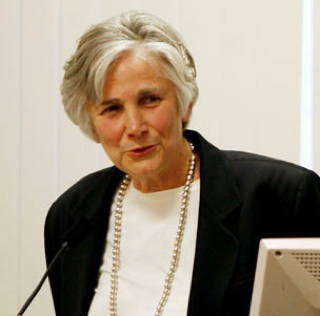
Having accused Ravitch of intellectual dishonesty, Brooks seems to walk down that same path, with the help of a foil, Whitney Tilson, whom he identifies for his readers as ‘the education blogger.’ That’s the same Whitney Tilson who was a founding member of Teach for America and who now serves on the Board of KIPP New York, the same Whitney Tilson who supports Democrats for Education Reform and who was a major player in the campaign of rumor and innuendo to discredit Linda Darling-Hammond when she was being considered for Secretary of Education. That Whitney Tilson! Even he must have been surprised to be labeled merely as ‘the education blogger.’
Brooks approvingly passes along Tilson’s observations about test-obsessed schools like KIPP (!) and the Harlem Success Schools, places where students are far more likely to participate in chess, dance and drama than do their counterparts in regular public schools.
Brooks’ money line follows:
The places where the corrosive testing incentives have had their worst effect are not in the schools associated with the reformers. They are in the schools the reformers haven’t touched. These are the mediocre schools without strong leaders and without vibrant missions.
In Brooks’ view, Ravitch is simply wrong. “Ravitch thinks the solution is to get rid of the tests,” he writes. “But that way just leads to lethargy and perpetual mediocrity. The real answer is to keep the tests and the accountability but make sure every school has a clear sense of mission, an outstanding principal and an invigorating moral culture that hits you when you walk in the door.”
Brooks’ conclusion — if a school teaches to the test, it’s the fault of the leaders, not of the test — may follow logically from his premises, but it’s a house of cards, and not just because Ravitch is being painted unfairly. The flaw lies in Brooks (or Tilson’s) failure to examine the dominant default model of public education today, which is precisely Ravitch’s point: test scores rule. Yes, inspired leaders can trump that thinking, and kids lucky enough to attend one of those schools may well emerge as more than a score.
It’s true, as Wendy Kopp of Teach for America asserts, that more winning schools are opening every year, and a body of evidence proves that strong leaders, talented teachers, a powerful sense of mission and coherent curricula like Core Knowledge make a difference. However, the evidence suggests that their success also requires superhuman effort that produces a high burnout rate among teachers and school leaders.
Is this a model for genuine and widespread reform? Let’s look at the numbers. We have about 100,000 public schools. Perhaps 5,000 or maybe even 10,000 are defying the odds. At that rate, how long will it take? Where will the thousands and thousands of inspired leaders and teachers come from?
Why do Brooks and others defend a system in which success seems to require superhuman effort? To be blunt, our ‘answer factory’ approach to education is outmoded and counter-productive in a world that technology has transformed, and continues to transform at an unimaginable rate. What is needed is a major rethinking of the structure of school — a recasting of the basic operating model.
Pitting Ravitch against Tilson makes for a readable column in the hands of a gifted writer like David Brooks. While I regret his unfair treatment of Ravitch, she has proven time and time again that she can take care of herself. What bothers me more is that Brooks and most observers are missing the larger point.
Which is this: Our public schools are the equivalent of yesterday’s pony express. Just as a faster pony express would not be sufficient to deliver the mail today, the “faster horses” that reforms like KIPP, Teach for America and charter schools represent are not in themselves adequate for our 50 million school-age children, nor will they ever be.
I have some thoughts about what truly transformed schools would look like, and I imagine you do as well. Some of these schools already exist, others perhaps only in your imagination. Please share your thoughts on what to do next, not just on how to end this counterproductive ‘education war’ but also on how to proceed positively.
I look forward to your responses.