As always, remember that John’s book The Influence of Teachers is for sale at Amazon.
I won’t be reporting from Saturday’s Save Our Schools March and Rally because my young granddaughters (and their parents) are visiting from Barcelona, but it’s likely that PBS NewsHour will have a presence there. The rally and march are being organized by teachers from across the country — and has attracted promises to attend from numerous big names in the field, as well as endorsements from Jonathan Kozol, Deborah Meier, Diane Ravitch and others. I regret missing the event, because I expect I would recognize a lot of people there. I wish everyone well.
I have a question, however. The acronym, SOS, is catchy and convenient — the internationally recognized cry for help. But what are protestors hoping to save our schools FROM? And, just as important, what are they FOR?
The March and Rally begins at noon on Saturday, July 30 at the Washington, D.C. ellipse.
I am one of those middle-of-the-road guys who is concerned about the polarization of public education. I see an ever widening gap, with “We must trust teachers” on one side and “We must verify with high stakes testing because we don’t trust teachers” on the other. I think Ronald Reagan — no hero to liberals — got it right when he said, “Trust but verify.” He was talking about the Soviet Union, but I think the concept applies to public education. How we get to that sensible middle, where we trust teachers but also have a valid and reliable way of measuring progress, is the challenge that I see facing us.
So please go to the rally ready to argue for specific changes in schools — not just ‘holistic education’ and the like, but specifics.
Here’s one: Barnett Berry of the Teacher Leadership Network suggested to me the other day that principals ought to be teaching part of the time. “Principal” was once an adjective, we both recalled, as in ‘principal teacher.’ That one step would free teachers to develop their leadership skills, a useful move in the right direction.
Here’s another: after the levees broke and effectively destroyed New Orleans’ lousy school system, the organization that was created to rebuild was pointedly called “New Schools for New Orleans,” a name designed to make the point that no one wanted to go back to the status quo. Whether you agree with the direction they’ve taken or not, the purpose was to move forward.
So, my protesting friends, on Saturday put on plenty of sunblock, wear floppy hats, drink lots of water, and please bring suggestions that will make schools better.
As always, remember that John’s book The Influence of Teachers is for sale at Amazon.
Forget cheating on tests for a minute and think about the concept of ‘teaching to the test.’ Just what does that mean? The usual line (which I have used myself) goes something like this: “It’s OK if it’s a good test,” and that may be correct. Unfortunately, most of the tests that I have seen are not ‘good’ tests.
Think about teaching students to write, and then testing their skills. Clear writing is important. Employers want to hire people who can write clearly, accurately and well — but learning to write takes time and requires rewriting and more rewriting, under the guidance of a good teacher. There are no shortcuts. However, our obsession with numbers subverts both teaching and learning. Teachers are told that their students must be able to pass bubble tests and write a lot of short so-called essays (usually one or two paragraphs!) There’s no time for reflection or rewriting.
Instead, students are drilled in the ‘constructed response’ process: write a declarative statement and then add three or four details to support a statement, such as: “I always use sun block when I go to the beach.” And so they follow the formula they’ve been given and produce something like: “I always wear sun block when I go to the beach because too much sun can cause cancer, and because too much sun will make me all wrinkled when I get old, and because cancer can kill you. My mother makes me use sun block too.”
That ‘essay’ would get a passing score because the student supported his statement in four ways. The teacher (or machine?) grading the ‘essay’ could simply count the supporting reasons. Everybody — teachers, principal, superintendent and school board — would pat themselves on the back, but is Microsoft, GE or Hilton likely to offer someone who’s been trained to write that way a job?
That’s what we are doing to our children. It’s only slightly hyperbolic to say that we are lying to our kids.
Cracking down on cheaters — which we should do — won’t fix our problem. Think about it this way: You are sitting in your living room when drops of water begin falling on your head. Clearly, you have a problem. If you move your chair, have you solved it? After all, you no longer have water falling on your head.
Tests aren't going away. But where do we go now?
Of course not, because the problem persists, although now the water is falling on your living room rug. Suppose you get a large pot and place it where it can catch the falling water? Have you solved the problem? Of course not, because you still have a leak somewhere.
You get the point. I think it’s time for those of us who are attacking bubble testing and the intense pressure to ‘produce’ to back off and ask, “Where do we go from here?”
Unfortunately, we haven’t asked and answered that question in the past. Subverting the testing system is an old story that we don’t seem to learn much from. Remember Austin, Texas, where most of the school board was implicated in test score deception? How about that small town in Connecticut with its ‘miraculous’ test score gains a few years ago? Not miracles, just plain old cheating.
Sometimes the system aids and abets the deception, as in Florida, where a loophole in the state law allowed districts to counsel low-performing students to drop out to go into GED programs. By law, the districts didn’t have to count these kids as dropouts as long as they suggested the GED alternative, no matter that no one had to follow up to see if the kids actually enrolled.
How about the so-called ‘Texas Miracle” that turned out to be the ‘Texas Mirage?’ Houston had great test scores, and Superintendent Rod Paige eventually became U.S. Secretary of Education. Then we learned that an inordinate number of low-performing 8th graders were simply being held back, often for more than one year, because high-stakes testing didn’t begin until 9th grade. Some find the seeds of No Child Left Behind in that misadventure.
Atlanta may actually be the proverbial tip of the cheating iceberg because evidence that suggests major cheating has also occurred in D.C., Pennsylvania, Florida, Houston, Baltimore, Los Angeles and elsewhere.
Some consultants, test security companies and even the test makers themselves are licking their chops right now, expecting to make a lot of money designing what they will claim will be better defenses against cheating, because ‘firewalls,’ ‘fail-safe’ steps, ‘erasure detection software’, and other ‘technical fixes’ are a big part of the conversation. In fact, Education Secretary Arne Duncan told the Atlanta Journal Constitution:
“The technical fix is very simple, and they need to put that in place. The job for a new superintendent coming in after a crisis is to rebuild public confidence with absolute integrity, transparency.”
I respectfully disagree, because cheating is not the real problem; it’s a symptom of a larger problem, and the solution is not simple. Not by a long shot.
The problem in Atlanta, in D.C., and wherever else cheating is occurring proves Campbell’s Law, which states “The more any quantitative social indicator is used for social decision-making, the more subject it will be to corruption pressures and the more apt it will be to distort and corrupt the social processes it is intended to monitor.”
Live by the test, die by the test.
We rely too heavily on the scores of relatively simple (and relatively cheap) machine-scored ‘bubble’ tests as the measure of educational accomplishment, and that invites deception, cheating and criminal behavior.
Nor is it enough to endorse “multiple measures” of achievement. It’s more complicated. We have to ask ourselves what we want young people to be able to do upon graduation and figure out how to teach and encourage those behaviors. Then — and only then — do we figure out ways to measure them.
What if we were to ask large employers like Michael Dell, Steve Ballmer of Microsoft, Carol Bartz of Yahoo, the heads of Hilton, Hyatt, Avis and Hertz, Wendy Kopp of Teach for America, Steve Jobs, Jeffrey Immelt of GE, the provosts of some major universities, top advertising agencies and so on what they look for in potential employees? What would they say?
Or maybe you hire people for your company. What do you look for?
Life is not all about work, of course, so we ought to ask what we want our youth to be: good parents, concerned citizens, informed voters, discerning consumers, and so on.
Then let’s figure out what sort of school-based experiences teach or sharpen those skills and attributes. My hunch is that group activities and project-based learning will figure prominently. I think we will be reminded of the truth of the late Ted Sizer’s observation that “Less is more.”
Tests drive public education right now. But what should be driving the enterprise are agreed-upon goals that come from the real world.
Where do we go from here? That’s up to us, isn’t it?
As always, remember that John’s book The Influence of Teachers is for sale at Amazon.
Right now I feel the need to vent, even though my rant might not move the ball forward. Next week I will pose the important question “Where do we go from here?” regarding the widespread cheating in Atlanta and apparently in a lot of other places as well, but that can wait.
I recall hearing former Secretary of State Madeleine Albright telling an audience of young girls that a special place in Hell was set aside for successful women who refused to help other women succeed.
An even hotter spot should be reserved for those adults who knowingly cheat children out of a decent education and lie to them about their achievements.
The cheaters in Atlanta, D.C., Philadelphia, Houston, Baltimore and elsewhere took advantage of the neediest and most vulnerable children and changed their scores so it would appear they had mastered material, when they in fact had not. They weren’t thinking about the kids, of course, but only about themselves and the appearance of success.
Kids were numbers, nothing more, nothing less.
The scale of unethical behavior in Atlanta is staggering: According to the report from the Georgia Bureau of Investigation, of the 56 schools investigated, 44 cheated; so did 38 principals and 178 teachers (about 80 of whom have already confessed). But the lack of integrity did not start at the school level, and it appears to the investigators that the rot went all the way to the top, to Superintendent Beverly Hall. The report says that she either knew or should have known, but the culture of the system she created put public praise of her leadership above integrity and ethics. In her regime, the report says, a culture of fear, intimidation and retaliation ruled, and any teacher who tried to blow the whistle was punished.
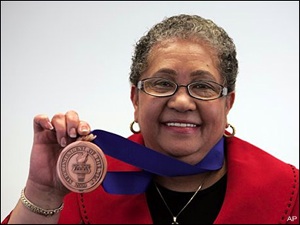
Beverly Hall displays her 2009 Superintendent of the Year medal.
Dr. Hall, who was the National Superintendent of the Year in 2009 — the highest honor given by the American Association of School Administrators — has resigned. She has apologized without admitting any wrongdoing.
Maybe she should do a Reggie Bush and give back that award, just as the former USC running back returned the Heisman Trophy — a few steps ahead of NCAA investigators.
The investigation focused on one school year, 2008-09, but the cheating must have started years earlier. It simply could not have grown so massive in just one year or two.
The report says that ‘thousands’ of children were affected but gets no more specific than that. Suppose that only 10% of students were affected; that’s about 5,000 kids. But the cheating went on for a few years, perhaps since 2001 or 2002, meaning that the cheaters stole a lot of years of opportunity from a lot of children.
And they are not just cheaters. They are also thieves.
Why did it continue undetected for so long? Probably because everyone wanted to believe in the remarkable success of low-income minority children. Closing the achievement gap has been education’s holy grail for many years, and now it’s happening right here in Atlanta. Who would want to pour cold water on that?
Any skepticism would likely have been met by skillful playing of the race card: “What, you don’t believe that poor African-American children can learn? Would you question the results if the children were white and middle class?” Michelle Rhee used that approach when people questioned the remarkable progress in Washington, D.C. and it worked there.
I told you what I think should happen to the guilty parties, and Georgia law actually provides for penalties of up to 10 years imprisonment for some offenses. But what will happen? The last cheating incident in Atlanta, about 10 years ago, produced two convictions but gentle slaps on the wrist: 40 hours of ‘community service’ in a soup kitchen, two years of probation and a fine of $1000 — the total punishment for the two offenders! That was quite a deterrent, wasn’t it?
(Ironic, isn’t it, that some of these adult thieves were responsible for making sure that students did not cheat.)
Officials from Education Secretary Arne Duncan on down are talking about ‘technical fixes’ and ‘better referees’ and closer monitoring to prevent this from happening again, but the horse is out of the barn here. And as long as test scores rule, cheating and other attempts to beat the system will continue.
And cheaters will find a way. Count on it, even if Atlanta’s cheaters go to jail, because, if the system is going to punish or even fire teachers and principals and administrators for students’ poor test scores, some are going to be tempted to get those scores up, by hook or by crook.
One does not have to be a skeptic or cynic to expect more cheating stories to emerge.
But what about the kids, the real victims? There’s no mulligan in life, and those 4th graders who didn’t master math or language arts are now 5th graders.
What should be done for them? How do we pay back the debt we owe them? I encourage you to comment here.
As always, remember that John’s book The Influence of Teachers is for sale at Amazon.
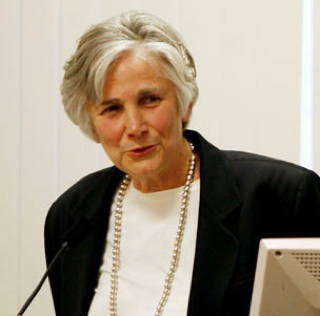
Last week in this space, I speculated about the most influential educator in America. Although I put forth more than a half dozen names, most respondents ‘voted’ for Diane Ravitch, the historian/policymaker/apostate whose book, The Death and Life of the Great American Public School, is a best seller.
Her landslide victory is not particularly surprising, because she is a Five Star General in the ongoing education wars; her badly outgunned army includes the two teachers unions, Linda Darling-Hammond and a lot of teachers.
The opposing side includes Brian Williams and NBC’s Education Nation, Oprah Winfrey, Teach for America, Joel Klein, Michelle Rhee, charter school supporters, Waiting for Superman and a lot of powerful business and financial leaders.
Add to that list David Brooks, the influential columnist for the New York Times. That’s particularly disappointing, because the normally perceptive Brooks seems to have swallowed a questionable argument hook, line and sinker.
At stake in this struggle is nothing less than the direction of public education. (I write about this war extensively in The Influence of Teachers and won’t rehash the arguments here.)
Just a few days after Ravitch clinched the election on this blog, Brooks took her to task in harsh terms on the op-ed pages of the Times.
Here’s a sample:
She picks and chooses what studies to cite, even beyond the normal standards of people who are trying to make a point. She has come to adopt the party-line view of the most change-averse elements of the teachers’ unions: There is no education crisis. Poverty is the real issue, not bad schools. We don’t need fundamental reform; we mainly need to give teachers more money and job security.
Brooks acknowledges that Ravitch highlights a fundamental tension in education — teaching is humane, while testing is mechanistic — but then accuses her of simply wanting to eliminate testing and accountability.
Is Diane Ravitch vs. David Brooks truly good for the future of public education?
Having accused Ravitch of intellectual dishonesty, Brooks seems to walk down that same path, with the help of a foil, Whitney Tilson, whom he identifies for his readers as ‘the education blogger.’ That’s the same Whitney Tilson who was a founding member of Teach for America and who now serves on the Board of KIPP New York, the same Whitney Tilson who supports Democrats for Education Reform and who was a major player in the campaign of rumor and innuendo to discredit Linda Darling-Hammond when she was being considered for Secretary of Education. That Whitney Tilson! Even he must have been surprised to be labeled merely as ‘the education blogger.’
Brooks approvingly passes along Tilson’s observations about test-obsessed schools like KIPP (!) and the Harlem Success Schools, places where students are far more likely to participate in chess, dance and drama than do their counterparts in regular public schools.
Brooks’ money line follows:
The places where the corrosive testing incentives have had their worst effect are not in the schools associated with the reformers. They are in the schools the reformers haven’t touched. These are the mediocre schools without strong leaders and without vibrant missions.
In Brooks’ view, Ravitch is simply wrong. “Ravitch thinks the solution is to get rid of the tests,” he writes. “But that way just leads to lethargy and perpetual mediocrity. The real answer is to keep the tests and the accountability but make sure every school has a clear sense of mission, an outstanding principal and an invigorating moral culture that hits you when you walk in the door.”
Brooks’ conclusion — if a school teaches to the test, it’s the fault of the leaders, not of the test — may follow logically from his premises, but it’s a house of cards, and not just because Ravitch is being painted unfairly. The flaw lies in Brooks (or Tilson’s) failure to examine the dominant default model of public education today, which is precisely Ravitch’s point: test scores rule. Yes, inspired leaders can trump that thinking, and kids lucky enough to attend one of those schools may well emerge as more than a score.
It’s true, as Wendy Kopp of Teach for America asserts, that more winning schools are opening every year, and a body of evidence proves that strong leaders, talented teachers, a powerful sense of mission and coherent curricula like Core Knowledge make a difference. However, the evidence suggests that their success also requires superhuman effort that produces a high burnout rate among teachers and school leaders.
Is this a model for genuine and widespread reform? Let’s look at the numbers. We have about 100,000 public schools. Perhaps 5,000 or maybe even 10,000 are defying the odds. At that rate, how long will it take? Where will the thousands and thousands of inspired leaders and teachers come from?
Why do Brooks and others defend a system in which success seems to require superhuman effort? To be blunt, our ‘answer factory’ approach to education is outmoded and counter-productive in a world that technology has transformed, and continues to transform at an unimaginable rate. What is needed is a major rethinking of the structure of school — a recasting of the basic operating model.
Pitting Ravitch against Tilson makes for a readable column in the hands of a gifted writer like David Brooks. While I regret his unfair treatment of Ravitch, she has proven time and time again that she can take care of herself. What bothers me more is that Brooks and most observers are missing the larger point.
Which is this: Our public schools are the equivalent of yesterday’s pony express. Just as a faster pony express would not be sufficient to deliver the mail today, the “faster horses” that reforms like KIPP, Teach for America and charter schools represent are not in themselves adequate for our 50 million school-age children, nor will they ever be.
I have some thoughts about what truly transformed schools would look like, and I imagine you do as well. Some of these schools already exist, others perhaps only in your imagination. Please share your thoughts on what to do next, not just on how to end this counterproductive ‘education war’ but also on how to proceed positively.


 The Merrow Report