A teacher is standing in front of her class of First Graders, most of them 6-year-olds, a few age five. She holds up a sign:

“Who can read this?”
Almost every hand goes up, and a few children call out the answer.
“That’s very good. I thought that you would know that word. Maybe you recognize the sign because you see it on lots of street corners. It says ‘Stop,’ but now let’s take it apart, letter by letter. The first letter, S, makes a sound. What sound does an S make?”
She then goes through the sounds the other three letters make, the children make the sounds, and they put the word together.
Then she holds up a slightly different sign, one that reads STOPE. She tells them how it is pronounced and explains that, when the letter E follows a vowel, that vowel ‘says its own name.’ She tells them how to pronounce it, and then she writes several words on the blackboard: NICE, HOSE, and CASE. The children sound them out.
That teacher is using a method known as Phonics, more formally called Phonics and Phonemic Awareness as the basis for her instruction. Basically, it recognizes that letters have sounds associated with them, and that those sounds often change when letters are rearranged. She’s teaching her students to decode or decipher words.
Phonics is one of two competing approaches to teaching reading. The other method, Whole Language, stresses recognition of words rather than sounding them out, and using their context, including pictures, to decipher or guess at meaning. The battle over how to teach reading has been going on forever. Should children learn to take words apart, letter by letter, or should they be taught to recognize words–the ‘look-say’ approach?
Back to that classroom: “OK, now let’s see what happens if we move the letters around.”
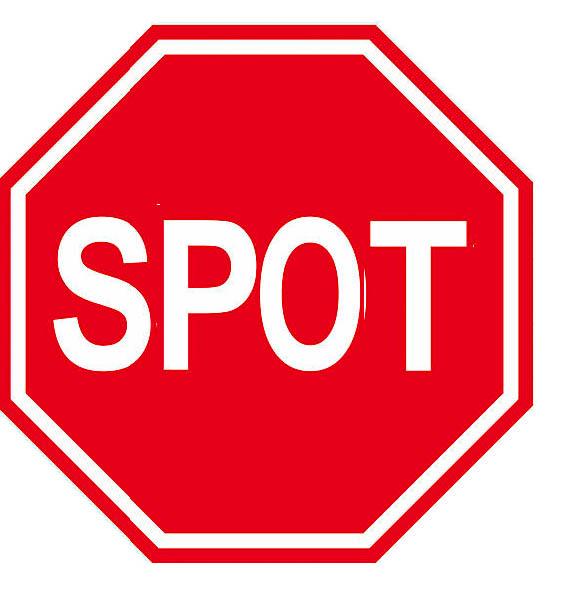
She holds up this sign:

“Same four letters. Let’s try to read it by sounding out each letter. Start with the first one, where I put the S at the end. What sound does T make?”
The children are delighted when she brings out four more versions of the familiar sign:


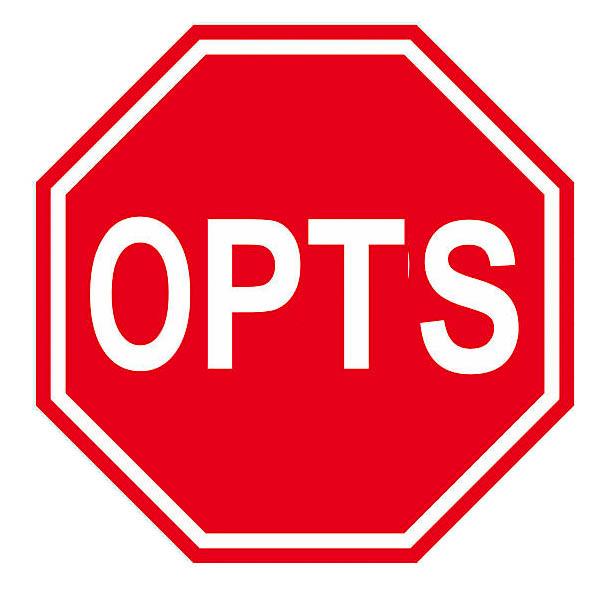
For the next ten or fifteen minutes, the children take those words apart, then put the sounds together, eventually reading all the words. OPTS is the most challenging because the children don’t know the word, leading to a discussion about OPTIONS, a noun, and OPT, a verb. The teacher doesn’t move on until she’s sure everyone understands. Perhaps she challenges her students to use those words in conversation during the day, or at home that night.
The supporters of Whole Language caricature Phonics, the method this teacher is using, as an endless series of “cat-hat-rat-sat-bat” drills, a cold and boring approach that drives children away from literature, while extolling Whole Language and its clone, Balanced Literacy, as warm, humanistic, and child-friendly.
As its most prominent gurus, Kenneth Goodman and Yetta Goodman, argued in 1991, “Whole Language classrooms liberate pupils to try new things, to invent spellings, to experiment with new genres, to guess at meanings in their readings, to read and write imperfectly.”
True believers in the Phonics camp point to ‘invented spellings’ and guessing at meanings as proof that Whole Language is a romantic fantasy that fails to give children the skills they will need as adults–while at the same time lying to them by telling them that they can read.
Whole Language advocates are quick to emphasize the limitations of Phonics. English, they point out, is more idiosyncratic than most languages. And they are correct: Just say these three words aloud: anger, ranger, and hanger. According to the rules of Phonics, they should rhyme, but they don’t. Likewise, good and mood should rhyme, but do not. Even Horace Mann, the founder of American public education, was anti-Phonics because of English’s irregularities.
Irregularities aside, however, reading does not ‘come naturally,’ as many Whole Language devotees assume. It must be taught. For this, the research is clear: Phonics and Phonemic Awareness are the bedrock of learning to read. That is, they are the engine, and Whole Language is the chassis. In sum, both approaches are necessary, but the engine–Phonics–is first among equals. And good teachers know this…
Back in the classroom, the teacher holds up another image:

“Who knows what this sign says? Can anyone use it in a sentence? (Many hands go up.) That’s good.”
After sounding out the two letters and putting the word together, the teacher asks the children, “What happens to GO if we replace the G with S or N?”
She writes SO and NO on the blackboard, next to GO, which the children figure out almost immediately.
“But letters can be tricky things, children. What sound does ‘O’ make in STOP? Keep that in mind.”
She replaces the G with the letter T. Some students automatically rhyme it with GO and SO, pronouncing it ‘TOE.’ Now she explains that in this new word, TO, the letter O has a different sound.
“So we see that the letter O can make different sounds. English is tricky, but we will learn all the tricks. Read this sentence: ‘SO I said NO, you must GO TO the STORE.’”
“Which letter isn’t following the rules?”
They all seem to understand that TO is the exception. She explains that they will have to learn to recognize words like TO if they want to be good readers.
“I warned you that letters were tricky! But there are ways to figure out most letters, rules that work most of the time. But not all the time, because English breaks a lot of its own rules. I promise you we will have fun figuring all this out…”
The current Reading Wars escalated in 1955 when Rudolf Flesch published “Why Johnny Can’t Read,” an all-out attack on ‘Whole Language.’ The world of education ignored him. In 1969 Harvard professor Jeanne Chall’s “Learning to Read: The Great Debate” presented compelling data demonstrating the importance of Phonics, but once again the system shrugged.
Inevitably, the crusade to dominate reading instruction became politicized. Those who supported Phonics were most likely Republicans, conservatives, and perhaps evangelical Christians as well. Television pastor Pat Robertson made teaching Phonics central to his platform when he ran for the Republican presidential nomination in 1988, and political activist Phyllis Schlafly pushed as hard for Phonics-based instruction as she did against the Equal Rights Amendment. “Through the late 1980s and into the 1990s, religious right organizations such as Schlafly’s Eagle Forum and Robertson’s Christian Coalition pushed legislators in Tennessee and elsewhere to enact Phonics instruction in public schools. By the early 1990s, Sing, Spell, Read and Write — the Phonics-based reading program, published by Pearson and promoted by Pat Robertson — was approved for use in a dozen states, including Tennessee, Arkansas and Mississippi,” David Waters notes in an analysis for The Institute for Public Service in Memphis.
If, on the other hand, you believed in Whole Language, you were certainly a liberal, probably a Democrat, and perhaps even an atheist or an agnostic.
Calling these two camps religious cults is not a stretch, because both approaches inspire devotion bordering on fanaticism….and have complete disdain for the other.
That First Grade teacher often takes pages out of the Whole Language playbook to talk about words that don’t follow the rules of Phonics.
One day she writes these sentences on the blackboard: COME HERE! WHERE ARE THE MACHINES?
“OK, kids. On your toes now, because only one of these words follows the rules.”
She asks them to pronounce each word according to the rules they have learned. They do, pronouncing COME with a long O, WHERE with a long E, ARE with a long A, and MACHINES with a long I. Then she pronounces them correctly, cracking up the children.
“I told you English was tricky and sneaky, but we won’t let it beat us!”
To finish the lesson, she writes HERE on the blackboard and asks the children to sound it out, which they do with ease. Then she puts a W in front of HERE and challenges them to sound it out. They rhyme it with HERE. She replaces the W with T, making THERE, and again asks her students to sound it out. WHERE and THERE, she explains, break the rules. They will have to learn to recognize them.
Reading politics reached the Oval Office when George W. Bush became President. In 1999 Congress had appointed a National Reading Panel to study the issue, but the Bush Administration controlled the publication of the results. The panel of scholars issued a 449-page report promoting a balanced reading program that included but should not be dominated by systematic instruction in Phonics. “Phonics should not become the dominant component in a reading program, neither in the amount of time devoted to it nor in the significance attached,” the report concluded.
However, Bush’s political operatives took charge of the Report’s summary–arguably the only section anyone reads. Their summary sent a very different message: Phonics rules! As Waters noted, “the report’s 32-page summary, widely reported by the media and mailed to every school district in the country, focused on Phonics. It used the word ‘Phonics’ 89 times, and the word ‘balanced’ only once.”
The politicization of reading continued in President Bush’s signature legislation, the “No Child Left Behind Act of 2000.” It called for an emphasis on Phonics and ‘scientifically based reading research’ (a term found in the law and accompanying regulations more than 110 times). NCLB spawned “Reading First,” a pro-Phonics federal program that collapsed amidst financial scandals, although, predictably, the Phonics Republicans and the Whole Language Democrats differed as to who was at fault.
At some point our teacher creates a list of other rule-breaking words to learn.These so-called ‘sight words’ include who, to, are, been, because, machine, and police. The list will grow throughout the year.
Then she opens another door. She invites the children to tell the class some words that they want to be able to read, perhaps words they have heard at home or on the street. Words they are curious about. By meeting them where they are and encouraging their curiosity, she’s empowering them. That’s a powerful motivation for young children, a strong sense of mastery.
(That teacher isn’t one person but a mashup of dozens of marvelous teachers I encountered as a reporter, all but one of them women. The man was Johnny Brinson, a First Grade teacher in Washington, DC. Among the women was my own First Grade teacher, Mrs. Peterson, whom I spent a day with when I was in my late 30’s and working for NPR.)
By all rights, teaching all First Graders to read with understanding ought to be a national priority. Set the bar there and then devote whatever resources are necessary to help children get where they want to be.
Sadly, we have not done that. Instead, even though 5-, 6-, and 7-year-old children are ready to learn and eager to be challenged, we have lowered the bar. For the past 20 years or so, our stated national goal has been to have children reading at “Grade Level” when they finish Third Grade. That’s a 2-year lowering of expectations.
So, instead of harnessing the incredible curiosity and energy of our 6-year-olds, we said to them and their teachers, “No rush. Take your time.” That goal was set during the Administration of George W. Bush, and—surprise!!–lowering expectations has not worked. Reading scores on the National Assessment of Educational Progress (NAEP) have flatlined: Fourth Graders in 1992 scored 217 on NAEP’s 0-500 scale, and in 2020, the Fourth Graders’ score was 215. But rather than questioning the wisdom of the ‘low expectations’ policy, many politicians and policymakers have chosen to blame the victims–by requiring them to repeat Third Grade. Currently, 18 states and the District of Columbia require retention for students reading below proficiency by the time they complete 3rd grade. Another 10 states, including Texas, New Jersey and Maryland, allow retention but do not require it.
The deep thinkers who decided to delay things also came up with a slogan: “In the first three grades, children learn to read; from then on, they read to learn.” Treating reading as an end, instead of a means to an end, is dangerous nonsense! Children learn to read so they can learn more about the world around them. Both at the same time! Imagine if those same deep thinkers were put in charge of teaching children to walk. They’d have kids walking in place for a year or two (learning to walk), after which they could walk around (walking to get somewhere).
Today’s politicians and policymakers are wildly enthusiastic about what is being called ‘the Science of Reading,’ and there’s a real danger that the pendulum is swinging back to Phonics. As I read the situation, some people see the Science of Reading as a way to make money selling schools stuff that’s ‘guaranteed’ to teach children to read. This is dangerous nonsense. Reading is as much art as science, and phonics is necessary but not sufficient. Rather than spending money on packaged curriculua, states and school districts ought to devote resources to retraining elementary teachers in how to teach reading, because most teacher training institutions ignored phonics, favoring instead a word recognition approach known as Whole Language.
When the year is nearly over, the First Grade teacher asks her children a question: ‘Who are the three or four fastest runners in the class?’ The children call out five or six different names. ‘OK, now who are the three or four best singers in the class?’ Again names are called out. ‘And one more question. Who are the three or four tallest kids in our class?’ More names.
‘I want to tell you why I asked those questions.’ The children look at her expectantly. ‘Some of you are taller than others, some of you can run faster, and some of you can sing better, but that’s just how things are turning out. It’s not because you are better. You’re just different. The same thing is true with reading. All of you are readers, good readers, but some of you can read better than others….because you got lucky at birth, not because you are a better person.”
(She is correct. About 40% of children are ‘born readers,’ able to absorb the basics of Phonics and able to decode and comprehend with ease. Everyone has to learn to read because reading is not a natural act, but some learn faster and more easily than others.)
“All of you are readers now, all of you. And nobody can take that away from you….ever. So please keep on reading, and writing, and thinking, and asking questions.”
Give children a couple of years with teachers like her, and they will be ready for almost anything, because she understands that, to become effective readers, her students need to understand that letters have sounds associated with them, and that most, but clearly not all, words follow certain rules. For her, and for good teachers of reading everywhere, decoding and higher test scores are not the goal; the goals are comprehension, confidence, and enjoyment.