The False Narrative of “Needy Kids vs Selfish Teacher Unions”

The giant lumbering beast known as the US Economy–akin to a conveyor belt with countless moving parts–wants public schools to reopen.  The beast needs workers, but right now too many adults are at home, supervising their children’s ‘remote learning.’  Open the schools, and the adults can go to work: it’s that simple….

But of course it isn’t simple.  Putting kids back in schools will allow adults to work, and that’s important, but it is what happens inside schools that matters more.  

A quick history lesson: We’ve always sent our children to school for three reasons: 1) Acquisition of knowledge, 2) Socialization, and 3) Custodial care.  The internet has turned that upside down because it puts infinite information at everyone’s fingertips wherever they happen to be and because thousands of apps allow for ‘socialization’ with anyone and everyone.  That left only custodial care as a vital school function, until the pandemic made even that impossible. 

However, students swimming in a sea of infinite information need guidance, because ‘information’ is not knowledge.  It takes a certain skill set to distinguish between wheat and chaff, and a certain value system to choose the wheat over the chaff.  Skilled teachers make that happen.

Socializing via apps, though convenient, is fraught with peril, because that person you believe to be your age and your gender might be an adult with evil intentions. Skilled teachers help students learn to discern. And skilled teachers see that students use this all-powerful technology for useful purposes.

But perhaps the major lesson of remote learning is that young people want and need to be with their peers.  Apps don’t cut it…and the kids are not alright.

The mental health consequences of prolonged isolation are becoming clearer by the day.  “Students are struggling across the board,” said Jennifer Rothman, senior manager for youth and young adult services at the nonprofit National Alliance on Mental Illness, to The Washington Post in January.  “It’s the social isolation, the loneliness, the changes in their routines.  Students who might never have had a symptom of a mental health condition before the pandemic now have symptoms.” 

If you read my blog last week, you were shocked by one reader’s response:  “John, I’m wondering if we could have a conversation sometime. I am passionate about this subject. Our 13-year old grandchild just committed suicide after returning one single morning to virtual schooling. It was Monday, Jan. 4, first day back, after the holidays. They broke for lunch, Donovan wrote a note…. went outside, and shot himself.”

So when schools reopen, attention must be paid, not to catching up with the curriculum but to the needs of young people.

Now to the present: President Joe Biden has pledged to reopen schools by the end of his first 100 days, a monumental challenge.  Reopening schools is a complex issue, but–sadly and predictably–opportunistic politicians and some in the media are framing the issue as a conflict between the needs of students and the selfish wishes of teachers and, naturally, their unions.  

This false narrative hurts both groups.

Let’s consider where we are right now.  Schooling at home isn’t working for many children for four reasons:  

1. The yawning technology gap–the Digital Divide–between rich and poor and white and non-white;

2. Lack of training.  Few teachers have been trained for on-line instruction, and many–perhaps most–aren’t good at it;  

3. Unimaginative school systems. Most have simply told their teachers to do on line what they normally would be doing in classrooms; and

4. The aforementioned consequences of prolonged isolation. 

Pre-pandemic, Trump’s Secretary of Education spent most of her time and energy subverting public education, favoring vouchers and private religious education above all.  When the Trump Administration suddenly called for reopening schools, Betsy DeVos did an immediate 180 turn–but never once reached out to public educators to ask how the federal government might be of assistance.  She was, in short, happy to see the enterprise flounder.  

It’s not just DeVos and Trump.  Politicians–including school board members–all across the nation have had more than a year to plan for reopening public schools.  They knew vaccines were coming and could have insisted that teachers be seen as “front-line workers” and therefore entitled to getting vaccinated in the first round.  Very few took that basic step, one that would have shown respect for teachers and concern for children.

What have school boards been doing?  Not much. The San Francisco School Board has spent months arguing whether to rename schools for people more admirable than Abraham Lincoln and George Washington, instead of preparing for reopening or pushing to make sure teachers would be vaccinated.  While that’s pathetically politically correct, the behavior of some school boards was borderline criminal, in at least one case allowing their family members to jump the vaccination line ahead of teachers!

And so, today, not even half of states have prioritized the vaccination of teachers and others who work with children in schools.  That’s an absolute disgrace.  As one teacher noted on Twitter, “…for us it’s been about the lack of care and preparedness of the school district, how they’ve treated the teachers and staff, the lack of communication, and the moving goalposts for how and when to reopen.”

And what do we know about the physical condition of schools that our Economy wants reopened?  A 2014 government report concluded that “53 percent of public schools needed to spend money on repairs, renovations, and modernizations to put the school’s onsite buildings in good overall condition. The total amount needed was estimated to be approximately $197 billion, and the average dollar amount for schools needing to spend money was about $4.5 million per school.”

I spent a lot of time in classrooms over the years, and I would say that many of them were poorly ventilated–hot when it was hot, and cold when it was cold. Most were crowded.  A friend who retired from teaching–in a fairly wealthy community–just a few years ago sent me this note:

My last classroom at (XXX) school was an unhealthy environment in the best of times: the sink backed up on a regular basis with smelly toilet water as the pipes were set in concrete and difficult to access when they clogged.  I taped large pieces of styrofoam over the sink to keep the children out of it and to keep the smell down.  One wall of the classroom backed up to the furnace room which spewed toxic fumes. I kept the door open to the hall.  There was NO air ventilation!   It’s going to be an expensive proposition  to properly ventilate old buildings. That’s a reality that needs to be dealt with!

So, yes, schools should reopen as fast as possible–but only after teachers have been vaccinated, classrooms have been provided with adequate ventilation and PPE, and schools have developed safety protocols. In some instances, this will require immediate attention to the physical condition of buildings, because there are public schools in America without hot running water!  

Experts have voiced concerns about what they call ‘Learning Loss,” which they tend to measure in months and sometimes years.  I hope that others find it offensive to define learning in terms of quantity rather than quality, but let’s save that for another day.  That said, it’s absolutely essential that adults stop obsessing about ‘learning loss.’  Cancel the damn standardized tests.  Meet the children where they are.  

Our giant lumbering economy wants schools reopened for another reason: It needs what our schools produce, high school graduates.  After all, America’s education system has been a reliable conveyor belt, moving students along for 12 years before dumping them out into society.  Higher education has come to depend on a fresh supply of close to 2 million freshmen each fall.  Branches of the military need recruits, and so on.

COVID has stopped the conveyor belt entirely in some places, and slowed it down considerably elsewhere, but I believe that many who are demanding that the conveyor belt be restarted are not thinking about either students or teachers. They want to get back to ‘normal.’

That ain’t happening, and we must embrace that reality.  This school year is unlike any other. For those students who have been able to stay on track, congratulations and Godspeed.  But for those whose lives have been turned upside down, they have not failed!  They shouldn’t have to go to summer school, have their ‘learning loss’ measured and published, or be held back.  

They should get a mulligan, a blame-free, no fault do-over.   

And finally, let’s acknowledge that the interests of teachers and students are aligned. They may not sync up with the interests of higher education, restaurants, bars et cetera, but students and teachers are in this together.
Our Choices During “School Choice Week”

This short piece attempts to make two points. First, public education must stop trying to ‘get back to normal,’ because “normal” isn’t anywhere near good enough to justify continued large public investments of taxpayer dollars in public education. As widespread school reopenings draw closer, I believe that educators face decisions that will, at the end of the day, determine whether public education survives. And, if they mess it up, Jeff Bezos is lurking in the wings!

A second point: The young people who will be returning to classrooms have endured (and are still living through) an unprecedented time of crises–not just COVID-caused isolation but also economic hardship, political turmoil, and often severe stress in their homes, including (perhaps) abuse. For those reasons, simply trying to “get back to normal” in classrooms is a terrible idea. It’s time to step up for our children, meet them where they are, and do what’s right. Stop blathering about ‘learning loss’ and ‘closing the achievement gap’ and other diversions!

Point One: As schools prepare for reopening, traditional public schools and the men and women running them are facing serious choices.  Ironically, this week, January 24-30, happens to be “School Choice Week,” a gimmick created ten years ago by conservatives to advance the charter school and voucher movements.  I.E., “School Choice Week” exists to undermine traditional public education.

(SIDEBAR: In case you are curious, the ‘School Choice Week’ website does not list its funders, but, as Valerie Strauss reported in the Washington Post,  “According to the Center for Media and Democracy, the National School Choice Week website listed the American Federation for Children, the Walton Family Fund, ALEC, SPN, the Freedom Foundation, FreedomWorks, Cato Institute, Reason Foundation, the Heritage Foundation, the James Madison Institute, and the U.S. Chamber of Commerce as education partners in 2016. Using the Wayback Machine, you will also find so-called progressive organizations such as Democrats for Education Reform (DFER), KIPP and Education Reform Now on the partners’ list that year.”

For the past four years, the school choice movement was aligned, and sometimes supportive of, the harshly anti-public school policies of Betsy DeVos, but the end of the Trump era has put Choice advocates in a tough spot, as this fascinating article by Avi Wolfman-Arent from WHYY details.)

The hostility of the right is not the greatest threat to a healthy public school system, however.  More dangerous is the continued acceptance of test-based accountability, the notion that true learning (and teacher quality) can be measured by standardized, machine-scored bubble tests.  The Presidencies of George W. Bush and Barack Obama gave us “No Child Left Behind” and “Race to the Top,” 16 years of heartless policies that drove out art, music, physical education, recess, and anything else that made schools interesting and vital places for children and adults.  Those policies also produced flat-line scores on our national test, the National Assessment of Educational Progress, by the way.

For public education to survive, Arthur Camins, until recently as Director of the Center for Innovation in Engineering and Science Education at Stevens Institute of Technology, says it’s time for a divorce.  He writes: 

It is time for Democrats to file for a divorce from a four-decade bipartisan education policy marriage.  The case is clearer now than ever. There are irreconcilable differences. A marriage with one partner committed to competition as an improvement driver and the other to equity and democracy is an inevitable failure. A partnership in which one party prioritizes tax cuts and deregulation for the wealthy and the other quality education for everyone results in abuse of the least powerful partner.”

But divorce alone won’t do it, and neither will abandoning test-based accountability.  Public schools must stand for something. 

Why? Because Amazon’s Jeff Bezos has his eye on taking over public education!  Don’t laugh! 

“Jeff Bezos’ $2 billion investment to establish a Montessori-inspired network of preschools may be shrugged off by many as the world’s richest man dabbling in another playground. Instead, we should see it for what it is: the early days of Amazon’s foray into public education.”

And later in the same article, these chilling sentences:  Public education offers Amazon access to a unique resource—the consumers, and employees, of the future, along with their user behavior, preferences and countless other data points. It’s easy to imagine why Amazon, a company famous for its powerful recommendation engines that personalize, and optimize, each user’s experience, would do anything to be able to collect years’ worth of data on a student by the time she graduated from high school and into adulthood. Future profits from owning that data would all but guarantee the return on Amazon’s investment, even if the company were to provide its educational services at a steeply discounted rate that made it hard for anyone else to compete.”

I urge you to read Dominik Dresel’s full piece in EdSurge. It’s alarming, as Diane Ravitch pointed out in her blog, dianeravitch.net.

So, what to do?  How can public education 1) turn aside the potential threat from Jeff Bezos and the genuine challenge of the right wing charter/voucher movement, 2) strengthen its position with the public, and 3) meet the critical needs of today’s children?   

To repeat an important point, it is not sufficient to be AGAINST something.  So what must public education be FOR in order to fight off external threats AND help children grow to their fullest potential?

For starters, here’s some thoughtful advice from Teresa Thayer Snyder, former superintendent of the Voorheesville district in upstate New York. She wrote on her Facebook page

When the children return to school, they will have returned with a new history that we will need to help them identify and make sense of. When the children return to school, we will need to listen to them. Let their stories be told. They have endured a year that has no parallel in modern times. There is no assessment that applies to who they are or what they have learned. Remember, their brains did not go into hibernation during this year. Their brains may not have been focused on traditional school material, but they did not stop either. Their brains may have been focused on where their next meal is coming from, or how to care for a younger sibling, or how to deal with missing grandma, or how it feels to have to surrender a beloved pet, or how to deal with death. Our job is to welcome them back and help them write that history.

Bear in mind that she wrote this before the January 6 insurrection at our Nation’s Capital. (I’m happy to report that her words have gone viral, largely due to praise from Diane Ravitch in her blog.)

But it’s also essential to begin making schools less autocratic and more democratic, because as Deborah Meier and others have noted, democracy requires practice, and, as we all know from experience, schools are intensely autocratic: line up, raise your hand, be quiet, and on and on.  

What better place to start practicing democracy than in classrooms?  Teachers can make the classrooms more democratic by letting students develop the rules for classroom behavior–I.E. for their own behavior.  

As I wrote back in March, 2019:  “I am partial to teachers and classrooms where the children spend some time deciding what the rules should be, figuring out what sort of classroom they want to spend their year in. I watched that process more than a few times. First, the teacher asks her students for help.

Children, let’s make some rules for our classroom.  What do you think is important? 

Or she might lead the conversation in certain directions:

What if someone knows the answer to a question?  Should they just yell it out, or should they raise their hand and wait to be called on?

Or: If one of you has to use the bathroom, should you just get up and walk out of class? Or should we have a signal?  And what sort of signal should we use?

It should not surprise you to learn that, in the end, the kids come up with reasonable rules: Listen, Be Respectful, Raise Your Hand Be Kind, and so forth.  But there’s a difference, because these are their rules.”

Those words–Kind, Safe, Respectful–are found in store-bought laminated posters, but when students create the rules, they own them and are therefore more likely to adhere to them.

That’s just a beginning. And, while making schools behave democratically does not mean that the kids take up, it does mean making certain that education is both child-centric and personalized, because the goal is to move toward a public system that gives young people more agency over their own learning. The adults must ask an essential question about each child “How is she smart?” instead of “How smart is she?” They must listen to the answers and then open doors that allow students to follow their interests and develop their talents.  

Eventually, this will mean students of different ages in different states (or even different countries!) working together on projects.  In these schools, students are no longer the product; instead, they are workers, producing knowledge.

For education leaders at this critical moment, imagination and courage are essential, along with the willingness to take risks.

Some other suggestions:

1. Give kids time and space to get accustomed to being with peers, even socially distanced, for the first time in many months, while recognizing that social and emotional learning (SEL) may matter more than book-learning for these first weeks and months, because we don’t know the effects of isolation. 

2. Make time for lots of free play.  Schools need to be happy places

3. Suspend high stakes testing for the foreseeable future–and perhaps permanently–while also calling a halt to hand wringing conversations  about ‘remediation’ or ‘learning loss,’ because that’s blaming the victim, big time.  Some states, including New York, are calling on the US Department of Education to suspend its requirements, something that then-candidate Biden pledged to do at a Presidential Candidates Forum in Pittsburgh in December, 2019. I was there and heard him with my own ears. Let’s push him and his choice for Secretary of Education to follow through!

While these steps are simple, they won’t be easy. However, our children’s futures are at stake. Not only that, children who practice democracy in school are more likely to be small-d democrats as adults and less likely to fall for the snake oil of demagogues like you-know-who.

And if positive motivation isn’t enough to spur educators to do the right things, remind them that Jeff Bezos is lurking in the wings!!!

The Lives They Lived (personal edition)

COVID-19  was responsible for the deaths of hundreds and hundreds of teachers in 2020, enough alone to make the year an ‘annus horribilis,’ to borrow Queen Elizabeth II’s phrase.  But the world of education also lost Ruth Bader Ginsburg, John Lewis, Sir Ken Robinson, Jim Lehrer and Les Crystal of the PBS NewsHour,  the Reverend Darius L. Swann, David K. Cohen, Arnold Packer, and (on the island of Martha’s Vineyard) Nelson Bryant, Lee Fierro, and Dr. Susan Whiting Shanock.

Although they weren’t educators per se, Justice Ruth Bader Ginsburg and U.S. Representative John Lewis contributed mightily to the cause of public education: Justice Ginsburg by the cases she brought as an attorney and the cases she decided while on the Supreme Court, and Mr. Lewis by his work as a student leader and his leadership in the struggle for civil rights as a protestor and as a member of Congress.  Barriers against women, in education and in the workplace, fell because of RBG. John Lewis nearly lost his life on the Edmund Pettus Bridge in Selma, but it was that savage beating that led directly to the passage of the Voting Rights Act of 1965.

I probably should have placed my tribute to Sir Ken Robinson at the end of this post, because I am going to ask that those who haven’t seen his TED talk, the most widely viewed in TED’s history, to please do so.  Viewed by an estimated 380,000,000 people, the short talk is profound. Its message, which is as relevant today as when he spoke, demonstrates how much the world lost when Sir Ken died in August at age 70 after a short battle with cancer.  Knighted by Queen Elizabeth II in 2003 for his service to the arts, Sir Ken was “named as one of Time/Fortune/CNN’s ‘Principal Voices’; acclaimed by Fast Company magazine as one of ‘the world’s elite thinkers on creativity and innovation’ and ranked in the Thinkers50 list of the world’s top business thinkers,” quoting from an obituary. 

Technically, PBS NewsHour co-founder Jim Lehrer and long-time Executive Producer Les Crystal were not teachers.  However, Jim and Les (with Robin MacNeil and Deputy Executive Producer Linda Winslow) built what began as The MacNeil/Lehrer Report in 1975 into the nation’s most trusted source of news.  While Jim and Les taught me a great deal, more importantly their PBS program educated millions of Americans five nights a week for many, many years….and continues to do so today.

A quick story about the kind of man Jim was: Sometime in 2006 while wandering around Bangkok, I came across a peddler selling tiny vehicles fashioned out of soda cans. At first I saw only replicas of taxi-like vehicles, but under the pile I spotted a bus. I immediately thought of Jim, whose bus collection was legendary.  His office was full of bus memorabilia, some no doubt from the work sites of his father, a bus dispatcher in Oklahoma and elsewhere. What’s more, the basement of the Lehrer home in DC was a carefully arranged display of bus memorabilia that Jim enjoyed showing to visitors.  Even though I spent lots of time in Jim’s office and had toured his basement, I nevertheless bought the tacky, tinny, tiny bus home and later presented it to Jim.  He could not have been more gracious; his words and his smile implied that this piece was the one item he had been searching for, in vain, the world over, and for years!  Odds are, of course, that Jim had been given this particular thing more than a few times….and had been as gracious to the other gift-givers as he was to me. (If you’re not familiar with Billy Collins’ poem, The Lanyard, please click this link.)

The Reverend Darius L. Swann, who died at 96, also contributed to the struggle for equality in education. Although I never interviewed him, I knew his name because his 1964 lawsuit led directly to the 1971 Supreme Court decision known as Swann v. Charlotte-Mecklenburg that upheld busing as a legal means of desegregation.  

The Associated Press reported it this way:  On Sept. 2, 1964, Swann wrote a letter to the Charlotte-Mecklenburg school board, asking that his son James be allowed to attend Seversville School, two blocks from his home, rather than the all-black Biddleville School, which was more than twice as far away. He was allowed to argue his case at a subsequent meeting of the school board, which suggested that the Swanns enroll James in Biddleville, then request a transfer.

The Swanns said no thanks. “We figured that the system was really protecting segregation,” Swann told The Associated Press in an interview in 2000. “What they wanted to do was decide things on a case-by-case basis, when what they needed to do was change the whole system; there was a systemic problem.”

Enlisting the support of local activist Reginald Hawkins and civil rights attorney Julius Chambers, Swann sued the school system in January 1965. While they pursued their legal fight, the Swanns enrolled James and his younger sister, Edith, in a private Lutheran school. After one year there, the Swanns moved their children to Eastover, a public school in the affluent, predominantly white Myers Park neighborhood.

Chambers continued the lawsuit even after the Swanns moved to New York, where Swann and his wife worked at Columbia University, and later to Hawaii before moving to India, where he researched Asian theater.    …

In 1971, the U.S. Supreme Court upheld court-ordered busing in the Charlotte-Mecklenburg school district, clearing the way for the use of busing as a means of desegregation. Swann learned of the decision while he was in a mountain village in India and read about it in an English-language newspaper.”

Finally, David K. Cohen and Arnold Packer, two men who contributed mightily to the education of others–and who also shaped my own professional life as much as anyone.   If you are at all wonkish about education, you are familiar with “The Shopping Mall High School,” which David, Arthur K. Powell, and Eleanor Farrar wrote in 1999.   Subtitled “Winners and Losers in the Educational MarketPlace,” the book was reviewed by Albert Shanker, a giant in the world of education.  He called it “A sobering analysis of current conditions in our secondary schools and how they got that way.”

A gifted writer, David was an even better teacher.  (Irony of ironies, David was also my wife’s favorite teacher when she attended the Harvard Graduate School of Education eleven years later.)  David was my doctoral thesis advisor, and a friend for many years thereafter.  He inspired thousands of other students to dig deeper and to ask questions. Moreover, he convinced self-doubting students–like me–that they could swim in a bigger pond, in deeper water.  

Dr. Arnold Packer, known everywhere as Arnie, was an economist, not an educator, and that was part of his appeal.  Plain-spoken and direct, Arnie had little patience for the love of jargon that seems to afflict the majority of educators.  “What does that mean, actually?” he would ask when some cloud of verbiage was filling a room.  He had serious credentials in the world of education because he was the principal architect of what were known as the SCANS skills.

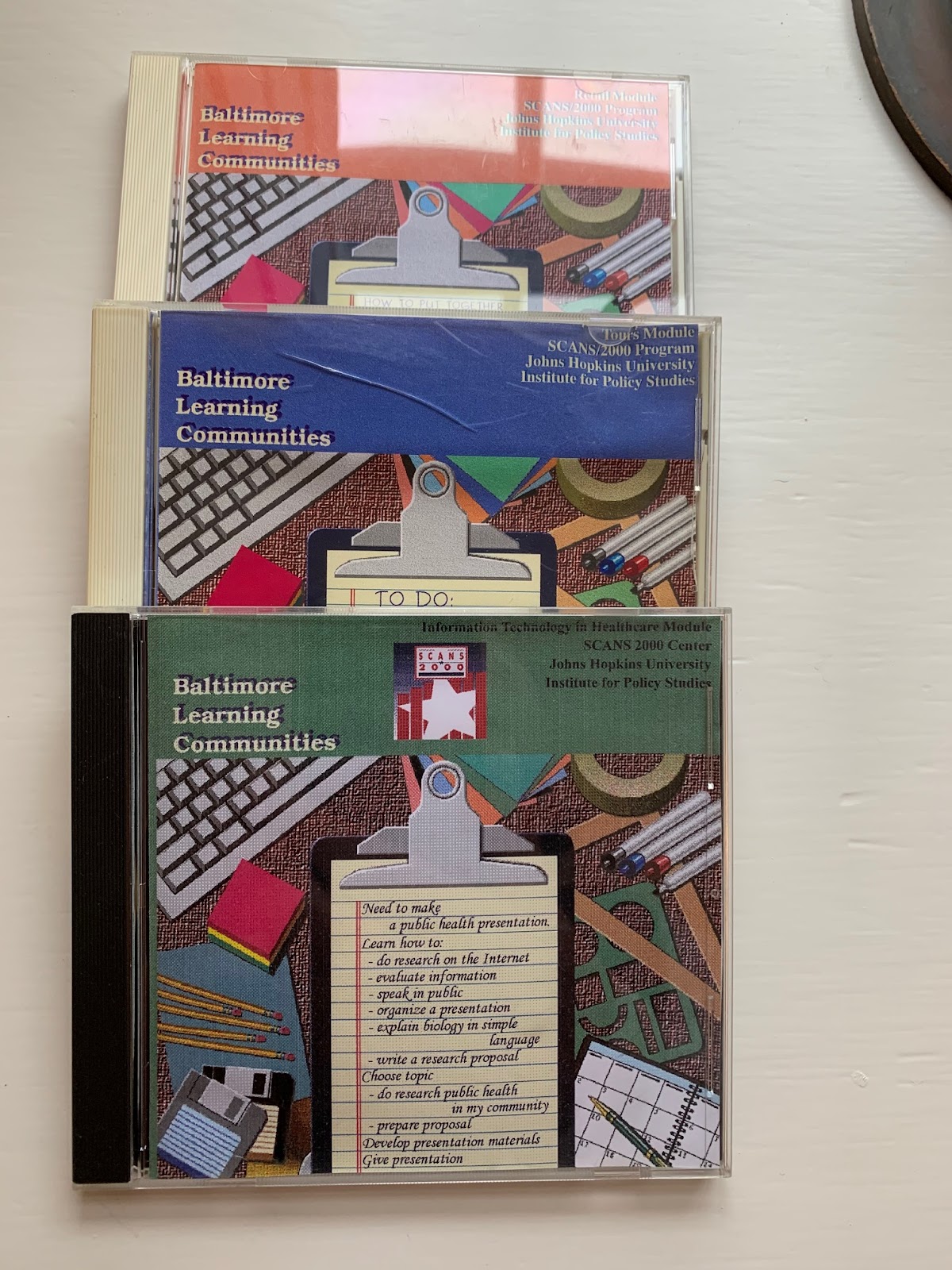
If I may, another quick trip down memory lane: Sometime around 2002, Arnie and I created an interactive curriculum to teach math and writing to HS students. This unlikely partnership between an economist and a reporter came about because he and I sat together at an education conference, an experience that activated the BS detector mentioned above, big time. When the meeting ended, we went to a bar, and–after two or three beers–decided that we could do a much better job than the educators.

And we actually created a plan, first scribbled on napkins at the bar, then in prose, and then in a proposal to the US Department of Education, which was funding innovation in curriculum using technology.  We partnered with Baltimore City Schools and–wonder of wonders–got a multi-million dollar grant (most of it went to the school system).   

The high school English and Math curriculum we created was interactive and computer-based. Working in teams, students had to become merchants who were selling something in a mall. Big decisions about rent, store frontage, what to sell, staffing, loans, etc. That meant lots of math. They also had to write and present their business plan—to real business men and women–meaning writing and public speaking. 

Some English and math teachers teamed, and others did not, meaning we had a natural experiment. It worked, producing statistically significant differences in both subjects, plus improved attendance.  Arnie and I were over the moon, until the system killed it because it was logistically difficult to arrange schedules, or some crap like that. 

The trio—Arnie, John, and beer—cannot share credit equally, because Arnie was the driving force.  Later we worked together to create what Arnie called the “Verified Resumé,” an electronic portfolio that could be updated to reflect newly acquired skills, much more than college credits.  Again Arnie was the driving force, and I was his eager wingman.

Thanks to all of you, and may you rest in peace……