The First Step

http://www.facebook.com/plugins/likebox.php?href=http%3A%2F%2Fwww.facebook.com%2Flearningmatters&width=292&colorscheme=light&show_faces=false&stream=false&header=true&height=62

If you had the power to make one change in public education right now, what would it be? I’m not talking about some sort of magic wand fantasy, so suggestions like “End Poverty” are not appropriate. What I am looking for are changes that could be made.

When Michele Norris of NPR asked that question this week, it got me thinking, and I hope it will stimulate your thinking as well. I left the panel discussion, posted the question on Twitter, asked a few friends, gathered my own thoughts, and then put together this short piece.

The panel that Michele was moderating was titled ‘How All Children Succeed.’ It was organized by TurnAround and JPMorgan/Chase and featured Paul Tough, author of “How Children Succeed,” TurnAround CEO Pamela Cantor, Scott Palmer of Education Counsel, and KIPP co-founder Dave Levin.

Dave Levin had the simplest — and perhaps the most profound — suggestion. “Change the sign,” he said. He reminded us that virtually every school has signs trumpeting a familiar slogan, “All Children Can Learn.” That should come down, Dave said, and be replaced by signs reading “All Will Learn.” Not ‘can’ but ‘will,’ reflecting a new determination and responsibility. And ‘all’ means ‘all,’ he said, including the adults! Changing the sign was, for Dave, an important first step toward changing the way adults in schools approach their jobs.

My change is similar to Dave’s. I would have adults change their fundamental question. Stop asking “How intelligent are you?” and ask instead, “How are you intelligent?” Changing that mindset would (could) lead to vastly different schools. School could become places where children are encouraged to find and follow their passion. An end to ‘one size fits all’ education.

Paul Tough was one of the panelists on NPR's discussion that helped inspire this post.

Along that line another necessary change — the importance of connecting — emerged in the discussion. Kids growing up in low income environments face stresses that well-off children can’t begin to imagine, and we know that children who are severely stressed simply cannot focus on learning. We also know that all children need the love and support of some adults. “It doesn’t have to be the parent,” Pam Cantor said, “But it has to come from someone.” I was reminded of E.M. Forster’s cry from the heart, “Only Connect.”

For her ‘one change right now,’ Pam Cantor suggested that all teachers reach out to parents with positive comments. That resonated with me because I saw my daughter Elise doing it a dozen or more years ago when she was teaching in a middle school in Harlem. Nearly all of her kids were Hispanic, and she made a point of calling their parents early in the year and praising their children — in fluent Spanish — for something they had done in class. With a few kids, she admitted, it was a stretch to find something worth cheering about, but she felt that it was absolutely critical that the parents’ first contact with their child’s teacher be a positive one. That’s also what Pam stressed. She pointed out that school was rarely a positive experience, suggesting that schools failed them, not the other way around. “We need to break that pattern, teacher by teacher.”

Paul Tough encouraged home visits by teachers when kids are older but recommended earlier connections (I noticed that he didn’t say ‘interventions’) of the type done by Ounce of Prevention in Chicago. The earlier the better, he seemed to be saying, a view echoed by Scott Palmer. That’s not ‘government meddling’ but help that most families are hungry for. Dave Levin echoed that: “We can’t let a vocal minority scare us away from helping the majority, when we know they want help.”

One Twitter follower focused on teaching: “Ease 1st year teachers into the classroom with reduced teaching load combined with support, prof development, peer observations.”

Another didn’t need anywhere near her 140 characters: “End High Stakes Testing!” was all she wrote. Aristotle, who wrote “We are what we repeatedly do,” might well agree.

Paul Tough spoke thoughtfully about the challenge of helping children learn to manage adversity and failure. Too often, he said, well-off parents want to keep their kids from ever falling down, even though it is only by falling down that one learns to get up and try again. Conversely, poor kids have so much adversity in their lives that what they need is more protection, more encouragement. (You ought to read his book, if you haven’t done so).

The conversation naturally expanded to cover other ways schools could be changed so that all children can succeed. On one significant point there was complete agreement: this country needs to make a long-term commitment to children, meaning a serious effort to help parents of infants and toddlers. “We need to make a 20-year commitment,” Dave Levin said.

One prominent American couple actually has the power to make one change that would reshape public education. I am referring to Edy and Eli Broad. Earlier this week I attended the annual Broad Prize festivities honoring the nation’s most outstanding urban school system. After being a runner-up for four years, Miami-Dade finally won, based on its remarkable accomplishments in raising achievement scores among Latino and Black students. That’s certainly notable, of course. But suppose that the Mr. and Mrs. Broad decided to emphasize — big time — two additional criteria: the vibrancy of the arts programs and the effectiveness of the social/emotional programs? Suppose school systems, eager to win the national acclaim and the $1,000,000 in college scholarship money, knew that they had to get serious about attending to the needs of the whole child if they wanted the judges to view them as contenders for the Broad Prize? Suppose systems knew that, if they weren’t providing opportunities in the arts, the judges would turn their backs?

You know darn well what would happen: The arts would come back to life. Counseling, mentoring and supporting would be center-stage, where they belong. And schools would be happier places for young people.

So here’s the burning question: If you could make one change right now, what would it be? Perhaps if enough of us put forth ideas, we may end up with a workable list of 10 or 20 changes that could be made now. Then we’d be on to something.

I look forward to your responses.


More of our videos | Our YouTube Channel | Our Podcasts | iTunes |
Donate | Join our e-mail list | Debate the issues | Facebook | Twitter | Google+
Obama, Romney and Education

http://www.facebook.com/plugins/likebox.php?href=http%3A%2F%2Fwww.facebook.com%2Flearningmatters&width=292&colorscheme=light&show_faces=false&stream=false&header=true&height=62

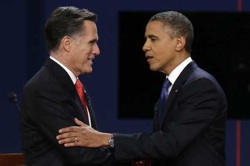
Are there great differences between the presidential candidates on education? What would a Romney presidency mean? A second Obama term?

Unfortunately (from my point of view), education has not been front-and-center in the campaign. Perhaps the low point came in the second debate when both men endorsed education as an antidote to the proliferation of assault weapons. Talk about bizarre!

Neither man was asked about No Child Left Behind, easily the most intrusive federal education effort in our history. They weren’t asked about the seemingly inexorable move toward national education standards; the growing body of evidence about the importance of early education; or the coming teacher shortage, to mention just a few of the pressing issues Americans might have been interested in hearing about.

In the second debate, the President recited how he’d changed the rules on student loans, taking bankers out of the equation and thus saving borrowers millions of dollars. The number of students receiving Pell Grants has grown, from about 7 million to 11 million, another point in his favor. Governor Romney boasted that Massachusetts ranked No. 1 in the nation on his watch. (I wrote a little about that in May.)

The night before the second debate, Columbia’s Teachers College hosted a debate between the candidates’ education advisors. There, a genuine difference emerged: one candidate would sharply restrict the federal role to data-gathering and promoting variety and choice for parents, while the other candidate apparently believes that the federal government should do what’s necessary, with no apparent limit to federal authority.

Both positions are a little scary, frankly.

Speaking for President Obama was Jon Schnur, a longtime political operative working in the education sphere. Governor Romney was represented by Phil Handy, co-chair of the candidate’s higher education advisory committee who has held top education positions in Florida and the U. S. Department of Education’s research wing.

Which one would be better for our students and our schools between now and 2016?

Mr. Schnur praised the Administration’s “Race to the Top” campaign for its impact on school reform. He touted the expansion of the “RttT” concept to include school districts and providers of early childhood education.

He noted that the Common Core was not federal but was instead a voluntary partnership among states. Washington was ‘seeding’ the effort, which he said was the proper federal role. And he praised the Administration for its pragmatic response to gridlock and the failure to amend the widely-discredited No Child Left Behind Act. The Administration, he reminded us, has granted waivers to 35 states, with more in the offing. That was genuine leadership, he suggested.

In response, Mr. Handy pointed out that Washington was still making the rules, because only states that jumped through Washington’s hoops got waivers. That, he said, was the issue: who knows best?

We learned from Mr. Handy that Governor Romney favors a return to an amended No Child Left Behind, largely on the philosophical grounds that states know better. He also would put bankers back into the student loan equation, again for a philosophical reason: competition produces better results.

Mr. Handy did say that a Romney administration would honor the long-standing commitment to underprivileged children and those with special needs, but he rejected out of hand the Obama Administration’s efforts to circumvent No Child Left Behind by issuing waivers. He warned that the ‘waived’ states would begin playing fast and loose with the rules, citing announcements from several states (including his own state of Florida) that they were establishing separate standards for different groups of students (IE, one passing grade for whites, another for blacks).

“We will nullify those (waivers) on the first day in office,” he told me after the debate.

In sum, the choice seems clear. A second Obama term would continue the expansion of the federal role in education, but Romney Administration would back off.

While I believe the former, I am skeptical of the latter. I expect that the winner, whoever it is, will continue to expand the federal role in public education. After all, George W. Bush arrived in Washington as a “states’ rights” guy, and look what he did (albeit with Democratic help). Something in the air down there must make men and women think that they know best. Or maybe that’s what happens to people when they suddenly have power.

The most heartening development in public education that I have seen in 38 years on the job has been what’s happened in New Orleans since Katrina and the flooding. A key to that success has been the willingness to cede power to others, to acknowledge that what they’ve been doing hasn’t worked.

We’re finishing our film, which we are calling “Rebirth: New Orleans” now. I believe you will want to watch it, and I certainly hope that our next President, whoever it may be, will pay attention.


More of our videos | Our YouTube Channel | Our Podcasts | iTunes |
Donate | Join our e-mail list | Debate the issues | Facebook | Twitter | Google+

The Pioneer Spirit

http://www.facebook.com/plugins/likebox.php?href=http%3A%2F%2Fwww.facebook.com%2Flearningmatters&width=292&colorscheme=light&show_faces=false&stream=false&header=true&height=62

(Full disclosure: The longer I work as an education reporter, the more skeptical and more bandwagon-adverse I am. And I am in my 38th year on the beat….so read on at your peril.)

A clever ad for Xerox a few years ago showed an executive at his desk listening to a succession of pitches from unseen salesmen, all of whom ended their pitch by saying “It’s almost as good as a Xerox.” As the last salesman began his windup, the (by now exasperated) executive interrupted, “I know, I know, ‘it’s almost as good as a Xerox,’” to which the salesman responded, “No, sir, it IS a Xerox.”

That old ad popped into my head the other day as I was listening to folks extolling the virtues of ‘blended learning’ and ‘the Common Core,’ two hot-button issues in education these days. Everybody in education seems to be on board for one or the other, often both, but I can’t help likening them to those earnest, well-meaning men pushing a product that is ‘almost as good as…..’

Recently I visited a school that was supposedly practicing ‘blended learning,’ but what I mostly saw was 6th graders tethered to their computers. They weren’t being lectured to by a teacher in the front of the room; instead they were reacting to the prompts of whoever designed the software they were using. There was nothing ‘self-directed’ about what they were doing, as far as I could tell. Instead, their ‘teacher’ was some team of software engineers somewhere, and the kids were — paradoxically — passively reacting. It may have looked like active learning, but there was nothing remotely creative about it.

Later the principal and chief academic officer explained how the school was using ‘blended learning’ as its path to achieving ‘the Common Core’ standards.

Is Common Core the answer? Well, that all depends on asking the right questions.

Let me unpack that. “Blended learning” is defined as schooling that is both brick and click, some combination of school-based education and online education, with the implication that the two are interrelated in significant ways so that the whole is greater than the sum of its parts. Note, however, that there is absolutely nothing in that definition that is evaluative in any way, and so ‘blended learning’ could be what I saw that day: half the day on the computer, half the day in teacher-directed activity.

For an analogy, think about the term ‘restaurant.’ What does that tell you about the food served there? Nothing. Even ‘French restaurant’ says nothing about the quality of the (French) food on the menu.

So let’s not get all gooey-eyed when educators tell you they are practicing blended learning in their schools. Before you jump on that bandwagon, ask how the brick and clicks are integrated. Ask how much time students are spending on computers. Ask what they do on those computers. Ask, ask, ask….and ask some more.

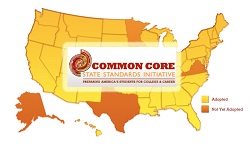
Now to the “Common Core’ bandwagon. The highly-touted ‘Common Core’ standards spell out, often in great detail, what children are expected to be able to do at various points in their schooling. These standards — adopted by nearly every state — are very specific and purportedly ‘higher’ than what now exists. We can agree that standards are good, and that higher standards better than low ones, but let’s take a second look.

What I fear is that these specific standards, intended to be the floor, will somehow become the ceiling. These benchmarks have the potential to calcify our already rigid, age-segregated system, at a time when flexibility is essential. In his brilliant book, The One World Schoolhouse, Sal Khan writes, “At a time when unprecedented change demands unprecedented flexibility, conventional education continues to be brittle.” He adds that the educational establishment seems “oddly blind (or tragically resistant) to readily available technology-based solutions.”

As I have argued elsewhere, age segregation has harmful effects on children, although it is of course convenient for the adults. The now-conventional wisdom of the Common Core will, I fear, harden the attitudes and practices of our ‘brittle’ system and keep kids segregated by age.

Too much of education is about consumption and regurgitation when it ought to be about production. Kids need to be encouraged to ask more and more questions. They need to learn how to sort through the flood of information that engulfs them, to separate wheat from chaff. If students can meet Common Core standards by spitting back answers, we’re making matters worse, not better.

On the flip side: Well-designed blended learning invites and allows kids to soar. But when a 6th grader soars past 6th, 7th and 8th grade math Common Core standards, she must be celebrated, not held back, ostracized or shamed in any way.

Despite the crowded bandwagon for blended learning and the Common Core, these men and women are often called ‘pioneers.’ But are they really pioneers? According to dictionary definitions, pioneers are “men and women who venture into unknown territory to settle, or who open up new areas of thought, research or development.”

It seems to me that rather than being true pioneers, many of these educators are simply looking for faster and more efficient ways to get to the same old destination.

Folks who care ought to be knee-deep in the struggle over measurements. We need to measure what matters, which to me means opposing those support our current ‘One Size Fits All’ approach to schooling, even when they have wrapped themselves in the glowing robes of blended learning and the Common Core.


More of our videos | Our YouTube Channel | Our Podcasts | iTunes |
Donate | Join our e-mail list | Debate the issues | Facebook | Twitter | Google+

Thanking Teachers

http://www.facebook.com/plugins/likebox.php?href=http%3A%2F%2Fwww.facebook.com%2Flearningmatters&width=292&colorscheme=light&show_faces=false&stream=false&header=true&height=62

The bumper sticker “If you can read this, thank a teacher” is a clever way of reminding us that teachers deserve our thanks. I agree and wish I had taken the time to thank Mr. Sullivan, my high school English teacher many years ago. He taught me that I had some ability and convinced me — after a long struggle — that it would be disgraceful, even sinful, to waste whatever talent I possessed.

I happened to mention my regret to one of my colleagues, producer Cat (neé Cathlin) McGrath, and a day or two later she shared a story with me. She had gone home that night determined to thank her special teacher, Mr. Roberts, who taught her in fourth grade. Through an internet search she learned that he is now a school superintendent in a Chicago suburb and that he had earned three advanced degrees, including his doctorate from Teachers College in New York City. Cat wrote to tell him that she still had a book he gave her, Dr. Seuss’ “Oh, The Places You’ll Go,” signed with a lovely inscription. In her e-mail thank you note she told Mr. Roberts that she often read it to her young daughter.

It's so easy to reach out and say thanks to one of your favorite teachers. If you do, tweet us @lmtv and tell us how it went.

He responded immediately, as follows:

Dear Cathlin,

I cannot begin to tell you how much your note means to me! Arlene (my wife) and I have thought of you often over the years. We exchanged Christmas Cards with your parents for a while and always asked about your exploits! It is difficult to think of how many years have passed since that 4th grade experience; but I remember you, and a good number of your classmates, as though it was yesterday! What a kind, caring, and intelligent group! Oh! don’t let me forget to say an energetic group as well – your class was a handful; but in the nicest way.

I am so happy to hear you have a daughter; and I can just picture you reading to her! We have a 7-year-old granddaughter and she loves to have her Grammy read to her. Again, thank you so much – you made my day! Please keep in touch and pass our best wishes along to your parents.

Al Roberts

So go ahead, dear readers, make your most important teacher’s day by reaching out to say thanks….

Cat’s story got me energized, and so I sent a note around (via Twitter) about thanking teachers. Anthony Cody, a Board-certified teacher I have gotten to know over the years, responded with his own story, one that demonstrates the impact that teachers have on our lives, not necessarily because they taught us math or science or English, but because they connected with us when we needed it most.

Here’s Anthony’s story:

About eight years ago I saw a news story on TV about a teacher doing amazing things with Shakespeare. The name of the teacher ran by, and I thought perhaps it was Harvey Sadoff, my 5th grade teacher at Lincoln Elementary in Berkeley, from the year 1968. I hunted for his name online, and found I had been mistaken about the person on the news — it was not my teacher. But I did find a Dr. Harvey Sadoff working as a principal at an elementary school in North Carolina. I emailed him a note, and it was my old teacher.
Once I knew it was him, I sent him a longer note with some of my memories and things I appreciated. As as teacher, he was funny and self-effacing, and he allowed the class to adopt a stray dog that wandered onto the playground one day. Back then it seemed like a big deal to know the teacher’s first name, and “Harvey” seemed just right when we discussed what to name the dog. We were not sure how Mr. Sadoff would take it when we told him the dog’s new name, but he just smiled. We took turns taking it home on the weekend, hoping the principal would not find out and banish it. After a month or so, we were found out, and the dog had to go.
I corresponded a bit with Mr. Sadoff, sharing how I had followed his lead and become a teacher myself. Then he sent a note that said that had been his last day as principal. He had cancer and was retiring mid-year because the treatment was making him weak. A few months later I got a note from his wife saying he had passed away.
I cannot remember much about what Mr. Sadoff taught me in terms of reading or math. But I remember his kindness and acceptance, and that was what I needed when I was nine years old. And that was what I tried to bring to my classroom every day.

It’s your turn, folks. Please make the effort. And, if you are so inclined, please share what develops.


More of our videos | Our YouTube Channel | Our Podcasts | iTunes |
Donate | Join our e-mail list | Debate the issues | Facebook | Twitter | Google+