Shoe’s On The Other Foot

http://www.facebook.com/plugins/likebox.php?href=http%3A%2F%2Fwww.facebook.com%2Flearningmatters&width=292&colorscheme=light&show_faces=false&stream=false&header=true&height=62


After 38 years of asking other people questions, I find the the tables (occasionally) being turned. Some people want me to answer questions. Truth is, it’s actually kind of fun, because it forces me to think more deeply than I am perhaps inclined to.

It’s already happened four times this week.

On Wednesday a policy person asked me what I thought about the push for “College and Career Readiness” and the national policies that were developing around that notion.

Followed by a question about ‘digital natives.’

On Monday, I was with Arts educators, always a lively bunch, and one asked me how I felt about teacher training.

Followed by a question about No Child Left Behind, Race to the Top and the Common Core.

In the interest of spurring some debate, here’s a shorthand version of how I responded.

I told the questioner that “College and Career Readiness” strikes me as a wrong-headed term. It implies that ‘College’ is a destination, when in fact it’s a way station on one of the roads to (one hopes) a fulfilling life. And putting ‘College’ first and ‘Career’ second implies to some that ‘Career’ is a poor cousin; it’s what you do if you do NOT go to college.

Sloppy language reveals sloppy thinking. And, I gather, a mish-mosh of policies and programs. I’d prefer government investment in, say, two years of education beyond high school and in what are called ‘early college’ programs in high school. (We’re reporting on the latter very soon on the NewsHour).

The question about “digital natives” was a softball pitch down the middle of the plate. To me, many adults say ‘digital natives’ as part of their confession of feelings of inadequacy, as in “The kids are digital natives who just get this technology naturally, and I can’t keep up.” Maybe so, but adults have important responsibilities here, because being a ‘digital native’ is NOT the same thing as being as ‘digital citizen.’ Developing good citizens — digital or otherwise — is an adult responsibility and obligation. ‘Nuff said.

John has made a career of asking the big questions. But sometimes ... he gets asked them, too.

As to teacher training, we need to do better. I found myself reaching for a sound bite on this issue: “We need to make it harder to become a teacher but easier to be one.” Raise the barriers to entry by making training more demanding. Internships and time with master teachers. Visits to classrooms in countries like Finland. But once in the classroom, teachers need to be treated like professionals. We need to get off their backs and involve them in curriculum development and student assessment. From what I hear, Stanford’s STEP program is a pretty good model to follow. STEP, for Stanford Teacher Education Program, pairs would-be teachers with carefully selected mentor teachers. In its own words, STEP is “where theory and practice meet and where, in turn, learning takes place. The links between theory and practice, university and school, experience and standards, are the links of learning.” I’ve been impressed by STEP graduates and hold the program’s leader, Linda Darling Hammond, in the highest regard.

Programs like STEP make it tougher to become a teacher (high admission standards, a demanding curriculum) and equip their graduates with a skill set that will make it easier for them to succeed in the classroom. More has to be done to make it easier for teachers to succeed, of course, including an end to the current ‘gotcha’ game that’s dominating education politics.

The last question thrown at me had to do with NCLB, ‘Race to the Top’ and the Common Core. What, the questioner wanted to know, did they have in common, if anything? I hope you will weigh in with your thoughts on this. As I stood there thinking (while saying “That’s a great question” — which is what you say when you don’t know how to answer!), the notion of ‘power’ popped into my head. Think about it: George W. Bush came to Washington as an avowed ‘states rights’ Governor and immediately proceeded to enact, with Democratic help, the greatest Federal intrusion into public education in our history. Secretary Duncan was a harsh critic of NCLB when he ran the Chicago public schools but has replaced it with a program that is only marginally less intrusive. He’s granting waivers so that states don’t have to follow NCLB’s orders — as long as they follow his. And the Common Core looks as if it’s going to continue the pattern of centralization.

The lesson here may not be that “Power corrupts,” but instead something akin to “Power corrodes.” To me, NCLB has proved conclusively that Washington cannot run public education, but maybe I feel that way only because I am not in Washington and do not have any power.

Your thoughts?


More of our videos | Our YouTube Channel | Our Podcasts | iTunes |
Donate | Join our e-mail list | Debate the issues | Facebook | Twitter | Google+

Thinking About Charters

http://www.facebook.com/plugins/likebox.php?href=http%3A%2F%2Fwww.facebook.com%2Flearningmatters&width=292&colorscheme=light&show_faces=false&stream=false&header=true&height=62


I have been hanging around charter school operators for the past few days, and the experience has left me with some complicated — and perhaps contradictory — thoughts about a movement that I have been following since 1988.

I love the energy, intelligence and dedication of the people I spent time with, but I left the annual meeting of the National Alliance for Public Charter Schools in Minneapolis with some concerns. I think they need to do a better job of choosing their friends and of refining their message, among other issues.

For what it’s worth, here’s my thinking.

Remember: the “charter movement’ is a still blip on the screen. It consists of 5,000 charter schools and 2.4 million students. But America has more than 100,000 schools and more than 55 million students, making it not all that much bigger than the homeschooling movement, which encompasses close to 1.5 million students. This is not Hertz and Avis, more like Hertz and Acme Rent-a-Car of Poughkeepsie. (I made that company up, so don’t bother taking me to task about it.)

I left Minneapolis with the sense that the leadership believes that Charter Management Organizations and Charter Networks are the future. Stand-alone charter schools are put down as ‘Mom and Pop’ schools, and only the biggies are eligible for the newly established Broad Prize for Charter Schools of $250,000 (which went to Houston’s YES Prep Network).

Much of the talk was about “going to scale,” the notion of mass replication of apparently successful strategies. Just what would ‘going to scale’ mean, anyway, in the charter school world? Tripling or quadrupling in size? Big deal! (Go back to the numbers in the fourth paragraph above, and do the math.)

And what is it that they want to take to scale? Seems like it’s all about test scores, and that sounds like school district talk, like Washington’s “Race to the Top” talk.

Another problem with embracing “replication” is the stifling effect on innovation. If I were going to apply for a charter school, I wouldn’t stand a chance, because the school I would want to create would not have ‘senior year’ as you recognize it. I might even eliminate ‘junior year.’ Instead, I would spend those dollars on the early years, enrolling three- and four-year-olds. My ‘juniors’ and ‘seniors’ would be taking college courses and would finish school with high school diplomas and Associates Degrees or Career Certification.

I will wager that there are lots more wild ideas like that out there, but, with the dollars flowing to networks and schools that can supposedly ‘go to scale,’ what chance do they have? Perhaps the guiding spirit of the charter movement ought to be “Let one hundred flowers bloom.”

The Broad Foundation could help here, by establishing a “Rookie of the Year” award, a la Major League Baseball. It wouldn’t have to be $250,000, but it should be substantial. Eli Broad got where he is by taking chances, as his recent autobiography makes clear. The Eli and Edythe Broad Foundation ought not to be creating disincentives to future risk-takers.

Another problem for me: From day one, charter schools have had problems getting their message across, and even now I will wager that most Americans have no real clue as to what charter schools actually are. I think that charter schools ought to be saying — often and loudly — “We are public education!” Let that sink in, and then go into the weeds with an explanation. Because, after all, charter schools are public schools.

And that’s why I think the charter movement has to do a better job of choosing its friends. I believe that its natural allies are the other men and women who work elsewhere in public education, the 3.2 million public school teachers. I know all about the narrow-mindedness and selfishness of many leaders of school boards and unions, but that doesn’t take away from the fact that it’s within the army of teachers that charter school people are most likely to find understanding and support.

We do, and it's a work in progress.

In the keynote panel I moderated, Howard Fuller, the legendary firebrand and former superintendent of schools in Milwaukee, pointed out that charter schools were supported across the spectrum by folks who don’t agree on much else: pro- and anti-vouchers, for profit and not for profit, liberals and conservatives, and so on. Well and good, but those who believe (as I do) that charter schools represent an opportunity to provide unprecedented educational opportunity for millions of children ought to be examining the motives of those who embrace charter schools.

Some offer their support — and their money — because they see charter schools as a necessary step toward their ultimate goal of dismantling (destruction) of the public school system. Privatizing is their end game. They don’t want any public schools! So wake up and recognize that a permanent network/system/movement of public charter schools does not figure into the plans of those particular ‘friends’ of yours.

To me, that means charter folks, and their associations, ought to be denying entrance to the tent to those whose end game is inimical to their own health. Reject their support and their money, difficult as that may be to do. Like Othello, you think you know who your friends and enemies are. Like Othello, you are wrong. Unlike Othello, you can do something about it before it’s too late.

Another concern: I believe in going to scale, but what has to get to scale is not one brand of charter school, or even charter schools more broadly. What needs to go to scale are effective ways of educating children. Let’s recognize that this can be done in charter-like public schools. It can be done in any public district that renounces “command and control” as its MO.

That’s why I think the charter movement must be reaching out to create alliances with superintendents who have embraced charter schools and with school boards that support authorization of, or provide facilities for, charter schools. How about a third Broad Prize here?

And finally, if you’ve heard me speak about charter schools, you know I compare them to restaurants. To wit, the name ‘restaurant’ tells you nothing about the quality or even the kind of food being served, just as ‘charter school’ tells you nothing about the education being offered inside. You have to have a meal to even begin to know anything. It’s not enough to read the menu (or the course syllabus and mission statement).

The analogy is apt in another way. We inspect our restaurants because it’s in the public interest to make sure they are following appropriate health procedures. And we close down ones that fail to comply, to keep ourselves from being poisoned.

One thing we have learned from New Orleans and its largely successful system of charter schools is that some form of central authority is essential. Someone must police even the finest ‘system of schools,’ whether charter schools or not. Someone must assure that every school’s behavior code is made public, that protections are in place against arbitrary action against students and teachers, that children with special needs are not discouraged from enrolling, and that the application process is fair for all.

“Trust but verify” is a useful mantra going forward, on many levels.

The charter school movement is the most promising development of my reporting career (which began in 1974). It’s painfully ironic that the dream of innovation is being challenged by the impulse to centralize, replicate and ‘go to scale.’ Maybe someday we will have a ‘one-size-fits-all’ approach to schooling, but right now we are not even close. Charter schools are a vital work in progress, nothing more. There’s a lot of work ahead.


More of our videos | Our YouTube Channel | Our Podcasts | iTunes |
Donate | Join our e-mail list | Debate the issues | Facebook | Twitter | Google+
I Have Seen The Future

http://www.facebook.com/plugins/likebox.php?href=http%3A%2F%2Fwww.facebook.com%2Flearningmatters&width=292&colorscheme=light&show_faces=false&stream=false&header=true&height=62


Listen to John and Daniel King’s interview:
[audio:http://learningmatters.tv/podcasts/media/MerrowKing2.mp3%5D

“I have seen the future, and it works.” I write those words with some trepidation, because another journalist used those exact words in 1919 and lived to regret it, big time.

If you remember your history, Lincoln Steffens said that after returning from newly Communist Russia. Only later did he see with clarity the harsh cruelty of the Soviet dictatorship.

I’m playing on a much smaller stage, of course, and I am talking about high school, not one of the largest countries in the world.

In two weeks or so, you will be able to see for yourselves what I am so enthusiastic about, because Learning Matters producer Cat McGrath is now editing our two-part report for PBS NewsHour.

Update: it has now aired, and here it is:

But here’s the gist: in 2007, half of the high school students in the Pharr-San Juan-Alamo school district in southeast Texas, on the border with Mexico, dropped out without graduating, just as their parents had done. The district has 31,600 students — it’s 99% Hispanic and 89% economically disadvantaged. It was ‘dropout city,’ with a failure rate that was nearly twice the state average.

Then Daniel King came to town, with Texas-size ambition and three bold plans. First, the new School Superintendent went after the 237 kids who had left school that spring without graduating, to try to persuade them to come back to school. He organized volunteers to go door-to-door to talk with them, with a simple — and counter-intuitive — message: “High school didn’t work, so come on back and let’s try college.”

In an abandoned WalMart store, he created a dropout recovery academy, but he didn’t call it that. It was instead the “College, Career and Technology Academy,” where students would complete their high school requirements, take some actual college courses and develop a connection to a local college or career training facility.

King is a persuasive man. Of the 237 students, he and his team convinced 223 to give education a second chance. That was in the fall of 2007. Very soon his College, Career and Technology Academy will graduate its one thousandth student.

“High school didn’t work, so let’s try college.” What a concept! We know in our gut that high school is a painful rite of passage for most young people, four years held together by friendships (if you’re lucky) but marked by boredom and, often, humiliation.

Why not attack boredom? Make the experience more challenging and interesting?

At the same time, he created a special school where everyone would go to college and high school at the same time. Admission to this small school would be by lottery. Students would spend half their time on the campus of a local college, half at their new school, which he named T-STEM, with the last four letters standing for Science, Technology, Engineering and Math (the initial T is, of course, for Texas).

At graduation this spring, 55 of the 80 T-STEM seniors earned their two-year Associates degrees, which they received one week before getting their high school diplomas.

Who are these young people?

Meet 18-year-old Viviana Hernandez, whose parents work in the fields picking crops, as did she during the summers. Here’s part of what she told us.

Since I am a girl, I am required to get up earlier than everybody else. We usually get up at 5:30, get to the field at 6:00, and we don’t come back until like 5:00 or 5:30. Every day. There’s no Saturday, no Sundays. It’s every day, with no summer break at all. I stress out with my college work a lot, but I would rather sit in college classes and take a billion finals than work another day in the fields.

Viviana graduated from high school and community college this spring.

With the success of his dropout recovery school and T-STEM, King made the boldest move of all: import this approach into a huge, comprehensive high school, where being indifferent about education is the standard M.O., where it’s just not cool to be interested in learning.

King
Daniel King has been a revolution in south Texas education.

This idea, ‘early college,’ began appearing in the 1950’s, and, while firm numbers are just about impossible to come by, it’s widely believed that at least 10% of high school juniors and seniors are in some sort of ‘dual enrollment’ program. By and large, these programs attract gifted and/or highly motivated students. What King is doing is pushing the inside of the envelope, in a big way.

He had made this work in a Texas district one-tenth the size, so he was optimistic going in. He’s also a veteran (14 years as a Superintendent) who was named Texas Superintendent of the Year in 2006, the year before he came to Pharr-San Juan-Alamo.

Based on what I saw in PSJA school district, King’s approach has been successfully transplanted to a larger stage. Kids are kids, he might say, and they want to be challenged.

I hung out with some students who had just finished taking their final exam in Economics 101, taught by Laura Leal, an instructor from a local college who travels to Memorial High School to teach her classes.

Leal told me that high school students were in some ways ideal. “It’s kind of like the experience that Adam and Eve had, before the apple. High school students see every challenge as possible; they have their whole future ahead of them.”

And, she added, they haven’t been jaded or corrupted by the anti-intellectualism of the college campus. That culture shock awaits. “Students in high school aren’t really experimenting with life yet. They don’t have the culture shock of being in a dorm because they’re still at home.”

She believes they will enter college more self-assured, not to mention that they will also be quite a few steps down the road to a degree.

The thread that ran through my conversation with the students was ‘respect.’ And students welcomed the higher expectations, even when it meant they missed hours of just hanging out.

“We use a college textbook, it’s a college teacher, it’s college work,” one said proudly.

“The (college) teacher treats us differently. High school teachers are always like ‘do your work , do your work, do your work,’ but this teacher isn’t that way. With her, It’s like ‘there’s the work, there’s the syllabus, and it’s your decision whether you do it or not.’”

“High school teachers kind of baby you,” another said, adding that, if you are failing a high school class, “you’ll get a bunch of extra credit just so you can pass,” but “if you slack off at college, that’s on you” because “you are not considered a kid anymore.”

At Memorial High School, 40% of the graduates have earned at least three college credit hours. And 60 graduating seniors from the district’s comprehensive high schools earned Associates Degrees from a local college.

The State of Texas encourages dual enrollment with financial incentives for colleges and participating high schools, because it wants and needs more graduates and a larger skilled labor force. King saw that opportunity, and his success should encourage others.

Could this be a new paradigm for the American high school? Remember, King is making this work in a district whose dropout rate was almost double the Texas average, with families with no tradition or expectation of higher education.

One final thought: I spent a fair amount of time with Danny King, and never once did I hear him use the word ‘rigorous.’ He’s about challenges, expectations and respect.

I have seen the future. Whether it spreads is not up to me, but I sure hope it catches on.


More of our videos | Our YouTube Channel | Our Podcasts | iTunes |
Donate | Join our e-mail list | Debate the issues | Facebook | Twitter | Google+

The Commonwealth

http://www.facebook.com/plugins/likebox.php?href=http%3A%2F%2Fwww.facebook.com%2Flearningmatters&width=292&colorscheme=light&show_faces=false&stream=false&header=true&height=62


I went to graduate school in the Commonwealth of Massachusetts and taught at a college in the Commonwealth of Virginia. That makes me two-for-four when it comes to connecting with states that are officially designated as a Commonwealth (the other two being Kentucky and Pennsylvania).

The other 46 states are just that — states.

What brings this to mind is graduation season, a time of closure that ought to be a joyous celebration of life’s next adventure for the millions of young people who have earned diplomas from high school or college.

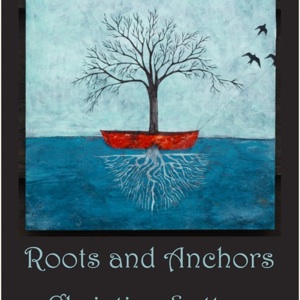
“Roots and anchors” was my theme when I was the commencement speaker at Richard Stockton State College (NJ) in 1991, where nearly all graduates were the first in their families to earn degrees. I encouraged them to take chances because, I said, they knew who they were (“Roots”) but weren’t constrained by debt (“Anchors”).

Roots
Couldn't say this today...

Couldn’t say that today, not when more than half of all college graduates leave with significant debt and, often, dim job prospects.

A trend that began during the “me, me, me” years of the Reagan Administration continues to accelerate: states are withdrawing their support for higher education; tuition and fees are going up; and student aid has gone from grants to loans.

Today only 7% of the funding for Ohio State University, the state’s flagship public institution, comes from the State of Ohio. Once “state-supported,” it is now “state-situated,” as the cynics say.

The cost of a year at an elite institution is approaching $60,000. A year of Community College — if you can find room — is now in five figures, and no one gets through Community College in just two years anymore, because so many classes have been eliminated. (My colleague John Tulenko has a piece about community colleges coming up on PBS NewsHour later this month.)

More students are borrowing, and they are borrowing more. The average borrower owes $23,000, and 10% of borrowers owe more than $54,000.

After World War II, America invested in higher education because we saw an educated populace as a common good. The GI Bill declared, in so many words, “If you have the determination and the brains, the country will pay for your college education.” It wasn’t entirely charitable: we didn’t want millions of veterans on the streets, preferring instead to have millions of working, tax-paying citizens. (Higher education largely opposed this, by the way.)

From that policy decision came our great middle class. Pell Grants to low income students opened the door even wider, but that door is also closing. A Pell Grant once paid almost half the cost of attending a state institution; today, less than 25%.

All of this makes me nostalgic for a Commonwealth and all the term implies: a public purpose, a sense of polity, an understanding of the importance of community, a shared belief in institutions, and the conviction that government is essential.

A significant portion of the voting population seems to see ‘government’ as the enemy, and those on the right talk about ‘government schools’ as a root cause of our national problems. The implication is clear: our ‘government’ is not theirs and does not represent them.

The trend toward the privatization of just about everything that moves is deeply disturbing to me. Because of my work, I see it most clearly in public education: profit-seeking charter schools, virtual schools, and voucher campaigns that undercut public education.

We once believed in national service and national sacrifice, but then George W. Bush took us into two wars without asking us to give up any comforts or pay higher taxes. In fact, he urged us to keep shopping. We no longer have a draft or a citizen military — the latter has also been privatized. We were told that we could have it all, without much regard for the other guy or the larger community. Now we know that we cannot.

It’s also true that public education has often been its own worst enemy, with adults protecting other adults while putting children, youth and learning on the back burners.

How do we refocus on the common good? Is that even possible in a time of scarcity, or does a sour economy make ‘every man for himself’ inevitable?

There’s evidence that our young people are ready to unite around a call for a Commonwealth, whether it’s the enthusiasm for Teach for America and other helping programs or the growth of community gardens, community schools, and project-based learning. We yearn to be part of community, to feel the satisfaction of being involved in meaningful actions that help others.

Unfortunately, many of our leaders tap into and inflame our lesser angels of selfishness, reckless individuality and ‘us versus them.’

Who will ask more of us — and trust that we will respond?


More of our videos | Our YouTube Channel | Our Podcasts | iTunes |
Donate | Join our e-mail list | Debate the issues | Facebook | Twitter | Google+